The short answer: The Bengal is the most-registered breed in TICA, and it carries one of the highest known frequencies of the PKLR variant behind feline pyruvate kinase (PK) deficiency — an autosomal recessive cause of intermittent hemolytic anemia. The course is notably variable, and many affected cats live fairly normal lives with veterinary monitoring. A DNA test reports clear, carrier, or affected — that is genetic risk and breeding information, not a diagnosis. Anemia itself is diagnosed by a veterinarian through bloodwork.
What PK deficiency and PKLR are


Pyruvate kinase (PK) is a key enzyme in glycolysis, the pathway that breaks down sugar to make cellular energy (ATP). This matters enormously for red blood cells: mature RBCs have no mitochondria, so glycolysis is their only source of ATP. When PK doesn’t work properly, red cells become energy-starved and break down prematurely — a process called hemolysis.
The feline variant was identified by Grahn and colleagues in 2012. It is an intronic change, c.693+304G>A in intron 5 of the PKLR gene: the G→A substitution triggers a 13-base-pair deletion at the 3′ end of exon 5, shifting the reading frame and creating a premature stop at amino acid 248. The result truncates roughly 57% of the protein. The condition is catalogued as OMIA:000844-9685 and is inherited in an autosomal recessive pattern.
How common it is in Bengals and other breeds
SamIs this just a Bengal problem, or do other breeds have it too? Elena MarshSeveral breeds carry it, but Bengals sit at the top: Grahn (2012) reported a PKLR allele frequency of 16.4% in US Bengals and 17.0% in UK Bengals — among the highest of all breeds tested.In the Grahn 2012 dataset, the Bengal showed one of the highest carrier-allele frequencies of any breed screened. An important caveat applies to every number below: much of the sampling came from cats submitted for testing, which can inflate apparent frequency, so the true population frequency may be lower. Treat these as an ordering guide rather than exact population rates.
| Breed / population | PKLR allele frequency (Grahn 2012) | Note |
|---|---|---|
| Bengal (US) | 16.4% (n=1,340) | Among the highest of all breeds |
| Bengal (UK) | 17.0% (n=1,210) | Among the highest of all breeds |
| Abyssinian (US) | 12.6% | — |
| Norwegian Forest Cat | 10.0% | Very small sample (n=13) — interpret with caution |
| Somali (US) | 8.5% | — |
All figures share the same test-submission sampling bias noted above, and the Norwegian Forest Cat value in particular rests on only 13 cats, so it should be read as a rough signal rather than a precise estimate. For context on why the Bengal matters here at all, it is the single most-registered breed in TICA, the dominant US cat registry — a large population multiplied by a high carrier frequency is exactly why responsible breeders take PKLR screening seriously.
Symptoms: intermittent hemolytic anemia
SamIf a cat is affected, does it get sick right away? Elena MarshNot necessarily — the course is notably variable. Kohn and Fumi (2008) followed affected cats for up to 11 years, and onset can range from around 6 months to about 5 years of age.The downstream problem of PK deficiency is intermittent hemolytic anemia. Because red cells break down prematurely, affected cats can develop episodes of anemia rather than a single steady decline. Reported signs include lethargy, pale gums, poor appetite, weight loss, a poor coat, and sometimes jaundice; enlargement of the spleen (splenomegaly) is also often seen.
What stands out in the literature is how variable and intermittent the disease is. Onset has been described anywhere from roughly 6 months to about 5 years of age, and the severity differs markedly between cats. In a long-term follow-up, Kohn and Fumi (2008) tracked affected cats for up to 11 years, and many affected cats live fairly normal lives with monitoring. That variability is central: a genetic “affected” result does not translate into a fixed clinical picture.
Clear, carrier, and affected — and the breeding math
SamMy coworker’s other Bengal is a “carrier.” Should she worry about its health? Elena MarshNo — because PK deficiency is autosomal recessive, a carrier has one copy and is expected to be healthy; that single copy only matters for breeding decisions.Autosomal recessive inheritance means a cat needs two copies of the PKLR variant to be at risk. That produces three genetic categories:
- Clear — no copies; not at risk and cannot pass a risk copy on.
- Carrier — one copy; expected to be healthy, but can pass the variant to offspring.
- Affected — two copies; genetically at risk of PK deficiency (though, as above, expression varies widely).
The breeding math follows directly. Pairing two carriers is expected to yield, on average, about 25% clear, 50% carrier, and 25% affected kittens. Pairing a carrier with a clear cat produces no affected kittens (about half carriers, half clear) — which is why carriers do not need to be removed from a breeding program, only paired thoughtfully. This is the practical value of testing: it lets breeders avoid carrier-to-carrier matings without shrinking the gene pool unnecessarily.
What the test can and cannot tell you
SamSo does an “affected” result mean the cat definitely has anemia right now? Elena MarshNo — the report is genetic risk and breeding status, not a diagnosis; even genetically affected cats vary, some with only mild intermittent anemia, and anemia itself is confirmed by a vet’s bloodwork.A PKLR DNA test tells you a cat’s genotype — clear, carrier, or affected. That is information about genetic risk and breeding status, not a clinical diagnosis. Even a genetically “affected” cat may show only mild, intermittent anemia or remain largely well for years, consistent with the variable course described above.
Anemia is diagnosed by a veterinarian, not by a genetic report. If health is the question, a vet evaluates it with bloodwork — a complete blood count (CBC), reticulocyte counts, and a blood smear — to determine whether hemolytic anemia is actually present and how severe it is. Use the DNA result to inform monitoring and breeding decisions, and direct any health concerns to your veterinarian.
FAQ — Frequently Asked Questions
Q. Does a “carrier” result mean my Bengal will get sick?
No. PK deficiency is autosomal recessive, so a carrier has just one copy of the PKLR variant and is expected to be healthy. The carrier status matters for breeding decisions, not for the cat’s own health.
Q. My cat tested “affected” — does that mean it has anemia?
Not necessarily. An “affected” genotype means two copies of the variant and genetic risk, but the disease is notably variable — some affected cats show only mild, intermittent anemia. Anemia is diagnosed by a veterinarian using bloodwork such as a CBC, reticulocyte count, and blood smear.
Q. Why are Bengals singled out for PK deficiency?
Grahn et al. (2012) found the PKLR allele frequency to be among the highest of all breeds in Bengals — 16.4% in US and 17.0% in UK cats — and the Bengal is the most-registered breed in TICA. Note the reported frequencies carry a test-submission sampling bias, so true population rates may be lower.
Q. If I have a carrier, can I still breed it?
Yes, with planning. Pairing a carrier with a clear cat produces no affected kittens, so carriers can stay in a program as long as carrier-to-carrier matings are avoided. This keeps the gene pool intact while managing risk.
References
- Grahn RA et al. 2012. BMC Vet Res 8:207. PMID 23110753. https://pubmed.ncbi.nlm.nih.gov/23110753/
- OMIA:000844-9685 (Pyruvate kinase deficiency, Felis catus). https://omia.org/OMIA000844/9685/
- Kohn B, Fumi C. 2008. PMID 18077199. https://pubmed.ncbi.nlm.nih.gov/18077199/
- Bengal cat (breed registration context). https://en.wikipedia.org/wiki/Bengal_cat
- Most popular cat breeds. https://www.catster.com/cat-breeds/most-popular-cat-breeds/
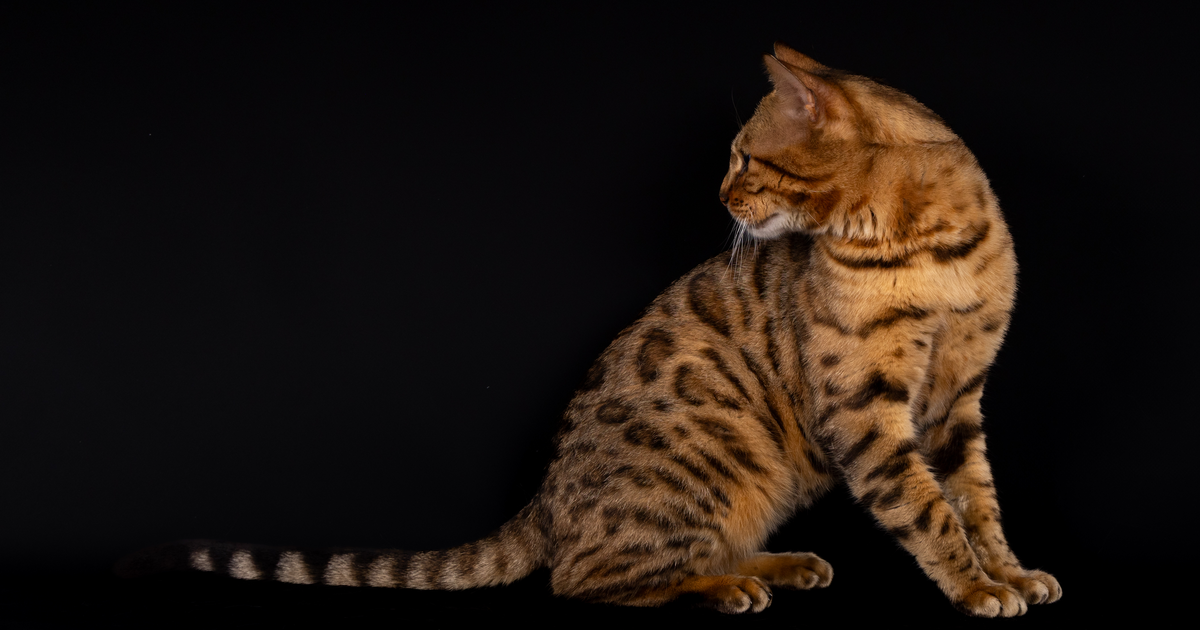
Eyecatch photo: Bengal cat by MaryDune, CC BY-SA 4.0, via Wikimedia Commons.
How to get your pet tested
Some pet DNA tests screen for hereditary-disease carrier status or genetic risk markers, but the results are information, not a diagnosis. If your pet has symptoms or you need a confirmed diagnosis, please consult your veterinarian.
Below is where PK deficiency (PKLR) can be tested, grouped by where you live and marked by whether each service explicitly lists this variant (✅ = listed / ❓ = unverified / ❌ = not offered).
In the United States
In the United Kingdom
In India
We could not verify a service in this region that explicitly lists this variant. Please ask your veterinarian.
Elsewhere
Note: even if the kit can be purchased/shipped internationally, the service itself (sample return, analysis, results) is not guaranteed in your country. Check each service’s stated service area and sample-return method before ordering.
Services offered in other regions (may not be available where you live)
Worried about your pet’s health? — Talk to a veterinarian
A confirmed diagnosis and any treatment plan are decisions for a veterinarian, not a test kit. The links below are professional resources.
AVMA — Find a veterinarian (American Veterinary Medical Association)
This section contains advertising (affiliate links); we may earn a commission if you buy through them. As an Amazon Associate, we earn from qualifying purchases. Genetic tests do not guarantee the prevention, diagnosis, or treatment of any disease — results indicate tendencies and provide information only.
This page is educational information, not veterinary diagnosis or advice. Always consult a veterinarian about your pet’s health.
About the author
Elena Marsh
Editor & writer (not a veterinarian)
A writer with a molecular-biology background and a lifelong dog and cat owner. Not a veterinarian — she translates peer-reviewed genetics research and primary data into plain language, always as information rather than diagnosis.