English

In short: pet DNA tests reveal breed/ancestry, traits, and carrier status or risk markers for some hereditary conditions. Results are information, not a diagnosis, compiled neutrally from peer-reviewed research. Medication and treatment decisions always rest with a veterinarian.

Topics we cover

Primary sources we build on

Frequently asked questions (FAQ)

Q. Can a pet DNA test tell me if my pet is sick?
Most consumer DNA tests report breed/ancestry, traits, and carrier status or risk markers. Results are information, not a confirmed diagnosis. See a veterinarian if your pet has symptoms or needs a diagnosis.

Q. Can I use the results as a diagnosis?
No. Consumer DNA tests are not intended for diagnosis. Health and treatment decisions are made by a veterinarian, who may use the results as one piece of information.

Q. Who writes this site?
A non-veterinarian editorial team that synthesizes peer-reviewed research, veterinary journals, and primary sources.

Editor: Elena Marsh (Editor & writer, not a veterinarian)
English

Dermatosparaxis Ehlers-Danlos Syndrome (ADAMTS2) in the American Pit Bull Terrier: What the Research Shows About This Rare Skin-Fragility Disorder

Conclusion: A frameshift variant in the ADAMTS2 gene (c.2280117delC) causes severe, sometimes fatal skin fragility — der...
English

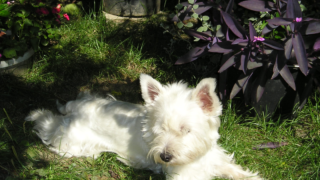
Globoid Cell Leukodystrophy (Krabbe Disease) in the West Highland White Terrier: The GALC Mutation Westies Share With Cairn Terriers

Conclusion: West Highland White Terriers can carry globoid cell leukodystrophy (GCL, also called Krabbe disease), caused...
English

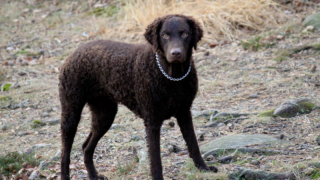
Glycogen Storage Disease IIIa in Curly-Coated Retrievers (AGL): The Second Collapse Gene Your Kennel Club Record Does Not Show

Bottom line: the Curly-Coated Retriever is the one breed in the world in which glycogen storage disease type IIIa (GSD I...
English

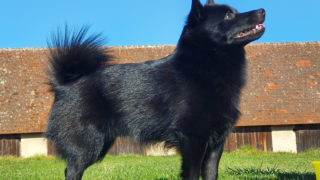
Mucopolysaccharidosis IIIB in Schipperkes (NAGLU): The Variant Nearly One in Four Carried — and the Screening Program That Cut It Back

Bottom line: Schipperkes carry a breed-specific variant in the NAGLU gene that causes Mucopolysaccharidosis IIIB (MPS II...
English

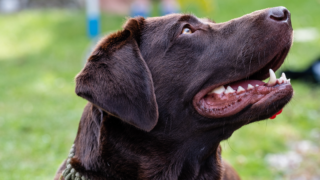
Narcolepsy in Labrador Retrievers (HCRTR2 c.1105+5G>A): The Splice Variant Behind Collapse on Excitement

Bottom line: Labrador Retrievers carry a breed-specific cause of narcolepsy — HCRTR2 c.1105+5G>A, a single base change a...
English

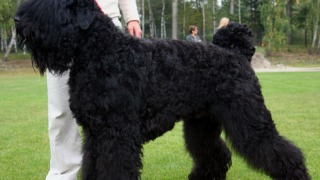
JLPP in the Black Russian Terrier (RAB3GAP1): A Recessive Disease You Can Design Out in One Generation

Bottom line: Juvenile Laryngeal Paralysis and Polyneuropathy (JLPP) is an autosomal recessive disease of the Black Russi...
English

Merle (M Locus / PMEL) in the Catahoula Leopard Dog: 10.3% of Double Merles Were Deaf, Not Two-Thirds — What the BAER Data Actually Says

Bottom line: the Catahoula Leopard Dog is the breed that the modern merle-deafness numbers were built on, and the number...
English

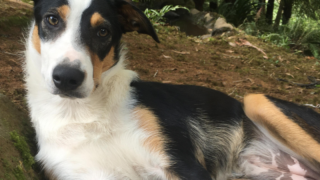
Vitamin B12 Malabsorption (CUBN) in New Zealand Heading Dogs: the Top Finding of Massey’s 249-Dog Genome Survey — and How to Test from the US, UK and NZ

Bottom line: when a Massey University team sequenced the genomes of New Zealand's working dogs and ranked what they foun...
English

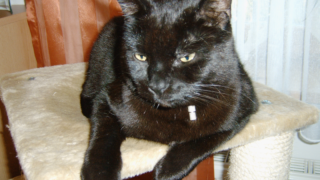
Hypokalaemia in the Bombay Cat (WNK4): 7% Affected — the Highest Rate of Any Burmese-Derived Breed

Bottom line: Of every Burmese-derived breed that has been surveyed, the Bombay carries the heaviest burden of hypokalaem...
English

Color Dilution Alopecia in the Doberman Pinscher: 42 of 57 Dogs — the Study That Put a Number on Blue and Fawn

Bottom line: In the Doberman Pinscher, blue and fawn are not just colors — they are the highest-risk coat colors for a h...