Bottom line: when a Massey University team sequenced the genomes of New Zealand’s working dogs and ranked what they found, vitamin B12 (cobalamin) malabsorption came out at the top of the list. Smith et al. (2025, Animal Genetics) surveyed 249 dogs — 130 Huntaways, 104 Heading Dogs and 15 crossbreds — and found a single-base deletion in the CUBN gene carried by six dogs, every one of them a Heading Dog, giving a minor allele frequency of 2.9%. That is roughly double the 1.5% previously reported in the Border Collie, the Heading Dog’s closest recognised relative. The variant is the same c.8392del frameshift first described by Owczarek-Lipska et al. (2013, PLoS ONE 8(4):e61144), it is autosomal recessive, and it stops the gut absorbing vitamin B12 no matter how well the dog is fed. Here is why this one belongs at the top of a farmer’s list rather than the bottom: it is treatable, cheaply, for life — injected cobalamin reverses the clinical signs — but an affected pup that nobody recognises simply fails to grow, goes off its food and never makes a working dog. Pāmu’s summary of the study puts it plainly: these are recessive traits, so mating two carriers risks 25% affected pups. If you have a pup in front of you right now that is not thriving, ring your vet before you order a DNA kit — a serum cobalamin result comes back long before a genotype does.
- Why the Heading Dog, and why now
- What the gene actually does
- What it looks like in a young dog
- Getting a dog tested from New Zealand
- Ordering the same test in the United States and the United Kingdom
- Where the result gets recorded: ABCA, ISDS and the Kennel Club
- The economics, honestly
- What to do with a carrier
- Frequently asked questions
- References
- How to get your pet tested
Why the Heading Dog, and why now


New Zealand’s Heading Dogs and Huntaways are not registered breeds in the usual sense. They are selected on the job, generation after generation, for eye, cast, huntaway bark and stamina. That selection is what makes them extraordinary at work — and it is also what concentrates recessive variants in a closed working population where nobody has been running health tests.
The “Right Dog for the Job” project, led by Professor Matt Littlejohn of Massey University’s School of Agriculture and Environment and reported in February 2025, set out to fix that blind spot. The project is supported by the Ministry for Primary Industries through the Sustainable Food and Fibre Futures fund, together with Focus Genetics, Pāmu farmers, the New Zealand Sheep Dog Trials Association, Vetlife, Ancestry and The Helical Company.
Whole-genome sequencing of 249 dogs turned up around 19 million DNA variations. The team then screened those against known disease-causing variants in dogs. Five stood out:
- CUBN — vitamin B12 malabsorption: 6 carriers, all Heading Dogs
- CLN8 — neuronal ceroid lipofuscinosis: 21 carriers, mostly Heading Dogs. Seizures, blindness, usually euthanasia
- SOD1 — degenerative myelopathy: 46 carriers, 5 affected
- VWF — von Willebrand disease: 9 carriers, 1 affected
- SGSH — mucopolysaccharidosis IIIA: 5 carriers, linked to Huntaways
Read that list again and notice something. CUBN is the only one on it with a simple, cheap, lifelong fix. CLN8 and SGSH end in euthanasia. DM has no cure. B12 malabsorption is managed with an injection. That is precisely why it is worth knowing about — the gap between a diagnosed dog and an undiagnosed one is enormous, and it costs almost nothing to close.
The carriers were not clustered in one kennel either. The study located them in Southland (four), Waikato (one) and Hawke’s Bay (one) — spread the length of the country, which is what you would expect from a variant that has been travelling in working lines for a long time without anyone noticing.
What the gene actually does
SamCan’t I just feed a B12 supplement and be done with it? Elena MarshNo — the fault is in the gut wall itself. Anything given by mouth stops at the same place the vitamin does.Mammals cannot make vitamin B12. It has to come out of the diet, and it is absorbed at one specific place: the last part of the small intestine, by a receptor called cubam.
Cubam is built from two proteins — cubilin (from CUBN) and amnionless (from AMN). Break either one and the receptor stops working. The dog eats normally, the food contains plenty of B12, and none of it gets in. In humans the same failure is called Imerslund-Gräsbeck syndrome, and the canine disease carries the same name.
The Border Collie variant — the one the Heading Dogs carry — is c.8392del, p.(Q2798Rfs*3): a single deleted base in exon 53 that throws the reading frame out and stops translation early, truncating the protein by 821 codons. Owczarek-Lipska and colleagues mapped it in seven affected dogs and seven controls, then validated it across roughly 200 Border Collies and 357 dogs of other breeds. In that Border Collie sample the carrier frequency was about 6.2%.
Two details from that paper are worth carrying into the paddock. First, the affected dogs were diagnosed at a median of 11.5 months, with a range of 8 to 42 months — in other words, at exactly the age you are deciding whether a young dog is going to make the grade. Second, every one of them recovered fully on injected cobalamin.
What it looks like in a young dog
SamHow would I tell this apart from a pup that’s just a poor doer? Elena MarshYou often can’t, by eye. That’s the point — a blood test settles it, and it’s an inexpensive one.The clinical picture is frustratingly ordinary:
- Failure to thrive — poor body condition, not growing on well
- Inappetence and lethargy, tiring on the hill
- Intermittent diarrhoea — comes and goes, so it gets blamed on the feed
- Megaloblastic anaemia and, in the Border Collie series, glossitis and bradyarrhythmia
- Undetectable serum cobalamin on laboratory testing
A dog like this on a farm gets a label long before it gets a diagnosis. “Poor doer.” “Never come right.” “Not worth the tucker.” It goes down the road, and the variant stays in the line because the parents look perfectly healthy — which they are. Carriers have no signs at all.
The laboratory workup is straightforward and your vet can order all of it:
- Serum cobalamin — very low to undetectable
- Methylmalonic acid (MMA) — the metabolite that piles up when B12 runs out. In the Komondor series affected dogs ran 20,000–37,000 mmol/mol creatinine against a normal of 2 or less. It is a very loud signal
- Haematology — non-regenerative anaemia, neutropenia
- Urinalysis — proteinuria, because cubam also sits in the kidney tubule
One thing worth knowing before you see the results: the proteinuria persists even after treatment fixes everything else. That is a documented feature of the disease, not a sign that the treatment is failing or that the kidneys are going.
Getting a dog tested from New Zealand
SamIs there a lab here that does it, or does the swab go offshore? Elena MarshOffshore, for now. The upside is the same variant is on the Border Collie panel, so it’s a standard catalogue test.Because the Heading Dog carries the Border Collie variant, you do not need a bespoke test. Any laboratory offering the Border Collie IGS test is looking at the same c.8392del deletion. In practice that means an overseas laboratory and a cheek swab in the post:
- LABOGEN / LABOKLIN (Germany) lists Imerslund-Gräsbeck syndrome as test 8475, covering Beagle, Border Collie and Komondor, accepting 0.5 ml EDTA blood, two cheek swabs, or one eNAT swab, with a 7–14 working day turnaround
- UC Davis Veterinary Genetics Laboratory (USA) and other international laboratories offer equivalent tests
- Talk to your own veterinary practice first — several New Zealand practices already handle offshore genetic submissions as a routine service, and Vetlife is one of the study partners
Two practical warnings for anyone posting samples out of New Zealand. Cheek swabs are far easier than blood: whole blood requires preservative tubes and courier packaging that complies with the carrier’s rules on biological substances. And if the result is going to be used for anything official, the sample usually has to be taken by a veterinarian and tied to an identified dog.
That identification point has a genuinely New Zealand twist. Under the Dog Control Act 1996, dogs used solely or principally for herding or driving stock are classified as working dogs — and working dogs are exempt from the microchipping requirement that applies to other dogs, provided they are not also kept as family pets or used for recreational hunting. They still have to be registered with the council every year by 1 July and wear the council disc. So the identifier that a laboratory certificate would normally be pinned to may simply not exist on your dogs. If you are testing breeding stock and want results that will still mean something in five years, talk to your vet about microchipping those particular dogs anyway, exemption or not.
Ordering the same test in the United States and the United Kingdom
SamWe’ve got littermates that went to relatives overseas. Can they test there? Elena MarshYes, and cheaper. It’s a catalogue test on both sides of the Atlantic — the price is published, and so is the turnaround.Heading Dogs and their Border Collie relatives move across borders, and so do the questions. Because the variant is the Border Collie type, owners in the US and UK are ordering an off-the-shelf test rather than anything bespoke.
United States. The Veterinary Genetics Laboratory at UC Davis lists Imerslund-Gräsbeck syndrome at $55 for a single test per animal, with a $5 discount when three or more dogs are submitted and only $25 when added to another health test on the same animal. That last figure is the one to plan around: if you are already running a panel on a breeding dog, adding IGS costs less than a bag of feed. UC Davis also offers a Border Collie health panel that bundles the breed’s known variants.
United Kingdom. LABOKLIN UK lists the same test — number 8475, covering Australian Shepherd, Beagle, Border Collie and Komondor — at £48.00 including VAT, on whole blood in EDTA (0.5–1 ml) or buccal swabs, with a one to two week turnaround. There is also a Border Collie DNA bundle that includes IGS alongside CEA, MDR1 and Raine syndrome. UK breeders should also check The Kennel Club’s DNA testing services page for the Border Collie, because results submitted through an approved route can be recorded against the dog’s registration — which is exactly the paper trail a buyer three years later will want to see.
Put the three markets side by side and the picture is consistent: US $55, UK £48, and a German catalogue price of €62 for owners. This is not an expensive test anywhere. The barrier has never been the money — it is that nobody told working-dog breeders the test existed.
Neither sample has to leave the country. UC Davis’s laboratory sits in Davis, California, so a US swab is a domestic envelope; LABOKLIN UK receives samples by ordinary UK post. Compare that with a New Zealand submission, which is an international courier job with biological-substance packaging rules attached. If you are a US or UK owner reading this because your dog descends from imported working lines, you have the easier end of the deal — use it.
Where the result gets recorded: ABCA, ISDS and the Kennel Club
SamIf I test, does the result go anywhere official, or is it just a PDF in my inbox? Elena MarshThat depends entirely on which registry your dog sits in — and the working registries and the show registries handle it very differently.A genotype that lives only on your hard drive helps you once. A genotype attached to the dog’s registration helps every buyer for the next fifteen years. Working Border Collies in the US and UK sit in registries that are separate from the kennel-club world, and each has its own health machinery.
United States. The American Border Collie Association is the working registry — its stated purpose is to register and verify the pedigrees of working Border Collies and to promote stockdog trials, not conformation. Its Health and Genetics pages urge members to screen prospective parents for the genetic diseases that are “serious and common enough to be of concern.” For the Register on Merit programme, the ABCA requires documented evidence that both sire and dam have an OFA hip rating of “good” or “excellent” (or a Cornell University Veterinary Radiology report that the hips are not dysplastic), plus a report from a DACVO-certified veterinary ophthalmologist within 24 months. In other words, the ROM route already assumes you are collecting health paperwork — a $25 add-on genotype fits into a process you are running anyway. Dogs registered with the AKC instead can have results recorded through OFA.
United Kingdom. The International Sheep Dog Society registers over 6,000 Border Collie pups a year on behalf of its members, with pedigrees that for most dogs trace back over a century. Its DNA Testing pages set out why breeding stock should be tested before mating, and the Registration on Merit route requires a clear ophthalmic certificate for CEA and CPRA, or a CEA DNA result of Normal or Carrier. There is one caveat every UK buyer should know: publishing genetic test results is not mandatory within the ISDS, and the society’s own 2023 review notes that breeders and stud dog owners remain reluctant to publish unfavourable results. Published carrier percentages are therefore optimistic by construction. Ask the breeder directly for the certificates rather than relying on what appears in a public database. For KC-registered dogs, The Kennel Club’s DNA testing services for the Border Collie is the route that gets a result onto the registration record.
Geographically, this matters most where the dogs actually work: the sheep country of Wales, the Scottish Borders, Northumberland and Cumbria in the UK, and the range sheep operations of the American West alongside smaller Midwest and Appalachian flocks. These are the populations where a single popular stud can seed a recessive across a region within a few generations — which is precisely the mechanism the New Zealand study caught in the act.
The economics, honestly
Working dogs are not pets on a balance sheet, and it is worth doing the arithmetic in those terms.
A trained Heading Dog represents years of feed, training time and opportunity cost. A pup that fails to thrive from eight months old consumes most of that investment and returns none of it. Against that, the cost of a genotype on your breeding bitch and the dog you use over her is a rounding error — and it is a one-off cost for life, because a genotype never changes.
Insurance behaves very differently depending on which country you are in, and this is one of the few places where US and UK owners are better served than almost anyone else. Several major American insurers cover hereditary and congenital conditions as standard: Trupanion states that it covers hereditary and congenital conditions as part of its standard policy once the waiting periods have passed (5 days for injuries, 30 days for illnesses); Healthy Paws places no coverage restriction on hereditary or congenital conditions provided signs first appear after enrolment and any waiting period, with hip dysplasia carrying its own 12-month wait; and Embrace includes hereditary, genetic and breed-specific conditions at no extra cost. That is the opposite of the position in Japan, China and Germany, where hereditary disease is routinely an outright exclusion.
The catch is the same everywhere, though: the cover has to be in place before the signs are recorded. A lifetime of cobalamin injections is exactly the kind of ongoing claim these policies are built for — but once a vet has written “failure to thrive, low B12” in the notes, it is a pre-existing condition and the door closes. If you are buying a working-bred pup in the US or UK, enrol first, test second, and read the waiting periods. In New Zealand the calculation is different again: insurers vary widely, some will not treat a hereditary condition as pre-existing if no signs showed before cover began, and most farm dogs are not insured at all.
Treatment itself is cheap. Parenteral cyanocobalamin, at intervals that stretch out to every two to four weeks once the dog is stable. In the Komondor series that regime kept affected dogs clinically normal indefinitely. It is a technique most farmers can be taught to do themselves, under veterinary direction.
What to do with a carrier
The rule is short: clear × carrier is safe — no affected pups. Carrier × carrier is the only mating to avoid.
Do not cull carriers from your breeding programme. The Heading Dog gene pool is not large, and a working population that throws away every carrier of every variant will lose the traits it was bred for far faster than it loses the disease. Test, record, and choose the other side of the mating. That is the entire practical message of the Massey work.
If you breed Heading Dogs seriously, there is one more thing worth doing. The study’s database is still being expanded, and the more working dogs that go into it, the sharper the allele frequency estimates get for everyone. The Massey University project page is the place to start if you want to put your dogs in.
Frequently asked questions
Q. Will a carrier ever get sick?
No. The condition is autosomal recessive, so only dogs carrying two copies are affected. Carriers are clinically normal but pass the variant to half their pups on average.
Q. Can I prevent it with a B12 supplement in the feed?
No. The defect is in the receptor that absorbs B12 from the gut, so oral supplementation stops at the same barrier. Treatment is by injection.
Q. My pup isn’t thriving. Should I order a DNA test?
Ring your vet first. Serum cobalamin and methylmalonic acid come back far faster than a genotype and will tell you whether B12 is the problem at all. Use the DNA test to confirm, or for breeding decisions.
Q. Is the Heading Dog test the same as the Border Collie test?
Yes. The variant found in Heading Dogs is the Border Collie c.8392del deletion, so a Border Collie IGS test genotypes it directly. Beagle and Komondor tests look at different variants and will not answer the question.
Q. The proteinuria hasn’t cleared after treatment. Is something wrong?
Persistent mild to moderate proteinuria after successful cobalamin treatment is a documented feature of this disease, because cubam also functions in the kidney tubule. Discuss the findings with your vet rather than assuming treatment failure.
Q. Do I need to test every dog on the place?
No. Testing has most value in the dogs you breed from. Working dogs that will never be bred gain little from a genotype, though a diagnosis is still worth chasing in any young dog that is failing to thrive.
References
- Smith TJ, et al. (2025) Survey of Mendelian-effect functional variants in New Zealand Huntaway and Heading dog breeds. Animal Genetics.
- Owczarek-Lipska M, Jagannathan V, Drögemüller C, et al. (2013) A Frameshift Mutation in the Cubilin Gene (CUBN) in Border Collies with Imerslund-Gräsbeck Syndrome (Selective Cobalamin Malabsorption). PLoS ONE 8(4):e61144.
- Fyfe JC, Hemker SL, Frampton A, et al. (2018) Inherited selective cobalamin malabsorption in Komondor dogs associated with a CUBN splice site variant. BMC Veterinary Research 14:418.
- Drögemüller M, Leeb T, Kook PH, et al. (2014) A frameshift mutation in the cubilin gene (CUBN) in Beagles with Imerslund-Gräsbeck syndrome. Animal Genetics 45(1):148-150.
- Kather S, Grützner N, Kook PH, et al. (2020) Review of cobalamin status and disorders of cobalamin metabolism in dogs. Journal of Veterinary Internal Medicine 34(1):13-28.
- Massey University (17 February 2025) Genetic research aims to improve health and performance of New Zealand working dogs.
- Pāmu (26 May 2025) New Zealand farm dog genetic study shows top five health risks.
- OMIA 001786-9615 — Intestinal cobalamin (vitamin B12) malabsorption, CUBN-related in Canis lupus familiaris.
- LABOGEN / LABOKLIN — Imerslund-Gräsbeck Syndrome (IGS), test 8475.
- Dog Control Act 1996 (New Zealand Legislation) — definition of working dog, registration and microchipping requirements.
- AA Insurance New Zealand — pet insurance and pre-existing conditions.
- American Border Collie Association — Health and Genetics.
- American Border Collie Association — Register on Merit programme requirements.
- International Sheep Dog Society — DNA Testing (Health Hub).
- International Sheep Dog Society — DNA Testing in ISDS Border Collies, 2023 Update.
- UC Davis Veterinary Genetics Laboratory — Imerslund-Gräsbeck Syndrome (IGS) test and pricing.
- LABOKLIN UK — Cobalamin Malabsorption (IGS), test 8475.
- Trupanion — Are hereditary and congenital conditions covered?
- Healthy Paws — Hereditary and congenital conditions.
- Embrace Pet Insurance — Genetic and breed-specific condition coverage.
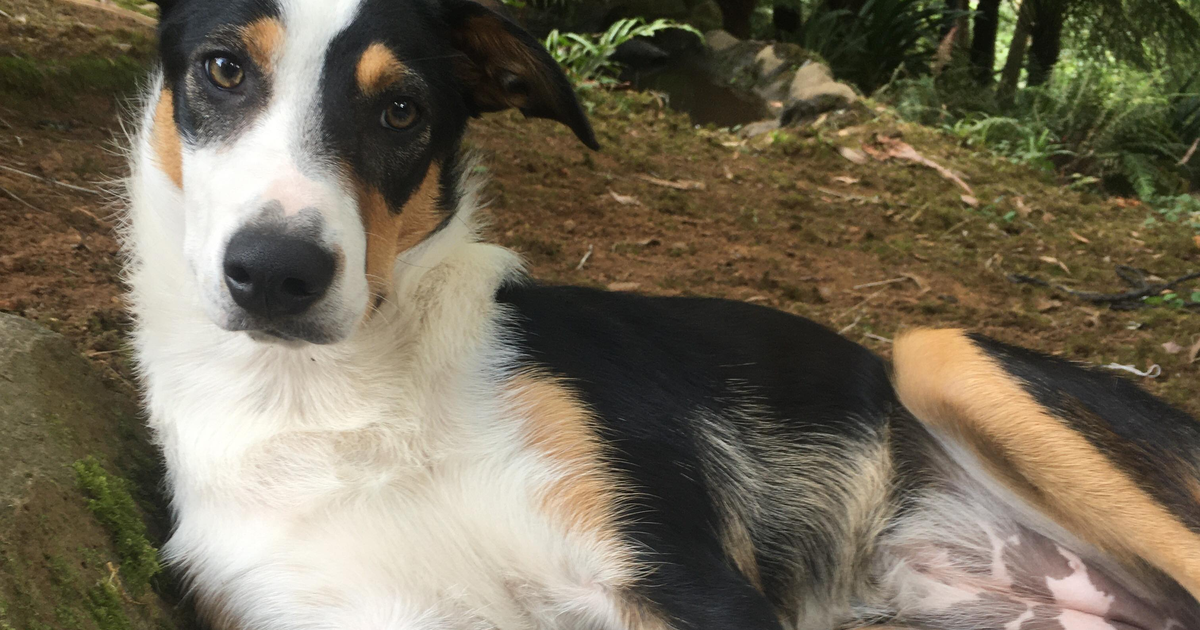
Image: “Young New Zealand Heading dog” by GrimGee, CC BY-SA 4.0 (scaled proportionally and centre-cropped to 1200×630)
How to get your pet tested
Some pet DNA tests screen for hereditary-disease carrier status or genetic risk markers, but the results are information, not a diagnosis. If your pet has symptoms or you need a confirmed diagnosis, please consult your veterinarian.
Below is where Cobalamin (vitamin B12) malabsorption (CUBN) can be tested, grouped by where you live and marked by whether each service explicitly lists this variant (✅ = listed / ❓ = unverified / ❌ = not offered).
In the United States
In the United Kingdom
In India
Elsewhere
Note: even if the kit can be purchased/shipped internationally, the service itself (sample return, analysis, results) is not guaranteed in your country. Check each service’s stated service area and sample-return method before ordering.
Services offered in other regions (may not be available where you live)
Worried about your pet’s health? — Talk to a veterinarian
A confirmed diagnosis and any treatment plan are decisions for a veterinarian, not a test kit. The links below are professional resources.
AVMA — Find a veterinarian (American Veterinary Medical Association)
This section contains advertising (affiliate links); we may earn a commission if you buy through them. As an Amazon Associate, we earn from qualifying purchases. Genetic tests do not guarantee the prevention, diagnosis, or treatment of any disease — results indicate tendencies and provide information only.
This page is educational information, not veterinary diagnosis or advice. Always consult a veterinarian about your pet’s health.
About the author
Elena Marsh
Editor & writer (not a veterinarian)
A writer with a molecular-biology background and a lifelong dog and cat owner. Not a veterinarian — she translates peer-reviewed genetics research and primary data into plain language, always as information rather than diagnosis.