The short answer: The Rat Terrier is an all-American ratter breed that can carry the ADAMTS17 splice mutation (c.1473+1G>A) behind an inherited eye condition called Primary Lens Luxation (PLL). It is autosomal recessive: dogs with two copies are at highest risk, and carriers with one copy are usually normal but hold a small, documented risk. Acute forward (anterior) luxation is a true ophthalmic emergency. A DNA test gives genetic risk and breeding information plus a reason for early eye checks — it is not a clinical diagnosis and does not replace an ophthalmologist.
- What PLL and ADAMTS17 actually are
- How common is it in Rat Terriers — and why the numbers aren’t the whole story
- Symptoms, progression, and why it becomes an emergency
- Clear, carrier, affected — and the breeding math
- What the test can — and cannot — tell you
- FAQ — Frequently Asked Questions
- References
- How to get your pet tested
What PLL and ADAMTS17 actually are


Your lens sits behind the pupil, held in place by a ring of tiny fibres called zonules — think of them as microscopic guy-wires suspending the lens. The gene ADAMTS17 codes for an enzyme that helps build and maintain the fibrillin microfibrils that make up those zonules. The splice-site mutation c.1473+1G>A disrupts the enzyme, so over time the zonules degenerate and snap. When enough of them fail, the lens luxates — it dislocates. This variant is catalogued as OMIA:000588-9615, and it was later found across many breeds, not just one (Gould et al. 2011, Vet Ophthalmol, PMID 22050825).
How common is it in Rat Terriers — and why the numbers aren’t the whole story
SamIs this actually common in the breed, or a rare thing I don’t need to worry about? Elena MarshIt’s not rare. In a Paw Print Genetics screened cohort of 1,044 Rat Terriers, 35.5% were carriers and 2.8% carried two copies — 38.3% at some genetic risk.Those figures come from a Paw Print Genetics screened cohort (n=1,044). Important caveat: this is a tested population, not a random sample of every Rat Terrier, so it reflects dogs whose owners chose to screen. There is also genetic heterogeneity — PLL has been reported in Rat Terriers without this mutation, meaning other genes or factors can contribute. So a “clear” DNA result is reassuring, but it is not an absolute guarantee against all forms of PLL.
Symptoms, progression, and why it becomes an emergency
SamIf it develops slowly, is there really a rush to catch it? Elena MarshYes — the Cornell Riney Canine Health Center notes onset typically at 3–8 years, and anterior luxation is a genuine emergency that can destroy vision within hours to days.Zonule breakdown is gradual, usually surfacing around 3 to 8 years of age. When the lens finally luxates it goes one of two ways. A posterior (backward) luxation may be quieter. An anterior luxation — the lens dropping forward into the front chamber — blocks the eye’s fluid drainage, spikes intra-ocular pressure, and triggers secondary glaucoma. That is acutely painful and, left untreated, can permanently destroy vision. Signs include a red, cloudy, or painful eye, squinting, or a sudden change in the eye’s appearance. Per the Cornell Riney Canine Health Center, treat an acutely painful eye as an emergency and get to a vet immediately.
Clear, carrier, affected — and the breeding math
SamSo a carrier dog is basically safe, right? Elena MarshMostly, but not entirely — Gould et al. (2011) and Cornell both note a low, documented risk of PLL even in single-copy carriers, so it’s recessive with incomplete penetrance.The mutation is inherited in an autosomal recessive pattern, but with a wrinkle: the risk in carriers is not zero. Dogs with two copies (affected / at-risk) sit at the highest risk; carriers with one copy are usually clinically normal but carry a small, documented risk — so it is best described as recessive with incomplete penetrance. For breeding, the classic recessive math still holds as a guide: two carriers bred together are expected to produce, on average, 25% clear, 50% carrier, and 25% affected/at-risk puppies. Responsible breeders use genotype to avoid ever pairing two dogs that could produce an affected litter.
| Genotype (result) | What it means | Risk of PLL |
|---|---|---|
| Clear (N/N) | No copies of the ADAMTS17 mutation | Lowest; but not an absolute guarantee (other factors reported) |
| Carrier (N/PLL) | One copy; can pass it to offspring | Usually clinically normal — but a small, documented risk exists |
| Affected / at-risk (PLL/PLL) | Two copies | Highest; lifelong ophthalmic monitoring advised |
What the test can — and cannot — tell you
SamIf the test comes back “affected,” does that mean my neighbor’s dog has PLL right now? Elena MarshNo — it’s a genotype, not a diagnosis; the OMIA record (OMIA:000588-9615) describes the mutation’s risk, while an ophthalmologist confirms what’s happening in the actual eye.A DNA result tells you which of the three genotypes a dog carries. What it cannot do is diagnose an eye. An “affected/at-risk” result does not mean the lens has luxated today — it means this dog is at the highest genetic risk and needs lifelong ophthalmic monitoring, because catching trouble early improves outcomes when acute luxation strikes. Diagnosis and management belong to a veterinary ophthalmologist using a slit-lamp exam, ideally within an ECVO or OFA-Eye screening framework. Even carriers benefit from routine eye checks. The genetic test complements, and never replaces, regular eye examinations.
FAQ — Frequently Asked Questions
Q. My Rat Terrier tested “carrier.” Is he going to go blind?
Very likely not from being a single-copy carrier alone — carriers are usually clinically normal. However, the literature (Gould 2011; Cornell) reports a small, documented risk even in carriers, so routine eye checks remain worthwhile. This is not veterinary advice; discuss your dog with a vet.
Q. What should I do in an emergency?
A sudden red, cloudy, or painful eye — especially with squinting or an obvious change in appearance — should be treated as an ophthalmic emergency. Acute anterior lens luxation can cause secondary glaucoma and permanent vision loss within hours to days. Seek veterinary care immediately.
Q. If my dog tests “clear,” is PLL impossible?
No. Clear (N/N) means this specific ADAMTS17 mutation was not found, which is the lowest-risk result. But PLL has been reported in Rat Terriers without this mutation, so other genes or factors can contribute. A clear result is reassuring, not an absolute guarantee.
Q. Does the DNA test replace eye exams?
No. The test reports a genotype and informs breeding and monitoring decisions — it does not examine the eye. Diagnosis and management require a veterinary ophthalmologist. Use the test alongside regular eye examinations, never instead of them.
References
- American Kennel Club — Rat Terrier: https://www.akc.org/dog-breeds/rat-terrier/
- Rat Terrier (breed overview): https://en.wikipedia.org/wiki/Rat_Terrier
- OMIA:000588-9615 — Lens luxation, ADAMTS17 (dog): https://omia.org/OMIA000588/9615/
- Farias FHG et al. 2010, Invest Ophthalmol Vis Sci 51(9):4716 (PMID 20375329): https://pubmed.ncbi.nlm.nih.gov/20375329/
- Gould D et al. 2011, Vet Ophthalmol 14(6):378 (PMID 22050825): https://pubmed.ncbi.nlm.nih.gov/22050825/
- Paw Print Genetics — Primary Lens Luxation (Rat Terrier cohort, n=1,044): https://www.pawprintgenetics.com/products/tests/details/71/?breed=7
- Cornell Riney Canine Health Center — Primary Lens Luxation: https://www.vet.cornell.edu/departments-centers-and-institutes/riney-canine-health-center/canine-health-topics/primary-lens-luxation
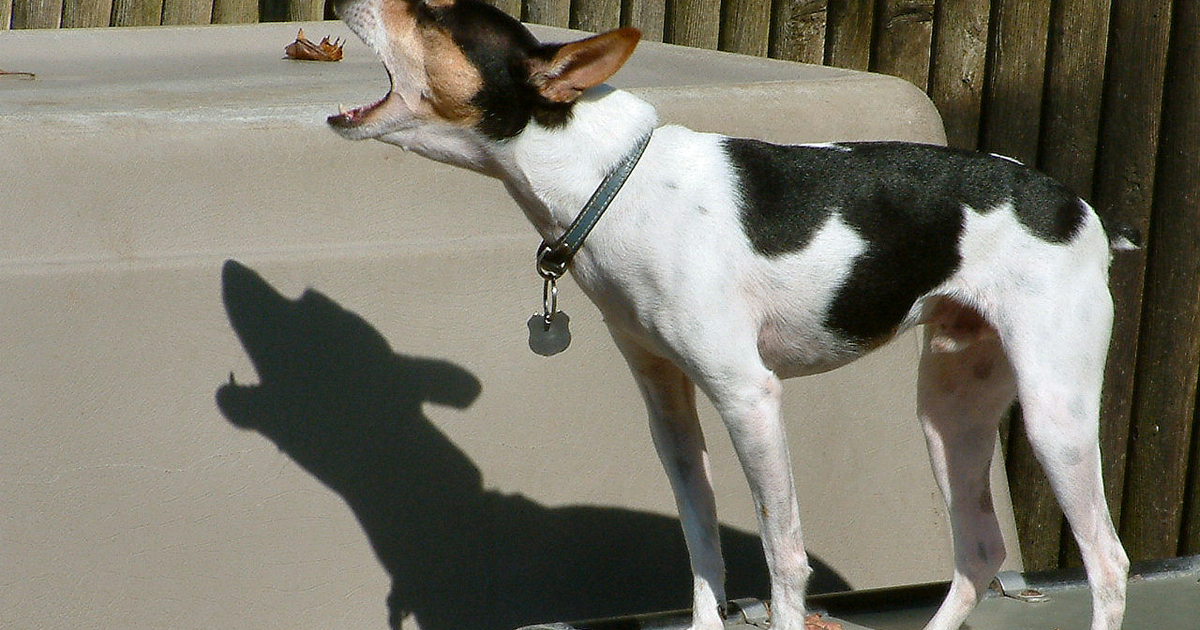
Eyecatch photo: Rat Terrier by Flickr user Bree Bailey, CC BY-SA 2.0, via Wikimedia Commons.
How to get your pet tested
Some pet DNA tests screen for hereditary-disease carrier status or genetic risk markers, but the results are information, not a diagnosis. If your pet has symptoms or you need a confirmed diagnosis, please consult your veterinarian.
Below is where Primary lens luxation (ADAMTS17) can be tested, grouped by where you live and marked by whether each service explicitly lists this variant (✅ = listed / ❓ = unverified / ❌ = not offered).
In the United States
In the United Kingdom
In India
Elsewhere
Note: even if the kit can be purchased/shipped internationally, the service itself (sample return, analysis, results) is not guaranteed in your country. Check each service’s stated service area and sample-return method before ordering.
Services offered in other regions (may not be available where you live)
Worried about your pet’s health? — Talk to a veterinarian
A confirmed diagnosis and any treatment plan are decisions for a veterinarian, not a test kit. The links below are professional resources.
AVMA — Find a veterinarian (American Veterinary Medical Association)
This section contains advertising (affiliate links); we may earn a commission if you buy through them. As an Amazon Associate, we earn from qualifying purchases. Genetic tests do not guarantee the prevention, diagnosis, or treatment of any disease — results indicate tendencies and provide information only.
This page is educational information, not veterinary diagnosis or advice. Always consult a veterinarian about your pet’s health.
About the author
Elena Marsh
Editor & writer (not a veterinarian)
A writer with a molecular-biology background and a lifelong dog and cat owner. Not a veterinarian — she translates peer-reviewed genetics research and primary data into plain language, always as information rather than diagnosis.