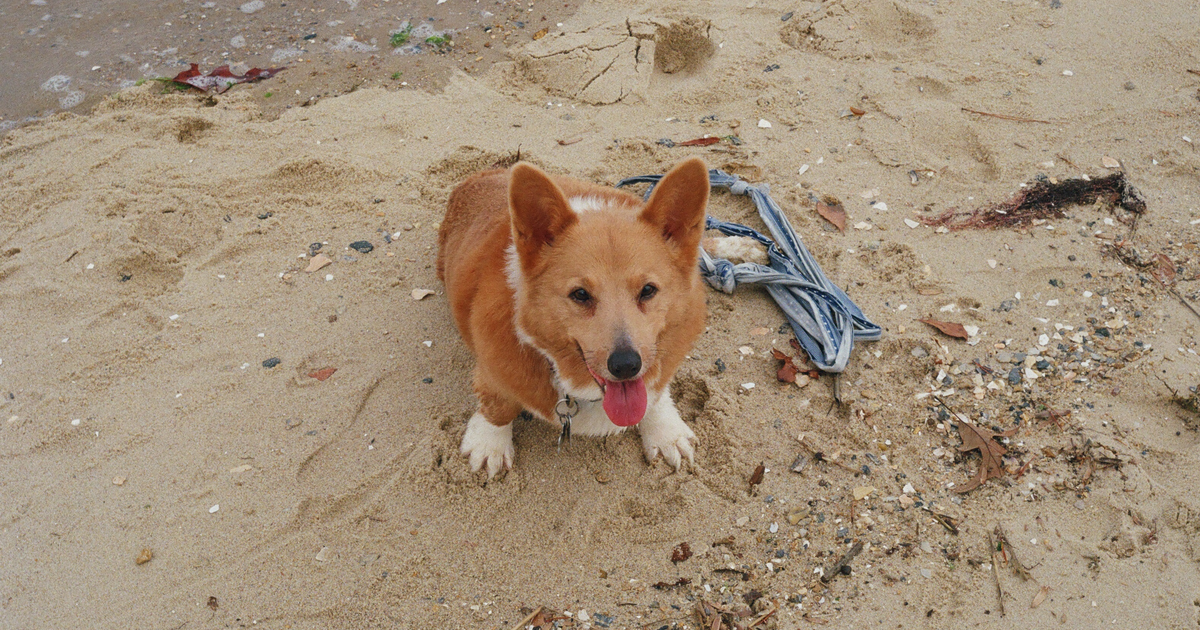
Bottom line: Lafora disease is caused by a dodecamer (12-base) repeat expansion in NHLRC1, and it has been confirmed in the Pembroke Welsh Corgi — but on the strength of a single published case (Kehl et al., 2019). That matters more than it sounds. In Beagles and Miniature Wirehaired Dachshunds there are cohort studies and even a national carrier survey; in Pembrokes there is no published frequency at all. So the honest answer to “how common is it in my Corgi?” is nobody has measured it. What we do know transfers across breeds: the mutation is autosomal recessive (normal dogs carry 2–3 copies of the repeat, affected dogs 19–26), onset is middle-aged to senior, and the first sign is almost always myoclonus — brief, conscious body jerks — not a collapse-and-convulse seizure. One more thing US and UK owners specifically need to know: the at-home panel we could verify as publishing a Lafora result, Wisdom Panel, uses a linkage test — it predicts from nearby markers rather than reading the NHLRC1 repeat itself, and the company itself advises confirming with a direct test before making breeding decisions. If your Corgi is jerking its head, panicking at flickering light, or forgetting house-training, see your veterinarian — ideally one with a neurology service. This article is information, not a diagnosis.
- What Lafora disease actually is — a storage disease wearing a seizure costume
- The Pembroke evidence — one case, and why that is the whole story
- What the disease looks like — the sign that comes first
- Myoclonus versus seizure: how to tell your vet what you saw
- Testing in the US and UK: the linkage-test trap
- Reading the result: carriers do not get sick
- Management: what held up, and what did not
- If you breed Pembrokes: the Dachshund precedent
- Frequently asked questions
- References
- How to get your pet tested
What Lafora disease actually is — a storage disease wearing a seizure costume


Lafora disease is not primarily an epilepsy. It is a glycogen storage disorder that produces seizures as a consequence. Normally, glycogen is stored in a soluble, well-branched form that cells can mobilise on demand. When NHLRC1 (also called EPM2B) stops working, cells build a malformed, insoluble polyglucosan instead. It accumulates into deposits called Lafora bodies in neurons, muscle and liver, and it progressively poisons the cells that hold it.
The genetic mechanism is unusual and worth understanding, because it explains why this disease keeps turning up in unrelated breeds. Lohi et al. (2005, Science) found that the canine NHLRC1 gene contains a 12-nucleotide tandem repeat that does not exist in the human gene. Dogs normally carry two or three copies. In affected dogs it has expanded to 19–26 copies, which knocks out the gene. Repeat sequences like this are inherently unstable — they can lengthen when they are copied — so the mutation does not need to be inherited from a single ancient founder to appear in a new breed. It can arise again.
That is exactly what the literature shows. von Klopmann et al. (2021, Life), after adding French Bulldogs, a Griffon Bruxellois and a mixed-breed dog to the list, concluded that “the tendency for Lafora disease is a species-wide problem that will likely appear spontaneously in many breeds and even crossbreeds.” The current roster in OMIA includes Basset Hound, Beagle, Chihuahua, Miniature Wirehaired Dachshund, French Bulldog, Newfoundland, Pembroke Welsh Corgi, Pointer and Poodle.
The Pembroke evidence — one case, and why that is the whole story
Kehl, Cizinauskas, Langbein-Detsch and Mueller (2019, Animal Genetics 50:413–414) reported an affected Welsh Corgi (Pembroke) that was homozygous for the 12-bp expansion. That is a solid, laboratory-confirmed finding: the same variant, in this breed, causing this disease.
It is also, as of now, essentially the entire Pembroke-specific evidence base. Compare what exists for other breeds:
- Miniature Wirehaired Dachshund: a 733-dog national testing programme with published carrier rates (Ahonen et al., 2018) and a 27-dog clinical series (Swain et al., 2017).
- Beagle: a 28-dog multicentre case series (Flegel et al., 2021) and a 166-dog genotype-versus-signs study (Flegel et al., 2024).
- Pembroke Welsh Corgi: one two-page case report.
This asymmetry has a practical consequence that Corgi owners should sit with. An absent number is not a zero. Nobody has screened a Pembroke population, so “we don’t know the carrier rate” is the accurate statement — not “it’s rare.” Equally, one case report is not evidence of a widespread problem. The reasonable posture is neither alarm nor dismissal: know the signs, and if you breed, test.
What the disease looks like — the sign that comes first
SamSo what should I actually be watching for? Elena MarshMyoclonus first. In Flegel’s 28 Beagles, 100% started with jerks; only 82% ever developed full seizures.Because the Pembroke literature is a single case, the clinical picture below comes from the breeds that have been studied in depth. The variant is identical, which is the reason it is reasonable to generalise the presentation — while remembering that severity and timing vary between individuals.
From Flegel et al. (2021), 28 Beagles at nine referral hospitals in Germany, Austria and Switzerland:
- Median age at onset 8.3 years (range 6.3–13.3). Female-to-male ratio 1.8:1.
- All 28 dogs (100%) presented with myoclonus first.
- 82% went on to generalised tonic–clonic seizures — 39% from onset, 43% only later, after a mean delay of 14.2 months.
- Incoordination 84%, impaired vision 58%, hearing loss 50%, photosensitivity 77%.
- Cognitive decline: loss of house-training 32%, difficulty learning new tasks 30%.
- Dogs still alive at the end of the study averaged 11.9 years — this disease damages quality of life far more than it shortens it.
From Swain et al. (2017), 27 Miniature Wirehaired Dachshunds, mean onset 6.94 years (3.5–12): reflex and spontaneous myoclonus 77.8%, hypnic myoclonus — jerking while falling asleep — 51.9%, generalised seizures 40.7%, jaw smacking 33.3%, fly-catching 22.2%, panic-like episodes 25.9%. Later: dementia 51.9%, blindness 48.1%, deafness 29.6%, incontinence 29.6–37%. Owners in that study described the presumed panic attacks as the most distressing feature, and reported that affected dogs could not safely be walked off-leash because of escape responses.
The ordering is the single most useful thing on this page. The jerks come first and can precede any recognisable “seizure” by more than a year. Most owners call the vet when the dog finally collapses and convulses — by which point the disease has been running for a long time.
Myoclonus versus seizure: how to tell your vet what you saw
You are not being asked to diagnose. You are being asked to describe accurately, because the event will not happen in the exam room.
- Myoclonus: a fraction of a second. Head, neck or trunk snaps. The dog stays conscious and returns to normal instantly. Often triggered by light, sound or movement (reflex myoclonus), or occurs as the dog drifts off (hypnic myoclonus).
- Generalised tonic–clonic seizure: tens of seconds to minutes. The dog falls, stiffens, then paddles rhythmically. Consciousness is lost. Drooling and incontinence are common, and there is usually a disoriented recovery period afterwards.
Film it. Ten to twenty seconds, whole dog in frame, sound on, and do not change the room lighting to get a better picture — the lighting may be the trigger, and the vet needs to see it as it happened. Note the time of day, whether the dog was falling asleep, and what preceded it (TV, doorbell, sunlight through blinds).
Seek emergency care the same day if: a seizure lasts more than five minutes; seizures repeat without the dog regaining consciousness in between; there are multiple seizures in one day; or it is the first seizure your dog has ever had. In the US, that means your regular practice during hours and a 24-hour emergency or specialty hospital otherwise; in the UK, your registered practice is obliged to direct you to out-of-hours provision. Look up your nearest emergency hospital now, not during the event.
Testing in the US and UK: the linkage-test trap
SamMy at-home DNA kit already reported Lafora. Isn’t that settled? Elena MarshNot for breeding. That result is a linkage prediction — Wisdom Panel itself tells you to confirm with a direct test.This is the part that is genuinely specific to the English-speaking consumer market, where mass-market at-home panels dominate in a way they do not elsewhere.
Wisdom Panel’s own Lafora page states that its test “does not directly test for the known Lafora Disease variant, but provides a prediction based on nearby proprietary marker(s) in the DNA.” It lists Basset Hounds, Beagles and Dachshunds as the susceptible breeds, and it advises owners to confirm genetic status with a direct test through a provider such as Laboklin before making breeding decisions.
Why this matters, in plain terms: a linkage test infers your dog’s genotype from markers that sit near the mutation on the chromosome and are usually inherited alongside it. That inference is only as good as the association between marker and mutation in your dog’s particular lineage. Recombination can separate them. And crucially, a marker panel developed on Dachshund and Beagle pedigrees carries no guarantee of holding up in a Pembroke Welsh Corgi, a breed that is not even on the vendor’s own susceptible list. For a pet-owner’s curiosity, that is fine. For a breeding decision, it is not sufficient — and the vendor says so.
A direct test reads the repeat expansion itself. Options that publish a Lafora test:
- Laboklin — direct NHLRC1 test with a published breed list that explicitly includes Pembroke Welsh Corgi and Cardigan Welsh Corgi. Note the sample requirement: EDTA blood, 0.5–1 ml — the page says “no cheek swabs!” Laboklin has a UK arm, which is the practical route for British owners; submission runs through a veterinary practice.
- LabGenVet (Canada) — lists a direct Lafora test for Beagle, Chihuahua, Miniature Wirehaired Dachshund, Newfoundland and Pembroke Welsh Corgi. Confirm sample type and cross-border shipping with the lab before sending anything.
- Genomia (Czech Republic, EU) — owner-orderable, twelve breeds listed, swab kits offered, price and turnaround published on the test page.
Practical sequence for a US or UK owner: decide why you are testing first. If it is pet curiosity or early awareness, a panel result plus attention to the clinical signs is reasonable. If a mating depends on the answer, go straight to a direct test, and expect a blood draw at your veterinary practice rather than a kitchen-table swab.
Reading the result: carriers do not get sick
Lafora disease is autosomal recessive. Only dogs carrying two copies of the expanded repeat develop the disease.
- Homozygous / affected (2 copies) — expected to develop clinical signs at some point.
- Heterozygous / carrier (1 copy) — will not develop Lafora disease from this gene. A carrier is a normal pet with a breeding consideration attached.
- Clear (0 copies).
Carrier × carrier gives roughly 25% affected puppies. Carrier × clear gives none. That is why culling carriers from a numerically small breeding population is usually the wrong move — you lose genetic diversity to solve a problem that choosing the right mate already solves.
And the standing caveat: a genotype is not a diagnosis. An “affected” result does not tell you when signs will start or how severe they will be, and a dog showing myoclonus needs a veterinary work-up regardless of what a DNA report says. Conversely, a negative direct test rules out this variant, not every cause of jerking and seizures.
Management: what held up, and what did not
There is no cure. The goal is symptom control and quality of life. Everything below is a summary of published reports; drug decisions belong to your veterinarian, and over-the-counter supplements should not be started on your own initiative.
Reported as helpful:
- Levetiracetam. Swain et al. (2017) found it “particularly effective in reducing myoclonus in early disease.” Flegel et al. (2021) saw subjective improvement with levetiracetam and piracetam in some dogs — while stating plainly that no definitive evidence emerged for reliably reducing myoclonic frequency.
- Light management. For photosensitive myoclonus, Swain et al. specifically mention canine sunglasses. The everyday equivalent is controlling flicker and sharp light-dark transitions — blinds, avoiding strobing screen content, managing dappled sunlight on walks.
- Anxiolytics such as alprazolam were used for the presumed panic episodes.
- Environmental adaptation as vision and hearing decline: keep furniture where it is, manage stairs, and re-think off-leash freedom — owners in Swain et al. reported that affected dogs could not be walked off-leash safely.
Reported as not helpful:
- Diet. Low-carbohydrate and high-antioxidant diets are mechanistically appealing, and they are widely recommended online. Swain et al. (2017) put it bluntly: longer-term observation suggests such diets do not delay onset. If someone sells you a diet as prevention for Lafora disease, that claim is not supported by the published follow-up.
If you breed Pembrokes: the Dachshund precedent
Pembroke Welsh Corgi breeders already have a genetic-testing culture, largely built around degenerative myelopathy — the OFA / University of Missouri SOD1 test is routine in the breed. Lafora slots into that same workflow, and the Dachshund precedent shows what the workflow is worth.
Ahonen et al. (2018) tested 733 Miniature Wirehaired Dachshunds and found 31.9% carriers and 7.0% affected overall (UK subset: 35.2% carriers, 7.1% affected). The UK Kennel Club then made testing mandatory for Assured Breeders in 2014. Between 2012 and 2017:
- litters bred safely (i.e. incapable of producing affected puppies) rose from 45% to 92.1%;
- carrier frequency among tested dogs fell from 41.5% to 25.7%.
The authors concluded that “the DNA test is a useful tool for the breeders to prevent occurrence of Lafora disease.” Note what did the work: not carrier elimination, but informed mate selection at scale. A recessive disease is one of the few problems in dog breeding that a single cheap test genuinely solves.
For Pembrokes specifically, the honest recommendation is narrower than a mandate: if a Lafora-consistent case appears in your line, or if you are importing or outcrossing into unfamiliar pedigrees, run a direct test. Because there is no published Pembroke frequency, every additional tested dog is genuinely new information for the breed.
Frequently asked questions
Q. How common is Lafora disease in Pembroke Welsh Corgis?
Nobody knows — no frequency has been published for this breed. The variant is confirmed in a Pembroke by Kehl et al. (2019), which establishes that it occurs, but no population screening has been done. Contrast that with Miniature Wirehaired Dachshunds, where a 733-dog survey found 31.9% carriers. Treat the absence of a Pembroke number as missing data rather than as reassurance, and do not extrapolate the Dachshund figure onto Corgis — it was measured in a different breed with a very different history.
Q. My at-home DNA panel says my Corgi is clear for Lafora. Can I breed on that?
Not safely. The at-home panel we could verify as publishing a Lafora result, Wisdom Panel, states on its own page that it is a linkage test that predicts from nearby markers rather than reading the NHLRC1 repeat, and it recommends confirming with a direct test through a provider such as Laboklin before breeding decisions. That advice is doubly relevant for Pembrokes, since the vendor’s own susceptible-breed list is Basset Hound, Beagle and Dachshund. For a mating decision, get a direct test.
Q. What is the difference between myoclonus and a seizure, and does it change what I should do?
Myoclonus is a sub-second jerk with consciousness preserved; a generalised tonic–clonic seizure lasts tens of seconds to minutes with consciousness lost. It changes urgency, not whether you act. Repeated myoclonus warrants a scheduled veterinary appointment with video evidence. A seizure lasting over five minutes, back-to-back seizures without recovery, several seizures in one day, or a first-ever seizure all warrant same-day emergency care.
Q. My Corgi is nine and has started jerking his head. Is it too late to test?
No, and testing can still be worth doing — but for different reasons than in a puppy. In an older dog with signs, a direct test contributes to the diagnostic picture your veterinarian is assembling and can spare you a longer work-up. It also informs relatives: full siblings of an affected dog have a meaningful chance of being carriers, which matters to anyone breeding that line. What testing will not do is change the prognosis or substitute for a neurological examination.
Q. Will a special diet slow it down?
The evidence says no, at least for onset. Low-carbohydrate and high-antioxidant diets are often recommended for Lafora disease, but the longest published follow-up — Swain et al. (2017) — reports that such diets do not delay onset. What did show benefit was levetiracetam for early myoclonus and practical light management for photosensitive episodes, both under veterinary direction.
Q. Where can a US owner get a direct test?
Options that publish a direct Lafora test include Laboklin (EU and UK arms; EDTA blood only, explicitly no cheek swabs, submitted via a veterinary practice), LabGenVet in Canada (lists Pembroke Welsh Corgi among its breeds), and Genomia in the Czech Republic (owner-orderable, swab kits available). Because most direct providers are outside the US, budget time for international shipping and confirm sample requirements with the lab before you draw blood.
Q. I’m in the UK — what’s the practical route?
Go through your registered veterinary practice. Laboklin operates a UK arm, and its Lafora test is a direct test with a published breed list that includes both Pembroke and Cardigan Welsh Corgi — but it requires EDTA blood (0.5–1 ml) and explicitly refuses cheek swabs, so book an appointment for a blood draw and say what the sample is for when you book. UK breeders have a useful precedent to point at here: the Kennel Club’s mandatory-testing requirement for Assured Breeders in Miniature Wirehaired Dachshunds is exactly what drove safe litters in that breed from 45% to 92.1%.
References
- Kehl A, Cizinauskas S, Langbein-Detsch I, Mueller E. NHLRC1 dodecamer expansion in a Welsh Corgi (Pembroke) with Lafora disease. Anim Genet. 2019;50:413-414. https://doi.org/10.1111/age.12795
- Lohi H, Young EJ, Fitzmaurice SN, et al. Expanded Repeat in Canine Epilepsy. Science. 2005;307(5706):81. https://doi.org/10.1126/science.1102832
- Flegel T, Kornberg M, Mühlhause F, et al. A retrospective case series of clinical signs in 28 Beagles with Lafora disease. J Vet Intern Med. 2021;35(5):2359-2365. https://doi.org/10.1111/jvim.16255
- Flegel T, Dirauf C, Kehl A, et al. Clinical Signs in 166 Beagles with Different Genotypes of Lafora. Genes (Basel). 2024;15(1):122. https://doi.org/10.3390/genes15010122
- Swain L, Key G, Tauro A, et al. Lafora disease in miniature Wirehaired Dachshunds. PLoS One. 2017;12(8):e0182024. https://doi.org/10.1371/journal.pone.0182024
- Ahonen S, Seath I, Rusbridge C, et al. Nationwide genetic testing towards eliminating Lafora disease from Miniature Wirehaired Dachshunds in the United Kingdom. Canine Genet Epidemiol. 2018;5:2. https://doi.org/10.1186/s40575-018-0058-8
- von Klopmann T, Ahonen S, Espadas-Santiuste I, et al. Canine Lafora Disease: An Unstable Repeat Expansion Disorder. Life (Basel). 2021;11(7):689. https://doi.org/10.3390/life11070689
- Hajek I, Kettner F, Simerdova V, et al. NHLRC1 repeat expansion in two beagles with Lafora disease. J Small Anim Pract. 2016;57(11):650-652. https://doi.org/10.1111/jsap.12593
- Mari L, Comero G, Mueller E, Kuehnlein P, Kehl A. NHLRC1 homozygous dodecamer expansion in a Newfoundland dog with Lafora disease. J Small Anim Pract. 2021;62(11):1030-1032. https://doi.org/10.1111/jsap.13396
- OMIA:000690-9615 — Myoclonus epilepsy of Lafora in Canis lupus familiaris. https://omia.org/OMIA000690/9615/
- Wisdom Panel — Lafora Disease (linkage test). https://www.wisdompanel.com/en-us/dog-health-conditions/lafora
- Laboklin — Lafora disease (NHLRC1) direct test. https://laboklin.com/en/products/genetics/hereditary-diseases/dog/lafora-disease/
- LabGenVet — Epilepsy, myoclonus of Lafora. https://labgenvet.ca/en/disease/epilepsy-lafora-dachshund-miniature-wirehair/
- Genomia — Testing of dogs: Lafora epilepsy. https://www.genomia.cz/en/test/lafora/
- Orthopedic Foundation for Animals — Degenerative Myelopathy (SOD1). https://ofa.org/degenerative-myelopathy/
How to get your pet tested
Some pet DNA tests screen for hereditary-disease carrier status or genetic risk markers, but the results are information, not a diagnosis. If your pet has symptoms or you need a confirmed diagnosis, please consult your veterinarian.
Below is where Lafora disease (NHLRC1) can be tested, grouped by where you live and marked by whether each service explicitly lists this variant (✅ = listed / ❓ = unverified / ❌ = not offered).
In the United States
In the United Kingdom
In India
Elsewhere
Note: even if the kit can be purchased/shipped internationally, the service itself (sample return, analysis, results) is not guaranteed in your country. Check each service’s stated service area and sample-return method before ordering.
Services offered in other regions (may not be available where you live)
Worried about your pet’s health? — Talk to a veterinarian
A confirmed diagnosis and any treatment plan are decisions for a veterinarian, not a test kit. The links below are professional resources.
AVMA — Find a veterinarian (American Veterinary Medical Association)
This section contains advertising (affiliate links); we may earn a commission if you buy through them. As an Amazon Associate, we earn from qualifying purchases. Genetic tests do not guarantee the prevention, diagnosis, or treatment of any disease — results indicate tendencies and provide information only.
This page is educational information, not veterinary diagnosis or advice. Always consult a veterinarian about your pet’s health.
About the author
Elena Marsh
Editor & writer (not a veterinarian)
A writer with a molecular-biology background and a lifelong dog and cat owner. Not a veterinarian — she translates peer-reviewed genetics research and primary data into plain language, always as information rather than diagnosis.