SamMy breeder mentioned a CEA test for my Lancashire Heeler pup. Should I be worried?
Elena MarshWorth taking seriously — a 1998 UK field survey found CEA in 13.7% of Lancashire Heelers examined.
SamI thought collie eye anomaly only hit actual Collies.
Elena MarshA 2007 Genome Research study traced the mutation across breeds, and OFA now lists 17 affected breeds — Lancashire Heeler included.
SamSo does a positive DNA test mean my dog is already sick?
Elena MarshNo — a DNA result flags genetic risk only. A veterinary eye exam is what actually confirms a diagnosis.


Conclusion: In the Lancashire Heeler, Collie Eye Anomaly (CEA) traces to a 7.8-kb deletion near the NHEJ1 gene, first mapped by Parker et al. (2007) across multiple herding breeds and confirmed in this breed by a 1998 UK field survey recording a 13.7% incidence. OFA lists the Lancashire Heeler among 17 CEA-affected breeds; a DNA swab test can flag genetic risk, but only a veterinary eye exam confirms an actual diagnosis.
The Lancashire Heeler is a small, low-set herding breed with roots in the Ormskirk area of Lancashire, England, traditionally used to drive cattle and control vermin on farms. It became the American Kennel Club’s 201st recognized breed, joining the Herding Group and becoming eligible to compete starting January 1, 2024 — a milestone that has brought renewed international attention to a breed whose population has stayed small for decades. In the UK, the Kennel Club has classified the Lancashire Heeler as a Vulnerable Native Breed since 2006, meaning annual registrations have stayed at 300 or fewer; the most recent published Kennel Club figures show just 92 registrations in 2025, following 75 in 2024 and 108 in 2023.
A small, closed breeding population like this makes hereditary disease tracking especially important, and Collie Eye Anomaly (CEA) — also called choroidal hypoplasia — is one of the conditions most consistently documented in the breed. Research spanning nearly three decades, from a 1998 UK clinical survey to a landmark 2007 genome-mapping study, has linked CEA in the Lancashire Heeler and related herding breeds to a specific deletion near the NHEJ1 gene. This article walks through what that research actually shows, how the DNA test works, and what a result does and does not tell an owner.
- The NHEJ1 gene and how the CEA mutation affects eye development
- The 2007 discovery: how a cross-breed study pinpointed the mutation
- Why the Lancashire Heeler is one of the affected breeds
- Symptoms and differential diagnosis
- How to get tested and how to read the results
- Breeding considerations and regulation
- Pet insurance implications
- What Lancashire Heeler owners can do today
- Frequently Asked Questions
- References
- How to get your pet tested
The NHEJ1 gene and how the CEA mutation affects eye development
NHEJ1 (non-homologous end-joining factor 1) is a gene involved broadly in DNA repair pathways across mammals. The mutation associated with CEA is not a simple single-letter change inside a coding exon — research led by Parker et al. (2007) identified a 7.8-kilobase deletion in intron 4 of the canine NHEJ1 gene, spanning a highly conserved regulatory region; a later genotyping study by Marelli et al. (2022) confirmed the same deletion and its allele frequencies in an independent Italian dog population. Because the deletion sits in a regulatory rather than protein-coding region, it is thought to disrupt normal gene expression during a critical window of eye development rather than eliminating NHEJ1 function outright.
During early fetal development, this disruption interferes with normal formation of the choroid, the vascular layer that nourishes the retina. The result is choroidal hypoplasia — an underdeveloped choroid, typically visible as a pale, thin patch when a veterinary ophthalmologist examines the fundus. In dogs that inherit two copies of the deletion, the anomaly can also include colobomas (pits or gaps in the optic disc or nearby tissue) and, in more severe cases, retinal detachment that affects vision.
The 2007 discovery: how a cross-breed study pinpointed the mutation
The causative deletion was identified in a study published in Genome Research by Heidi G. Parker and colleagues, titled “Breed relationships facilitate fine-mapping studies: a 7.8-kb deletion cosegregates with Collie eye anomaly across multiple dog breeds” (Parker et al., 2007, Genome Research 17(11):1562-1571). The research examined a core fine-mapping cohort of Collies, Shetland Sheepdogs, Australian Shepherds, and Border Collies, and found that the same 7.8-kb deletion cosegregated with CEA across all of them — a strong indication that the mutation arose once in a common ancestor and was subsequently distributed across related herding lineages. Follow-up testing in additional breeds beyond this core cohort traced the same deletion into Boykin Spaniels as well — first as a heterozygous, presumed-carrier finding in one dog, then confirmed more broadly when a family of related Boykin Spaniels that included CEA-affected individuals was subsequently identified and genotyped — a breed whose ancestry connects back to the same herding and sporting dog populations. The study’s core methodological insight — that documented breed relationships can be used to fine-map a mutation more efficiently than working within a single breed alone — became a template for later genotyping surveys, including the one that later confirmed the same deletion in Italian herding-breed populations (Marelli et al., 2022).
Why the Lancashire Heeler is one of the affected breeds
The breed-specific clinical evidence for the Lancashire Heeler actually predates the 2007 gene discovery: a UK field survey by P.G.C. Bedford, published in Veterinary Record in 1998 under the title “Collie eye anomaly in the Lancashire heeler,” examined the breed population (fieldwork completed in 1996) and found a 13.7% incidence of CEA, with clinical and pedigree analysis supporting an autosomal recessive pattern within the breed. What’s less widely known is that the Lancashire Heeler was not left out of the molecular follow-up, either — beyond the four-breed core fine-mapping cohort, Parker et al. (2007) directly genotyped Lancashire Heeler, Longhaired Whippet, and Nova Scotia Duck Tolling Retriever as part of the same study’s follow-up testing, and reported that every dog in those three breeds diagnosed as CEA-affected was homozygous for the 7,799-bp deletion, giving the breed both a clinical (1998) and a molecular (2007) evidence base rather than an inferred one. The Orthopedic Foundation for Animals (OFA) now lists the Lancashire Heeler among 17 breeds with documented CEA, alongside Australian Cattle Dog, Australian Shepherd, Bearded Collie, Border Collie, Boykin Spaniel, Collie, English Shepherd, Hokkaido, Australian Kelpie, Koolie, Windsprite, McNab, Nova Scotia Duck Tolling Retriever, Shetland Sheepdog, Silken Windhound, and Welsh Sheepdog.
SamSo is this because Lancashire Heelers are related to Border Collies?
Elena MarshLikely tied to shared herding-dog ancestry — that’s the same breed-relationship logic Parker et al. used to fine-map the mutation back in 2007.
Symptoms and differential diagnosis
Mild choroidal hypoplasia is often subtle. In many affected puppies, pigment develops in the retina over the first several weeks of life and can partially or fully mask the underdeveloped patch on later exams — a phenomenon sometimes called “going normal,” which is exactly why early screening, ideally around 6 to 8 weeks of age, matters more than a single adult exam. In more severe cases, owners or veterinarians may notice signs consistent with coloboma or retinal detachment, including abnormal eye reflection, disorientation in low light, or visible differences between the two eyes. Because the Lancashire Heeler is also documented with other inherited eye conditions — including Primary Lens Luxation (PLL), Persistent Pupillary Membrane (PPM), and hereditary cataracts — a full ophthalmologic exam is necessary to distinguish CEA from these other conditions rather than relying on visual symptoms alone. In the UK, this exam is formalised through the BVA/KC/ISDS Eye Scheme, run jointly by the British Veterinary Association, the Kennel Club, and the International Sheep Dog Society, under which a general practice vet refers the dog to an approved veterinary ophthalmologist for a standardised eye certificate. In the US, the equivalent referral path is a board-certified Diplomate of the American College of Veterinary Ophthalmologists (ACVO), often located through a general practice referral or the OFA/CAER (Companion Animal Eye Registry) exam network.
How to get tested and how to read the results
CEA/NHEJ1 testing uses a non-invasive buccal (cheek) swab rather than a blood draw. Through the OFA testing pathway, kits are ordered online and the collected sample is sent to the University of Missouri College of Veterinary Medicine’s Small Animal Molecular Genetics Lab for processing, with results returned and registered through the OFA database. The test reports one of three genotypes:
- N/N (clear): no copies of the CEA deletion detected; the dog cannot pass the mutation to offspring.
- N/CEA (carrier): one copy of the deletion; the dog is not expected to show clinical signs itself but can pass the mutation to roughly half of its offspring.
- CEA/CEA (affected/at-risk): two copies of the deletion; the dog is genetically at risk of developing choroidal hypoplasia and should have eye findings confirmed by veterinary ophthalmologic exam rather than assumed from the DNA result alone.
In the UK, the Lancashire Heeler Club lists the DNA test for CEA/CH among the health schemes it recommends all breeders use before mating a dog, alongside Kennel Club eye-panel testing. Since 2022 the Kennel Club has run its own in-house DNA Testing Services, with breed-specific packages priced from £60; results from Kennel Club-approved external labs such as Animal DNA Diagnostics are also accepted and forwarded automatically into the Kennel Club’s health test results database every few weeks, so owners do not need to submit paperwork separately. In the United States, the OFA/University of Missouri route costs $65 per test at the time of writing, with results registered directly in the OFA database; the recently formed United States Lancashire Heeler Club has partnered with OFA and the Canine Health Information Center (CHIC) to require CEA testing — together with Primary Lens Luxation and patellar luxation screening — for a dog to qualify for a CHIC number, and prospective puppy buyers are encouraged to request proof of parent certifications directly. Both routes use a simple buccal swab sent by post; turnaround is typically one to two weeks, and cross-border submission (for example, a US-based owner using a UK-approved lab, or vice versa) should be confirmed with the lab in advance, since international postage and currency conversion fees on card payments add to the headline price.
SamIf my dog tests as a carrier, does that mean trouble?
Elena MarshNot for the dog itself — carriers are clinically normal. It mainly matters for choosing breeding pairs, which is why OFA and CHIC track the N/CEA category separately from N/N and CEA/CEA.
Breeding considerations and regulation
Because CEA is autosomal recessive, pairing two carriers (N/CEA x N/CEA) risks producing CEA/CEA offspring, while pairing a carrier with a clear dog (N/CEA x N/N) is not expected to produce affected puppies, though roughly half the litter may themselves be carriers. In the UK, the Kennel Club’s Assured Breeder Scheme guidance points breeders toward using DNA tests, eye-panel screening, and inbreeding-coefficient calculators as part of responsible mating decisions, and licensed breeding activity more broadly falls under the Animal Welfare (Licensing of Activities Involving Animals) (England) Regulations 2018 framework, which requires a licence for anyone breeding three or more litters in a 12-month period, or breeding dogs and advertising a dog-selling business regardless of litter count. Given the Lancashire Heeler’s Vulnerable Native Breed status and a UK gene pool small enough that annual registrations have stayed under 150 for the past decade, breed clubs on both sides of the Atlantic emphasize that avoiding carrier-to-carrier pairings needs to be balanced against maintaining enough genetic diversity to avoid a separate bottleneck problem — which is part of why test results, rather than blanket exclusion of carriers from breeding, are the tool both the UK and US breed clubs recommend.
Pet insurance implications
The UK market splits into “lifetime cover” policies (renews the same condition’s benefit pool each year, generally the better fit for a lifelong hereditary condition like CEA) — a model insurers such as Agria specialise in exclusively — versus “time-limited” or “maximum benefit” policies offered by other providers (a fixed payout or fixed time window per condition, after which further CEA-related treatment is no longer covered). This distinction matters far more for CEA than the DNA result itself, since eye treatment can be needed intermittently over a dog’s life, so confirming which cover type a given UK policy actually is should be a priority before assuming ongoing CEA-related costs will be met. In the US, insurers such as Trupanion, Healthy Paws, and Embrace generally do cover hereditary conditions like CEA under standard accident-and-illness plans, provided the dog was enrolled, and the condition was not yet diagnosed or symptomatic, before the policy started; a condition already present or noted in vet records before enrollment is treated as pre-existing and excluded in both markets. Because CEA-related eye issues can appear early in a puppy’s life, owners are generally better positioned by insuring a Lancashire Heeler puppy as early as possible — ideally before or shortly after a DNA test — and disclosing any known result accurately, rather than waiting until symptoms are visible. Exact wording varies by insurer and policy, so the lifetime-vs-time-limited distinction (UK) and the pre-existing-condition clause (US) should always be confirmed directly with the provider.
What Lancashire Heeler owners can do today
- Ask breeders for the puppy’s parents’ CEA/NHEJ1 DNA test results (N/N, N/CEA, or CEA/CEA) before committing to a purchase.
- Schedule a veterinary ophthalmologic exam early, ideally around 6 to 8 weeks of age, since pigment development can later mask mild choroidal hypoplasia on adult exams.
- If adopting an adult Lancashire Heeler without health records, arrange independent DNA testing through OFA or a Kennel Club-recognized testing scheme.
- Favor breeders working with Kennel Club Assured Breeder Scheme guidance in the UK, or CHIC-certified breeders affiliated with the United States Lancashire Heeler Club in the US.
- Treat this article as general background information only — always defer diagnosis, interpretation of a specific test result, and any treatment decisions to a licensed veterinarian or veterinary ophthalmologist.
Frequently Asked Questions
Q. What is Collie Eye Anomaly (CEA) and why is it linked to the NHEJ1 gene?
CEA, also called choroidal hypoplasia, is an inherited eye condition caused by a 7.8-kb deletion near the NHEJ1 gene, identified by Parker et al. (2007) as cosegregating with the condition across multiple herding breeds.
Q. How common is CEA in Lancashire Heelers specifically?
A 1998 UK field survey by Bedford recorded a 13.7% incidence of CEA in the breed, and OFA currently lists the Lancashire Heeler among 17 breeds with documented CEA.
Q. Can a Lancashire Heeler test clear (N/N) and still develop eye problems?
An N/N result means the specific CEA/NHEJ1 deletion was not detected, but it does not rule out unrelated inherited eye conditions documented in the breed, such as Primary Lens Luxation or hereditary cataracts, which require separate testing or exams.
Q. Is CEA testing required for AKC or UK Kennel Club registration?
Registration itself does not require the test, but breed-club health schemes strongly recommend or functionally require it: the Lancashire Heeler Club (UK) lists the CEA/CH DNA test among its recommended breeding health schemes, and the United States Lancashire Heeler Club requires CEA testing, alongside PLL and patellar luxation, to qualify for an OFA/CHIC certification number.
References
- Parker HG, Kukekova AV, Akey DT, Goldstein O, Kirkness EF, Baysac KC, et al. (2007). “Breed relationships facilitate fine-mapping studies: a 7.8-kb deletion cosegregates with Collie eye anomaly across multiple dog breeds.” Genome Research 17(11):1562-1571.
- Bedford PGC (1998). “Collie eye anomaly in the Lancashire heeler.” Veterinary Record 143(13):354-356.
- Orthopedic Foundation for Animals (OFA). “Collie Eye Anomaly (CEA).”
- Marelli SP, Rizzi R, Paganelli A, Bagardi M, Minozzi G, Brambilla PG, et al. (2022). “Genotypic and allelic frequency of a mutation in the NHEJ1 gene associated with collie eye anomaly in dogs in Italy.” Veterinary Record Open 9:e26.
- The Kennel Club (UK). “Vulnerable Native Breeds” registration statistics.
- American Kennel Club. “Meet the Lancashire Heeler, AKC’s Newest Recognized Dog Breed.”
- The Lancashire Heeler Club (UK). “Health & Welfare” — recommended health schemes and DNA tests.
- United States Lancashire Heeler Club. Breed health and OFA/CHIC certification information.
- The Kennel Club (UK). “The Kennel Club Launches New DNA Testing Services” — packages priced from £60.
- Animal DNA Diagnostics (UK). Kennel Club-approved DNA testing lab, ordering information.
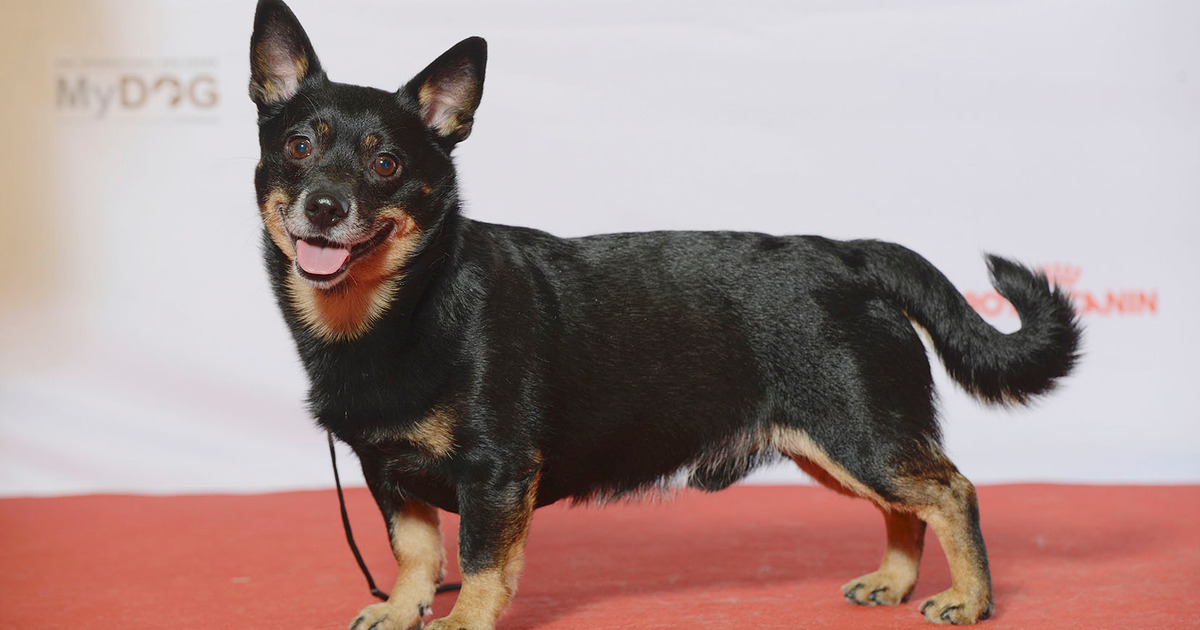
Image: Svenska Mässan, “Grupp 1, LANCASHIRE HEELER, Ståhlskyttens Longed For Antony”, CC BY 2.0, via Wikimedia Commons.
How to get your pet tested
Some pet DNA tests screen for hereditary-disease carrier status or genetic risk markers, but the results are information, not a diagnosis. If your pet has symptoms or you need a confirmed diagnosis, please consult your veterinarian.
Below is where Collie Eye Anomaly (CEA/NHEJ1) can be tested, grouped by where you live and marked by whether each service explicitly lists this variant (✅ = listed / ❓ = unverified / ❌ = not offered).
In the United States
In the United Kingdom
In India
Elsewhere
Note: even if the kit can be purchased/shipped internationally, the service itself (sample return, analysis, results) is not guaranteed in your country. Check each service’s stated service area and sample-return method before ordering.
Services offered in other regions (may not be available where you live)
Worried about your pet’s health? — Talk to a veterinarian
A confirmed diagnosis and any treatment plan are decisions for a veterinarian, not a test kit. The links below are professional resources.
AVMA — Find a veterinarian (American Veterinary Medical Association)
This section contains advertising (affiliate links); we may earn a commission if you buy through them. As an Amazon Associate, we earn from qualifying purchases. Genetic tests do not guarantee the prevention, diagnosis, or treatment of any disease — results indicate tendencies and provide information only.
This page is educational information, not veterinary diagnosis or advice. Always consult a veterinarian about your pet’s health.
About the author
Elena Marsh
Editor & writer (not a veterinarian)
A writer with a molecular-biology background and a lifelong dog and cat owner. Not a veterinarian — she translates peer-reviewed genetics research and primary data into plain language, always as information rather than diagnosis.