The short answer: GM1 gangliosidosis is a severe, early-onset, fatal lysosomal storage disease with no cure, and the DNA test for the “Alaskan Husky type” GLB1 variant screened in Alaskan Malamutes is a genetic carrier/risk screen, not a clinical diagnosis. Because the disease is autosomal recessive, a dog carrying just one copy of the variant is completely healthy and will never become sick. The reason to test is therefore not to treat an individual pet but to make informed breeding decisions. Two carriers bred together have roughly a 25% chance of producing an affected puppy with each litter, so the test’s real value is avoiding carrier-by-carrier matings so that no affected puppies are ever born. For the owner of a healthy adult companion, the result is pedigree and breeding information handled with care.
- What GM1 gangliosidosis is and the role of the GLB1 enzyme
- The Alaskan Husky-type variant in the Malamute (Kreutzer 2005)
- A risk/carrier screen, not a clinical diagnosis
- Recessive genetics — clear, carrier, and affected
- No cure — why the test’s real value is responsible breeding
- Frequently asked questions (FAQ)
- References
- How to get your pet tested
What GM1 gangliosidosis is and the role of the GLB1 enzyme


GM1 gangliosidosis is a lysosomal storage disease. Lysosomes are the recycling compartments inside cells, and they rely on specific enzymes to break down complex molecules. In GM1, the enzyme β-galactosidase — encoded by the GLB1 gene — is deficient or absent. Without enough functional enzyme, a fatty substance called GM1 ganglioside cannot be cleared and accumulates progressively inside neurons.
Because nerve cells are especially rich in gangliosides, this build-up is most damaging to the brain and spinal cord. The result is progressive neurodegeneration: affected puppies develop worsening tremors, incoordination, vision problems, and loss of previously learned abilities. The disease is early-onset, relentlessly progressive, and fatal, and there is no cure (Kreutzer 2005; OMIA:000402-9615).
It is important to understand that GM1 is one specific disease caused by GLB1. A separate but related condition, GM2 gangliosidosis, is caused by different genes (HEXA/HEXB) and is not what this Alaskan-type test detects.
The Alaskan Husky-type variant in the Malamute (Kreutzer 2005)
SamMy aunt was told her dog has the “Alaskan Husky type” — is that the same thing screened in Alaskan Malamutes? Elena MarshYes; Kreutzer 2005 described a 19-base-pair duplication in GLB1 called the Alaskan Husky type, and that is the exact variant Malamutes are screened for.The specific mutation relevant to the Alaskan Malamute is GLB1 c.1688_1706dup, a 19-base-pair duplication that changes the protein at p.(Thr570Profs*22). This variant was characterized by Kreutzer, Wang and colleagues in 2005 and is catalogued as OMIA:000402-9615. It is commonly referred to as the “Alaskan Husky type,” and the Alaskan Malamute (an AKC-recognized breed) is screened for this same variant commercially.
The frameshift caused by the duplication disrupts the β-galactosidase protein, which is why enzyme function is lost. Onset is very early — often within weeks to a few months of age — and affected puppies typically do not survive beyond about a year (Kreutzer 2005; OMIA:000402-9615).
A crucial point for breeders and owners: this is a distinct variant. The Shiba Inu GM1 (a different GLB1 change, c.1649delC) and the Portuguese Water Dog GM1 (c.179G>A) are separate mutations. Only the Alaskan Husky-type 19-bp duplication applies to the Malamute, so a test must specifically target this variant.
| Attribute | Alaskan Husky type (Malamute) |
|---|---|
| Gene | GLB1 |
| Variant | c.1688_1706dup (19-bp duplication) |
| Protein effect | p.(Thr570Profs*22) |
| Inheritance | Autosomal recessive |
| Catalogue ID | OMIA:000402-9615 |
A risk/carrier screen, not a clinical diagnosis
SamIf my dog’s test comes back positive, does that mean my dog has the disease already? Elena MarshNot necessarily — the test detects the GLB1 Alaskan-type variant and reports genotype, so a single copy means carrier and healthy, not affected, consistent with Kreutzer 2005.The DNA test is a genetic screen. It looks for the presence of the specific GLB1 Alaskan-type variant and reports how many copies a dog carries. That is different from a clinical diagnosis, which is based on symptoms, enzyme assays, and veterinary examination in a dog that is already showing signs of disease.
Because the test reports genotype, its meaning depends entirely on how many copies of the variant are found. One copy means the dog is a carrier — healthy, and never affected. Two copies is the genotype associated with disease. This is why a “positive” result must always be read alongside whether it means carrier or affected.
Reputable laboratories offer this screen as “GM1 gangliosidosis, Alaskan Husky type,” including Genomia, Paw Print Genetics/Orivet, the UC Davis Veterinary Genetics Laboratory, and labgenvet. Choosing a lab that names this exact variant ensures the correct mutation is being tested.
Recessive genetics — clear, carrier, and affected
SamHow can my healthy dog be a carrier and still be perfectly fine? It doesn’t seem to add up. Elena MarshWith autosomal recessive traits one working copy of GLB1 is enough for normal enzyme function, so carriers stay healthy — only two variant copies cause disease, as Kreutzer 2005 confirms.GM1 gangliosidosis follows autosomal recessive inheritance. Every dog carries two copies of GLB1, one from each parent. A dog needs two copies of the variant to be affected. With one normal copy and one variant copy, the normal copy produces enough β-galactosidase for health, so carriers live entirely normal lives.
The genotype outcomes fall into three categories, summarized below. Understanding these three states is the foundation of any responsible breeding plan.
| Genotype | Copies of variant | Health | Can pass variant on? |
|---|---|---|---|
| Clear (normal) | 0 | Healthy | No |
| Carrier | 1 | Healthy | Yes (50% of offspring) |
| Affected | 2 | Develops the disease | Yes (all offspring get at least one) |
When two carriers are bred together, each puppy has, on average, a 25% chance of being affected, a 50% chance of being a carrier, and a 25% chance of being clear. That 25% affected risk per puppy is the central, honest reason the test exists — it is entirely preventable with knowledge of the parents’ genotypes.
No cure — why the test’s real value is responsible breeding
SamIf there’s no cure, is there even any point in me testing my healthy adult Malamute? Elena MarshYes — because the disease is fatal and untreatable, the whole value is prevention: knowing your dog’s genotype lets you avoid pairing two carriers, a principle Kreutzer 2005 makes plain.There is no cure for GM1 gangliosidosis, and no treatment reverses the neurodegeneration. This is exactly why the test’s value is not “test to treat your pet.” For an individual dog, a positive carrier result changes nothing about that dog’s own health or lifespan — it remains a healthy companion.
The value lies in breeding decisions. If both parents are tested and at least one is clear, no puppy in the litter can be affected. The only way an affected puppy is born is when two carriers (or a carrier and an affected dog) are mated. By screening breeding candidates for the Alaskan Husky-type variant, breeders can pair a carrier safely with a clear dog and still never produce an affected puppy.
For the owner of a beloved, healthy adult, the result is simply pedigree and breeding information. It carries no bad news about your dog’s future — it is a tool that, used across a breeding population, prevents the birth of puppies who would otherwise face a short and painful life (Kreutzer 2005; OMIA:000402-9615).
Frequently asked questions (FAQ)
Q. My Alaskan Malamute is a carrier — will it get sick?
No. GM1 is autosomal recessive, so a carrier with one copy of the GLB1 variant is healthy and never develops the disease; the single normal copy makes enough β-galactosidase. The result matters only for breeding decisions, not for your dog’s own health.
Q. Is the DNA test a diagnosis of the disease?
No. It is a genetic carrier/risk screen that detects the Alaskan Husky-type GLB1 variant and reports how many copies your dog carries. A clinical diagnosis is a separate process based on symptoms and veterinary examination in a dog already showing signs.
Q. What happens if I breed two carriers?
On average, each puppy has about a 25% chance of being affected, a 50% chance of being a carrier, and a 25% chance of being clear. That is why avoiding carrier-by-carrier matings is the core reason to test breeding candidates.
Q. Where can I get my Malamute tested for this variant?
Several reputable labs offer it as “GM1 gangliosidosis, Alaskan Husky type,” including Genomia, Paw Print Genetics/Orivet, the UC Davis Veterinary Genetics Laboratory, and labgenvet. Choose a lab that names this exact variant to be sure the correct mutation is screened.
References
- Kreutzer R, Wang J, et al. (2005), GLB1 mutation in Alaskan Husky GM1 gangliosidosis (Genetics). https://pubmed.ncbi.nlm.nih.gov/15944348/
- OMIA:000402-9615, GM1 gangliosidosis, GLB1, Canis lupus familiaris. https://www.omia.org/OMIA000402/9615/
- UC Davis Veterinary Genetics Laboratory (VGL), GM1 gangliosidosis tests. https://vgl.ucdavis.edu/tests?field_species_target_id=216
- labgenvet, GM1 gangliosidosis. https://labgenvet.ca/en/disease/gm1-gangliosidosis-portuguese-water-dog-type/
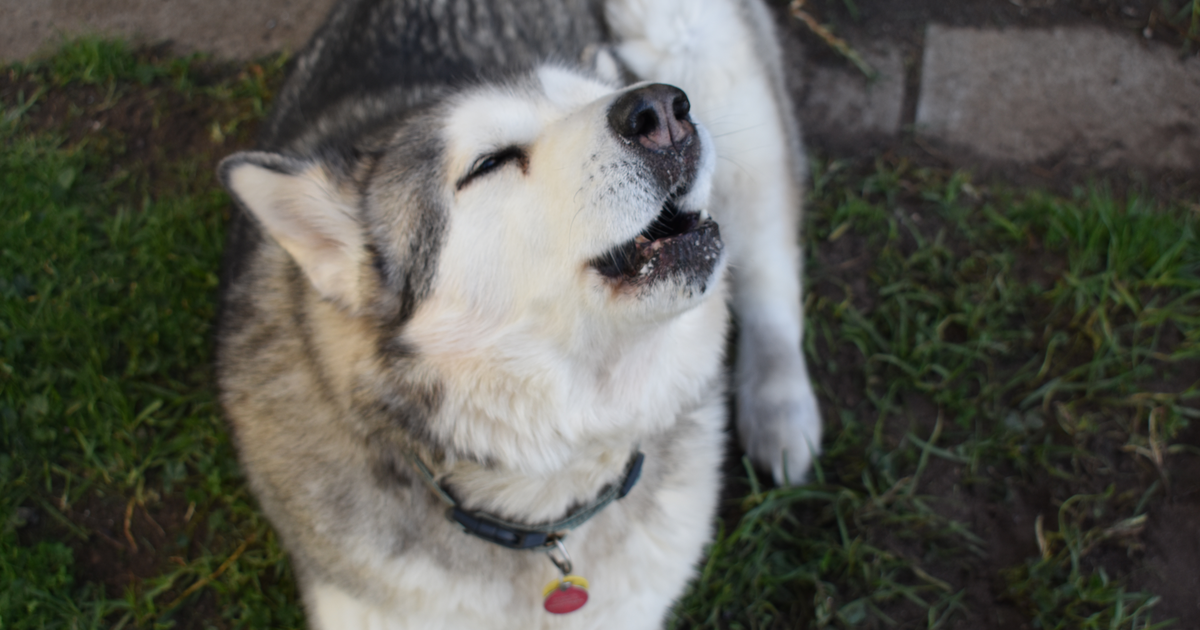
Image: Emma576, “Alaskan Malamute”, CC BY-SA 4.0, via Wikimedia Commons.
How to get your pet tested
Some pet DNA tests screen for hereditary-disease carrier status or genetic risk markers, but the results are information, not a diagnosis. If your pet has symptoms or you need a confirmed diagnosis, please consult your veterinarian.
Below is where Gangliosidosis (GM1/GM2) can be tested, grouped by where you live and marked by whether each service explicitly lists this variant (✅ = listed / ❓ = unverified / ❌ = not offered).
In the United States
In the United Kingdom
In India
Elsewhere
Note: even if the kit can be purchased/shipped internationally, the service itself (sample return, analysis, results) is not guaranteed in your country. Check each service’s stated service area and sample-return method before ordering.
Services offered in other regions (may not be available where you live)
Worried about your pet’s health? — Talk to a veterinarian
A confirmed diagnosis and any treatment plan are decisions for a veterinarian, not a test kit. The links below are professional resources.
AVMA — Find a veterinarian (American Veterinary Medical Association)
This section contains advertising (affiliate links); we may earn a commission if you buy through them. As an Amazon Associate, we earn from qualifying purchases. Genetic tests do not guarantee the prevention, diagnosis, or treatment of any disease — results indicate tendencies and provide information only.
This page is educational information, not veterinary diagnosis or advice. Always consult a veterinarian about your pet’s health.
About the author
Elena Marsh
Editor & writer (not a veterinarian)
A writer with a molecular-biology background and a lifelong dog and cat owner. Not a veterinarian — she translates peer-reviewed genetics research and primary data into plain language, always as information rather than diagnosis.