The short answer: The Newfoundland was the breed in which canine cystinuria was first traced to a gene — a recessive variant in SLC3A1 (cystinuria Type I-A). Two copies break the kidney’s reabsorption of cystine, so cystine spills into acidic urine and can precipitate into stones. In males, a stone can lodge in the long, narrow urethra and block urine flow — a life-threatening emergency. A DNA test tells you the SLC3A1 genotype (clear / carrier / affected) — breeding and risk information, not a diagnosis. Only a veterinarian diagnoses and manages actual stones.
- What cystinuria and SLC3A1 are (the COLA transporter)
- From high urinary cystine to stones — and the male-obstruction emergency
- Clear, carrier, affected — and the recessive breeding math
- Diagnosis and management (urinalysis, nitroprusside, ultrasound, diet)
- What the test can and cannot tell you
- FAQ — Frequently Asked Questions
- References
- How to get your pet tested
What cystinuria and SLC3A1 are (the COLA transporter)


Cystinuria is a defect of amino-acid transport in the kidney. In the proximal renal tubule, a two-part transporter normally reabsorbs four amino acids — Cystine, Ornithine, Lysine, and Arginine (conveniently remembered as “COLA”) — pulling them back out of the forming urine and into the blood. That transporter is a heterodimer: a heavy chain called rBAT, encoded by SLC3A1, paired with a light chain called b0,+AT, encoded by SLC7A9.
In the Newfoundland form, the SLC3A1 gene carries a nonsense mutation, c.586C>T (p.Arg196*), in exon 2 — a change that introduces a premature stop codon and truncates the rBAT protein. This was the founding discovery of canine cystinuria genetics, reported by Henthorn PS et al., Human Genetics 2000 (PMID 11129328). Because rBAT is broken, the COLA transporter can’t do its job, and those four amino acids are lost into the urine. The variant is catalogued as OMIA:000256-9615. This Newfoundland form is classified as cystinuria Type I-A and is inherited as an autosomal recessive trait — a classification set out by Brons AK et al., J Vet Intern Med 2013;27(6):1400 (PMID 24001348).
From high urinary cystine to stones — and the male-obstruction emergency
SamFour amino acids leak out. Which one actually causes trouble? Elena MarshOnly cystine — it’s poorly soluble, especially in acidic urine. Brons et al. (2013) describe how that low solubility is what drives it to crystallize into stones.Here is the key nuance: of the four amino acids that spill into the urine, only cystine is dangerous. Ornithine, lysine, and arginine stay dissolved and cause no harm. Cystine is different because it is poorly soluble — and its solubility drops further in acidic urine. When cystine concentration stays high in acidic urine, it precipitates out as crystals, and those crystals can aggregate into cystine stones (uroliths) in the bladder or kidney.
The danger becomes acute because of anatomy. A male dog has a long, narrow urethra, so a stone that passes out of the bladder can lodge and block the flow of urine. A complete urinary obstruction is a life-threatening emergency: urine backs up, the bladder can rupture, and the kidneys can fail within a day or two. Signs such as straining to urinate, producing little or no urine, crying out, a distended painful abdomen, vomiting, or collapse demand immediate veterinary care — this is not a wait-and-see situation. As the Cornell Riney Canine Health Center emphasizes, intact males carry the highest obstruction risk.
Clear, carrier, affected — and the recessive breeding math
SamIf my sister’s dog is a carrier, is it going to get sick? Elena MarshFor Type I-A, usually not — it’s recessive. LabGenVet frames the result as clear, carrier, or affected: a single-copy carrier is typically clinically unaffected but passes the variant on.Because the Newfoundland Type I-A form is autosomal recessive, genotype maps to risk in three tiers, exactly as testing labs report it — clear / carrier / affected (LabGenVet, Cystinuria — Newfoundland type):
- Clear (0 copies): not at genetic risk and cannot pass the variant on.
- Carrier (1 copy): typically clinically unaffected, but will pass the variant to about half of offspring.
- Affected (2 copies): at risk of forming cystine stones; this is the group that needs monitoring.
The breeding math follows the recessive rule: two clear dogs produce only clear pups; a carrier bred to a clear dog produces roughly half carriers and no affected pups; only carrier × carrier can produce affected (about one in four) offspring. That is why carriers are not removed from breeding — they can be safely paired with clear mates — but two carriers should not be bred together. Screening on this principle has, over time, reduced the incidence of the disease in the breed.
An important caveat against over-generalizing: inheritance in cystinuria is not uniform across dogs. The Newfoundland Type I-A form is recessive, but some other cystinuria types in other breeds are dominant, where even a single copy can confer risk. So the “one copy is safe” logic applies to the Newfoundland Type I-A form specifically — not to every cystinuria test on every breed.
Diagnosis and management (urinalysis, nitroprusside, ultrasound, diet)
SamSo can the DNA result tell us whether the dog already has stones? Elena MarshNo — that’s a veterinary diagnosis. Brons et al. (2013) describe the clinical work-up: urinalysis, the nitroprusside screen, imaging, and stone analysis are what confirm actual disease.Diagnosing and managing cystine stones is a job for a veterinarian, not a genetic report. The clinical work-up typically includes:
- Urinalysis — looking for the characteristic hexagonal cystine crystals and assessing urine pH and concentration.
- Nitroprusside screening test — a chemical urine test that flags high cystine excretion.
- Imaging — ultrasound and/or radiography; note that cystine stones can be radiolucent, so they don’t always show clearly on plain X-rays, which makes ultrasound valuable.
- Stone analysis — laboratory analysis of a retrieved stone to confirm it is cystine.
Management, once cystine stones are confirmed, centers on lowering cystine concentration and keeping it dissolved: a therapeutic diet, urine alkalinization (cystine is more soluble in less-acidic urine), and generous water intake, all under veterinary guidance. A complete urinary obstruction — the male emergency described above — requires emergency surgery to relieve the blockage. None of this is directed by the DNA result; the genotype only tells you which dogs warrant earlier and closer monitoring.
What the test can and cannot tell you
SamThen what’s the DNA test actually good for? Elena MarshInformation and breeding decisions. It reports the SLC3A1 genotype the way LabGenVet frames it — clear, carrier, or affected — which lets you plan matings and monitor earlier, but it never replaces a vet’s diagnosis.A DNA test for the Newfoundland Type I-A variant does three useful things: it tells you a dog’s SLC3A1 genotype, it supports breeding decisions (avoiding carrier × carrier pairings), and it flags affected dogs so an owner and vet can begin earlier monitoring before a stone becomes a crisis. That is genuine, actionable information.
What it cannot do is equally important. A DNA test is not a diagnosis: it does not tell you whether a dog currently has stones, and an “affected” genotype does not mean stones are inevitable, just that the risk is present. It reports only this specific SLC3A1 variant, not every possible cause of urinary stones. And because inheritance varies by breed and type, a Newfoundland Type I-A result should not be read as if the same rules governed a dominant cystinuria form in another breed. The honest framing is: test = information + breeding guidance + earlier monitoring; veterinarian = diagnosis and treatment.
The table below shows why “cystinuria” is not one single disease — the type determines the gene and the mode of inheritance, which is exactly why over-generalizing is a mistake:
| Cystinuria type | Gene | Inheritance | Note |
|---|---|---|---|
| Type I-A | SLC3A1 | Recessive | Newfoundland form (c.586C>T, p.Arg196*) |
| Type II-A | SLC3A1 | Dominant | Same gene, different variant & inheritance |
| Type II-B | SLC7A9 | Dominant | Light-chain (b0,+AT) partner of the transporter |
| Type III | — | Androgen-dependent | Sex-hormone–linked; risk tied to intact males |
Classification per Brons et al. (2013). The Newfoundland is the Type I-A, recessive SLC3A1 form — the row that started canine cystinuria research.
FAQ — Frequently Asked Questions
Q. My male Newfoundland is straining and can’t seem to pass urine — is this an emergency?
Treat it as one. In a male dog, a cystine stone can lodge in the long, narrow urethra and completely block urine flow, which can lead to bladder rupture and kidney failure within a day or two. Straining with little or no urine, crying out, a painful distended belly, vomiting, or collapse all warrant immediate veterinary care — emergency surgery may be needed to relieve the obstruction.
Q. My Newfoundland tested as a carrier. Will it get cystine stones?
For the Newfoundland Type I-A form, cystinuria is recessive, so a single-copy carrier is typically clinically unaffected. Carriers can be bred safely to genetically clear mates; the pairing to avoid is carrier × carrier, which can produce affected pups (about one in four). A carrier result is breeding information, not a diagnosis.
Q. Does the DNA test diagnose whether my dog has stones right now?
No. A DNA test reports the SLC3A1 genotype (clear / carrier / affected) — genetic risk, not current disease. Diagnosing actual cystine stones is a veterinary task using urinalysis (cystine crystals), the nitroprusside screening test, ultrasound or radiography, and stone analysis (Brons et al., 2013).
Q. How common is cystinuria in Newfoundlands today?
There is no reliable published figure — Brons et al. (2013) state that the prevalence “remains unknown.” Genetic screening has reduced the incidence over time, but we deliberately avoid quoting an unverified carrier percentage. What matters practically is testing before breeding and monitoring affected dogs.
References
- Henthorn PS, et al. Canine cystinuria: polymorphism in the canine SLC3A1 gene and identification of a nonsense mutation in cystinuric Newfoundland dogs. Hum Genet. 2000. PMID 11129328. https://pubmed.ncbi.nlm.nih.gov/11129328/
- Brons AK, et al. SLC3A1 and SLC7A9 mutations in autosomal recessive or dominant canine cystinuria: a new classification system. J Vet Intern Med. 2013;27(6):1400. PMID 24001348. https://pmc.ncbi.nlm.nih.gov/articles/PMC3946761/
- OMIA:000256-9615 — Cystinuria (SLC3A1), Canis lupus familiaris. https://omia.org/OMIA000256/9615/
- Cornell Riney Canine Health Center — Cystinuria. https://www.vet.cornell.edu/departments-centers-and-institutes/riney-canine-health-center/canine-health-topics/cystinuria
- LabGenVet — Cystinuria, Newfoundland type (clear / carrier / affected framing). https://labgenvet.ca/en/disease/cystinuria-newfoundland-type/
- Most popular dog breeds in the United States (Newfoundland, AKC-recognized working/water breed). https://en.wikipedia.org/wiki/List_of_most_popular_dog_breeds_in_the_United_States
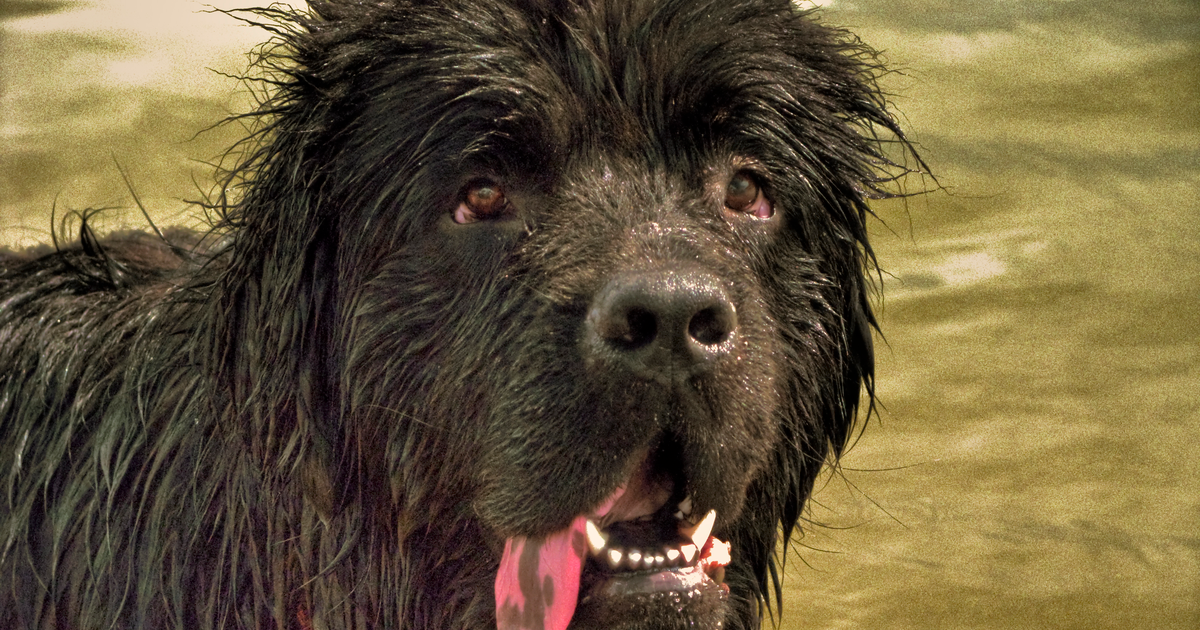
Eyecatch photo: Newfoundland by illryion, CC BY 2.0, via Wikimedia Commons.
How to get your pet tested
Some pet DNA tests screen for hereditary-disease carrier status or genetic risk markers, but the results are information, not a diagnosis. If your pet has symptoms or you need a confirmed diagnosis, please consult your veterinarian.
Below is where Cystinuria (SLC3A1/SLC7A9) can be tested, grouped by where you live and marked by whether each service explicitly lists this variant (✅ = listed / ❓ = unverified / ❌ = not offered).
In the United States
In the United Kingdom
In India
Elsewhere
Note: even if the kit can be purchased/shipped internationally, the service itself (sample return, analysis, results) is not guaranteed in your country. Check each service’s stated service area and sample-return method before ordering.
Services offered in other regions (may not be available where you live)
Worried about your pet’s health? — Talk to a veterinarian
A confirmed diagnosis and any treatment plan are decisions for a veterinarian, not a test kit. The links below are professional resources.
AVMA — Find a veterinarian (American Veterinary Medical Association)
This section contains advertising (affiliate links); we may earn a commission if you buy through them. As an Amazon Associate, we earn from qualifying purchases. Genetic tests do not guarantee the prevention, diagnosis, or treatment of any disease — results indicate tendencies and provide information only.
This page is educational information, not veterinary diagnosis or advice. Always consult a veterinarian about your pet’s health.
About the author
Elena Marsh
Editor & writer (not a veterinarian)
A writer with a molecular-biology background and a lifelong dog and cat owner. Not a veterinarian — she translates peer-reviewed genetics research and primary data into plain language, always as information rather than diagnosis.