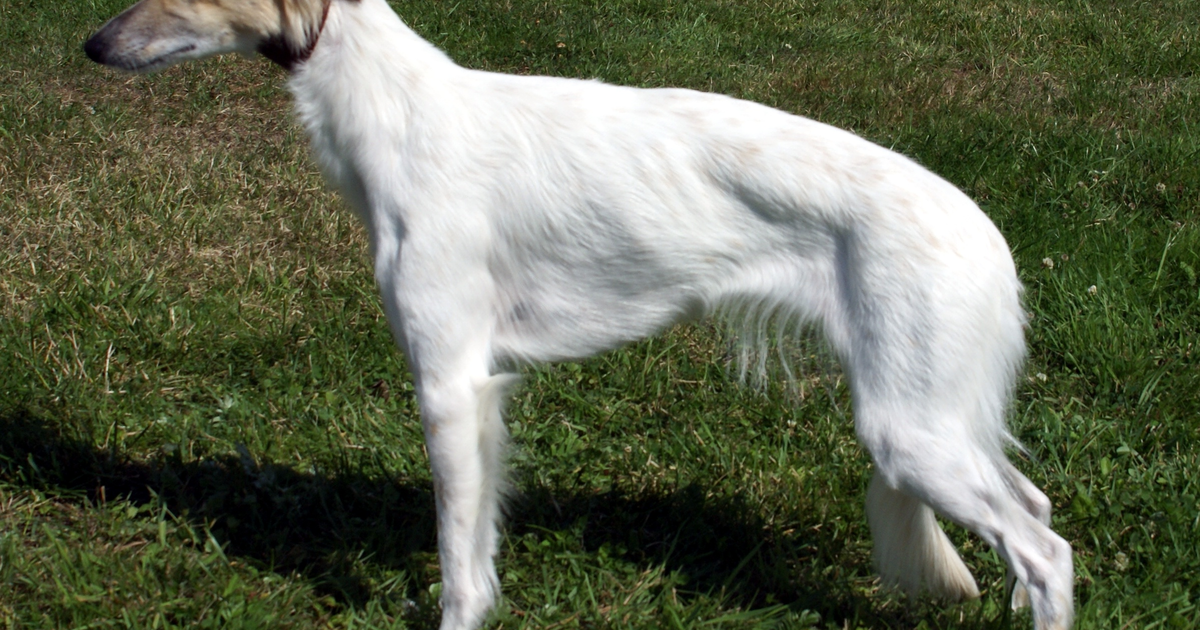
The short answer: Long-haired Whippets carry the MDR1 (ABCB1) mutation at a documented rate of about 50%, according to Washington State University’s veterinary diagnostic laboratory — the same lab that discovered the mutation. That means a coin-flip’s worth of Long-haired Whippets could have a life-threatening reaction to routine drugs like ivermectin or acepromazine. A cheek-swab DNA test is the only way to know for sure, and a clear result only rules out this one mutation in this one gene — it does not screen for every hereditary risk your dog may carry.
If you own, breed, or are about to bring home a Long-haired Whippet, there’s a genetic wrinkle in this variety’s family tree that most standard-Whippet owners never have to think about. The multidrug resistance 1 (MDR1) gene mutation — first identified in Collies in 2001 — turns up in Long-haired Whippets at a rate high enough that Washington State University lists the variety by name among the breeds it recommends testing before surgery, sedation, or parasite prevention.
This isn’t a rare or theoretical risk. It’s a well-documented pharmacogenetic trait with a clear biological mechanism, a traceable ancestral origin, and — most importantly — a cheap, fast test that tells you exactly where your dog stands. Below, we walk through the science, the numbers, and what US owners specifically need to do about it.
- What MDR1 Actually Does in a Dog’s Body
- How the Mutation Was Discovered — and Why It Predates Modern Breeds
- Why Long-Haired Whippets Specifically Are on WSU’s List
- The Drugs That Actually Matter
- Genotypes: N/N, Carrier, and Affected — and What That Means for Breeding
- Is the Long-Haired Whippet an AKC-Recognized Breed? An Honest Answer
- How to Actually Get Your Dog Tested (US)
- If Your Dog Shows Symptoms: The Vet Referral Pathway
- Pet Insurance and Genetic Test Results in the US
- Breeding Management Guidance
- What Long-Haired Whippet Owners Should Do Today
- FAQ
- References
- How to get your pet tested
What MDR1 Actually Does in a Dog’s Body
MDR1 (ABCB1) is the gene that codes for P-glycoprotein, a transporter protein that sits in cell membranes throughout the body — including the wall of blood vessels that make up the blood-brain barrier. According to WSU’s veterinary diagnostic laboratory, P-glycoprotein “plays an important role in limiting drug distribution to the brain and in enhancing the excretion of many drugs.” In a dog with normal MDR1 function, this protein acts like a bouncer, pumping certain drug molecules back out of brain tissue before they can accumulate to dangerous levels.
When the gene carries the mutation, that bouncer is effectively absent. Drugs that would normally be kept out of the brain — or cleared from the body promptly — instead build up in the central nervous system. WSU describes the result plainly: mutant dogs risk “severe adverse reactions – including tremors, disorientation, blindness, severe muscle weakness, and death.”
SamSo this isn’t about an allergic reaction, it’s a totally different mechanism?
Elena MarshRight — it’s a transport failure, not an immune response. WSU explains the mutant protein can’t pump drugs out of the brain, so normal doses accumulate to toxic levels there.


How the Mutation Was Discovered — and Why It Predates Modern Breeds
The mutation itself was first characterized in a 2001 study by Katrina Mealey and colleagues at Washington State University, published in the journal Pharmacogenetics. The team traced ivermectin sensitivity in Collies to a specific defect: a 4-base-pair deletion at nucleotide 230 of the canine MDR1 gene (referred to as nt230[del4]). That small deletion shifts the gene’s reading frame, so instead of producing the full 1,281-amino-acid P-glycoprotein, the dog’s cells make a drastically truncated, non-functional fragment — commonly cited in later literature as roughly 91 amino acids, though that exact figure is a downstream summary rather than a number stated directly in the original 2001 paper.
A follow-up study in 2004 by Neff and colleagues, published in the Proceedings of the National Academy of Sciences, dug into the mutation’s history and found something striking: it traces back to a single dog living in Great Britain before formal breed registration began in 1873. In other words, the mutation is older than the modern breed system itself. It spread outward through shared ancestry into the various herding- and sighthound-related breeds that descend from that early lineage — which is a large part of why a mutation first flagged in Collies also shows up in breeds as visually different as the Long-haired Whippet.
Why Long-Haired Whippets Specifically Are on WSU’s List
Washington State University’s Program in Individualized Medicine (PrIMe) — the lab that developed the reference MDR1 test — publishes ongoing breed frequency data based on the samples it processes. As of its October 2021 update, the documented mutation frequency for Long-haired Whippets sits at 50%, putting the variety in the same tier as the Australian Shepherd and Miniature Australian Shepherd, and second only to the Collie’s 70%.
Here’s the honesty point worth underlining: the standard, smooth-coated Whippet recognized by the AKC does not appear on WSU’s affected-breed list at all. WSU’s own wording is specific: “The MDR1 mutation has also been found in Shetland sheepdogs (Shelties), Australian shepherds, old English sheepdogs, English shepherds, German shepherds, long-haired whippets, silken windhounds, and a variety of mixed-breed dogs.” This article is about the Long-haired Whippet variety specifically — not a claim that every Whippet carries this risk.
It’s also worth knowing that other sources report different numbers for this variety — for instance, some European breeder resources cite figures in the mid-40s percent range. We’re leading with WSU’s 50% because WSU is the laboratory that discovered the mutation and continues to run the reference diagnostic test in the US, but treat any single percentage as an estimate rather than a fixed constant, since testing pools and methodology differ between sources.
SamWhy does WSU single out long-haired whippets and not regular whippets?
Elena MarshBecause their surveillance data only found the mutation in the long-haired variety — the standard smooth-coat whippet doesn’t appear on WSU’s affected-breed list at all.
The Drugs That Actually Matter
An MDR1-affected Long-haired Whippet isn’t sensitive to “medications” in some vague general sense — the risk is concentrated in a specific, well-defined list of compounds. WSU names the following as drugs that can trigger severe reactions in MDR1-mutant dogs:
- Antiparasitics: ivermectin, eprinomectin, selamectin, milbemycin, moxidectin
- Loperamide (an over-the-counter antidiarrheal many owners reach for without thinking twice)
- Acepromazine (a common tranquilizer and pre-anesthetic sedative)
- Butorphanol (an analgesic and pre-anesthetic drug)
- Chemotherapy agents: vincristine, vinblastine, doxorubicin, paclitaxel
- Apomorphine (used to induce vomiting after toxin ingestion)
The Orthopedic Foundation for Animals (OFA) adds cyclosporine and spinosad (the active ingredient in the flea/tick product Comfortis) to the list of drugs of concern. Several of these — acepromazine and butorphanol especially — are routinely used before minor procedures like dental cleanings, which is exactly why knowing your dog’s MDR1 status before any sedation event matters.
Genotypes: N/N, Carrier, and Affected — and What That Means for Breeding
MDR1 test results come back in one of three genotypes, and OFA lays out what each one means in practice:
- N/N (normal/normal): “Not expected to have multidrug sensitivity, cannot transmit the risk variant to offspring.”
- N/MDR1 (carrier, heterozygous): “May exhibit multidrug sensitivity and will transmit the risk variant to 50% of offspring.”
- MDR1/MDR1 (affected, homozygous): “Will exhibit multidrug sensitivity even at low doses; all offspring will carry at least one copy.”
The breeding math follows simple Mendelian inheritance: pair two carriers, and on average roughly 25% of the resulting puppies will be affected (MDR1/MDR1), 50% will be carriers, and 25% will be clear. Given that WSU documents a 50% mutation frequency in this variety overall, the odds of unknowingly pairing two carriers — or an affected dog with a carrier — are far from negligible if breeding decisions are made without testing.
SamIf both parents are just carriers, not affected, is that still risky to breed?
Elena MarshYes — OFA’s model shows two carriers bred together produce roughly 25% MDR1/MDR1 affected puppies, purely from standard Mendelian inheritance.
Is the Long-Haired Whippet an AKC-Recognized Breed? An Honest Answer
Here’s a detail worth being upfront about rather than glossing over: the Long-haired Whippet is not a formally recognized breed or coat variety under the American Kennel Club. The AKC’s written Whippet standard describes a short, smooth coat only. According to reference material published by whippet-specific breed resources, “this variety is not recognized by any of the major kennel clubs because by definition a whippet can only be short coated as stated in the breed standard.”
The variety’s modern history traces to the 1970s and a breeder named Walter A. Wheeler Jr. of Windsprite Kennels in Massachusetts, who bred long-coated dogs from his Whippet lines and attributed the coat to a recessive gene expressing itself. Breed historians and Whippet-specific sources have long suspected the long coat’s actual origin involves outcrossing with other breeds — Borzoi and Shetland Sheepdog ancestry are both commonly cited possibilities — rather than a pure recessive trait within closed Whippet bloodlines. A related, more recently developed breed, the Silken Windhound, grew out of overlapping foundation stock (Borzoi crossed with Whippet-type sighthounds) and did achieve United Kennel Club recognition, in 2011 — but that is a distinct breed with its own studbook, not the same thing as an AKC-recognized “Long-haired Whippet.”
Practically, this means Long-haired Whippets in the US are generally bred and sold outside the AKC’s registry system, often through hobbyist or specialty breeders rather than AKC parent-club-affiliated programs. We did not find a current, verifiable AKC or UKC registration count specifically for “Long-haired Whippet” as its own category, and we’re not going to manufacture one — if a breeder or seller quotes you a specific registration ranking or number for this variety, treat that claim with skepticism and ask for a primary source.
How to Actually Get Your Dog Tested (US)
The reference test for MDR1 in the United States comes from the lab that discovered the mutation in the first place: Washington State University’s Veterinary Clinical Pharmacology Laboratory (VCPL), part of its WADDL diagnostic network. As of WSU’s August 2022 pricing update, the test costs $70 for “medical diagnostic quality MDR1 genotyping with rapid turn-around and pharmacology consulting.” The sample can be either a cheek swab or a blood draw — no sedation or vet visit is strictly required for the swab version.
Turnaround is fast by genetic-testing standards: WSU processes results in weekly batches, with results “available Wednesday afternoon Pacific time for samples received in the laboratory the previous Monday” — roughly a one-week wait. WSU’s confirmed intake address is in Pullman, Washington; we found no confirmation that the lab accepts international submissions, so US owners mailing a domestic sample are on solid ground, but don’t assume international shipping is supported without checking directly with the lab first.
WSU also backs its testing with a dedicated consultation service called MDR1Caddie™, led by Dr. Katrina Mealey, DVM, PhD, DACVIM, DACVCP — the same researcher behind the original 2001 discovery paper — which helps owners and veterinarians interpret results and plan safer medication choices afterward.
If Your Dog Shows Symptoms: The Vet Referral Pathway
MDR1 status is not something to self-diagnose from symptoms alone. If your Long-haired Whippet shows signs like tremors, disorientation, unsteady gait, excessive drooling, or unresponsiveness — especially after a dose of a heartworm/parasite preventive, a sedative, or any new medication — this is an emergency, not a wait-and-see situation. Contact your veterinarian or the nearest emergency animal hospital immediately; do not attempt to treat suspected MDR1 toxicity at home.
If your dog survives an adverse event or you simply want to plan ahead, ask your regular vet to order the WSU MDR1 test (many US veterinary clinics can submit the sample directly to WSU on your behalf) and to flag the result prominently in your dog’s chart so that every future prescriber — including emergency and specialty vets who may not know your dog’s history — sees it before reaching for a drug on the risk list.
Pet Insurance and Genetic Test Results in the US
A common worry among owners is whether testing positive for MDR1 will hurt their ability to get or keep pet insurance. Based on the general pattern across major US insurers, the answer is reassuring: genetic test results are generally not used in underwriting decisions. What insurers like Trupanion and Healthy Paws typically exclude is pre-existing or symptomatic conditions — meaning something diagnosed or already showing signs before your policy’s effective date — not a genotype on file.
Coverage specifics still vary by insurer and by policy, and hereditary/congenital condition coverage often comes with a waiting period after the policy starts. The safest sequence, if you’re insurance-shopping, is to secure a policy before or shortly after testing, and to read the hereditary-conditions section of any policy carefully rather than assuming a positive MDR1 result will be treated the same way everywhere. When in doubt, call the insurer directly and ask how they handle genetic test results specifically.
Breeding Management Guidance
For anyone breeding Long-haired Whippets in the US, MDR1 testing should be treated as standard pre-breeding due diligence, the same way hip or eye screenings are for other breeds. Because roughly half of the variety’s documented population carries at least one copy of the mutation, testing both parents before a planned litter — not after puppies are already on the ground — is the only way to avoid producing MDR1/MDR1 affected puppies unintentionally.
A carrier (N/MDR1) does not need to be removed from a breeding program outright; responsible pairing with a confirmed N/N partner avoids producing affected (MDR1/MDR1) puppies while still allowing valuable bloodlines to continue. What matters is that the pairing decision is made with genotype data in hand, not guesswork, and that puppy buyers are told the tested status of both the litter and, ideally, the parents.
What Long-Haired Whippet Owners Should Do Today
- Order an MDR1 DNA test (cheek swab or blood) through WSU’s Veterinary Clinical Pharmacology Laboratory before your dog needs sedation, surgery, chemotherapy, or a parasite preventive.
- Keep a written or digital record of the result and share it with every vet, groomer, or boarding facility that might administer or recommend medication.
- Review the specific drug list above with your veterinarian — don’t assume “flea and tick medicine” or “heartworm preventive” is automatically safe without checking the active ingredient.
- If you’re insurance-shopping, ask the insurer directly how they treat genetic test results and hereditary conditions before you sign.
- If breeding, test both parents before a planned litter and pair a carrier only with a confirmed N/N dog.
- Don’t rely on unofficial “Long-haired Whippet registry” numbers or rankings you can’t verify — this variety currently sits outside AKC recognition, and that’s simply a fact to plan around, not a red flag about the dogs themselves.
- Always involve a licensed veterinarian for diagnosis and treatment decisions — this article is educational, not a substitute for professional veterinary care.
FAQ
Q. What percentage of Long-haired Whippets have the MDR1 mutation?
According to Washington State University’s veterinary diagnostic lab, documented frequency in Long-haired Whippets is about 50%, though other sources report slightly different figures, so treat this as a well-supported estimate rather than a fixed number.
Q. Does the standard, smooth-coated Whippet also carry the MDR1 mutation?
WSU’s affected-breed list names the long-haired variety specifically and does not include the standard smooth-coat Whippet, so this risk should not be assumed to apply to all Whippets.
Q. Is the Long-haired Whippet an AKC-recognized breed?
No. The AKC’s Whippet standard specifies a short, smooth coat only, and reference sources indicate the long-haired variety is not recognized by major kennel clubs; it is generally bred and sold outside the AKC registry system.
Q. How much does MDR1 testing cost and how long does it take?
WSU’s reference test costs $70 and is processed in weekly batches, with results typically available about one week after the lab receives your sample.
Q. Will a positive MDR1 result affect my dog’s pet insurance?
Based on the general pattern among major US insurers, genetic test results are not typically used in underwriting; pre-existing or symptomatic conditions are the standard exclusion, not a genotype. Always confirm directly with your specific insurer.
References
- Mealey KL, Bentjen SA, Gay JM, Cantor GH (2001). “Ivermectin sensitivity in collies is associated with a deletion mutation of the mdr1 gene.” Pharmacogenetics 11(8):727–733.
- Neff MW et al. (2004). “Breed distribution and history of canine mdr1-1Δ, a pharmacogenetic mutation that marks the emergence of breeds from the collie lineage.” PNAS 101(32):11725–11730.
- Washington State University WADDL/PrIMe, “Dog breeds commonly affected by MDR1 mutation” (Oct 19, 2021)
- WSU WADDL, “MDR1 test pricing” (Aug 29, 2022)
- WSU WADDL, “MDR1 in Dogs” service page
- WSU WADDL, “Is your pet at risk of an adverse reaction to common drugs?” (Oct 19, 2021)
- Orthopedic Foundation for Animals (OFA), “Multiple Drug Sensitivity (MDR1)”
- The Whippet, “The Long Haired Whippet” — coat variety history and recognition status
- United Kennel Club, “Silken Windhound” breed standard and recognition
How to get your pet tested
Some pet DNA tests screen for hereditary-disease carrier status or genetic risk markers, but the results are information, not a diagnosis. If your pet has symptoms or you need a confirmed diagnosis, please consult your veterinarian.
Below is where MDR1 (ABCB1) can be tested, grouped by where you live and marked by whether each service explicitly lists this variant (✅ = listed / ❓ = unverified / ❌ = not offered).
In the United States
In the United Kingdom
In India
Elsewhere
Note: even if the kit can be purchased/shipped internationally, the service itself (sample return, analysis, results) is not guaranteed in your country. Check each service’s stated service area and sample-return method before ordering.
Services offered in other regions (may not be available where you live)
Worried about your pet’s health? — Talk to a veterinarian
A confirmed diagnosis and any treatment plan are decisions for a veterinarian, not a test kit. The links below are professional resources.
AVMA — Find a veterinarian (American Veterinary Medical Association)
This section contains advertising (affiliate links); we may earn a commission if you buy through them. As an Amazon Associate, we earn from qualifying purchases. Genetic tests do not guarantee the prevention, diagnosis, or treatment of any disease — results indicate tendencies and provide information only.
This page is educational information, not veterinary diagnosis or advice. Always consult a veterinarian about your pet’s health.
About the author
Elena Marsh
Editor & writer (not a veterinarian)
A writer with a molecular-biology background and a lifelong dog and cat owner. Not a veterinarian — she translates peer-reviewed genetics research and primary data into plain language, always as information rather than diagnosis.