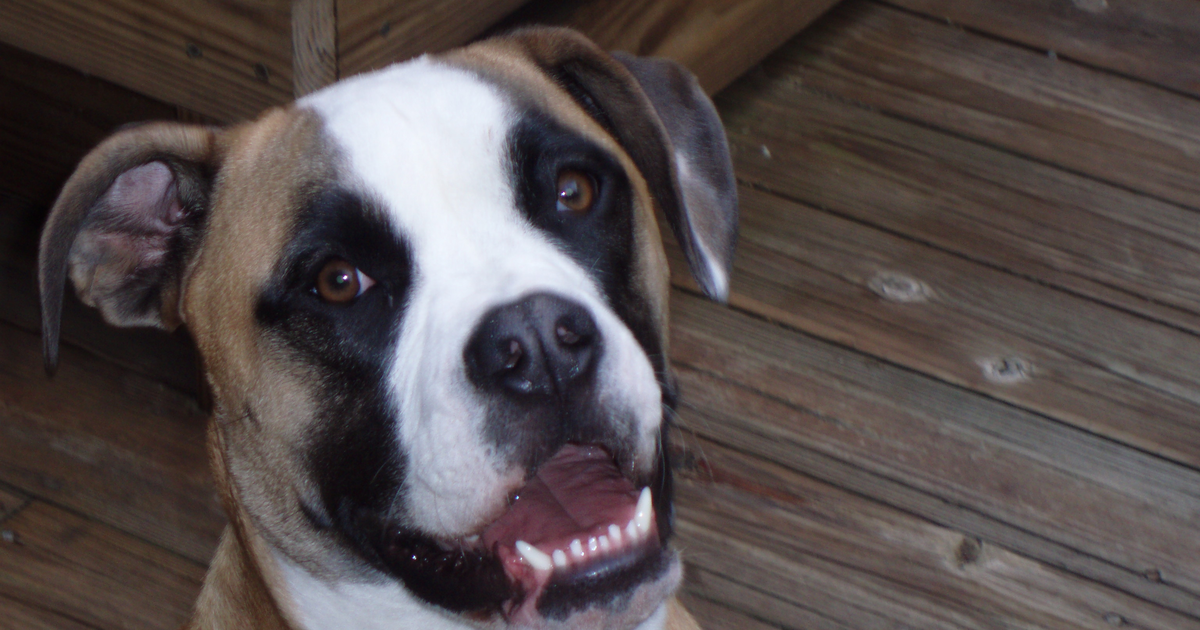
The short answer: Ichthyosis in the American Bulldog is an inherited skin-barrier disorder caused by a recessive variant in the NIPAL4 (ICHTHYIN) gene, meaning a dog needs two copies to be affected. In the study that discovered this variant, roughly one in three American Bulldogs tested were healthy carriers — this ~34.3% figure is a carrier rate, so it does NOT mean one in three dogs are sick. A carrier with a single copy is clinically normal. A DNA test here is a genetic risk/carrier screen, not a clinical diagnosis — only a veterinarian can diagnose actual skin disease, sometimes with a skin biopsy. The test’s real value is guiding breeding decisions (avoiding carrier × carrier pairings) and anticipating a scaly-coat phenotype so supportive skin care can start earlier. There is no cure — management is supportive only.
- What ichthyosis is, and the NIPAL4 gene in American Bulldogs
- Carrier vs affected: the 34.3% carrier number explained honestly
- Risk screen vs clinical diagnosis: the vet and the biopsy
- Severity and supportive management (there is no cure)
- Breeding decisions, and what clear, carrier, and affected mean
- Frequently asked questions (FAQ)
- References
- How to get your pet tested
What ichthyosis is, and the NIPAL4 gene in American Bulldogs

Ichthyosis is not a single disease but a group of inherited disorders of cornification — the process by which the outer skin layer matures and forms a proper barrier. When that process is faulty, the skin becomes flaky and scaly, often from a young age. Crucially, ichthyosis is breed-specific in both the gene involved and the typical severity, so what is true for one breed cannot be assumed for another.
In the American Bulldog, the responsible variant is a single-base deletion in the NIPAL4 (also called ICHTHYIN) gene: c.744delC, predicted to cause a frameshift, p.(Thr248fs), in exon 6, producing a truncated protein. This was identified by Casal, Mauldin and colleagues in 2017 (PLoS One). The trait is autosomal recessive, so only dogs inheriting the deletion from both parents are affected.
It is worth stressing that this is the American Bulldog’s own variant. Other breeds have entirely different genes — the Golden Retriever form is caused by PNPLA1 (Grall 2012) and is often mild, and the Great Dane form involves SLC27A4. None of those facts transfer to the American Bulldog.
Carrier vs affected: the 34.3% carrier number explained honestly
SamI read that about a third of American Bulldogs carry it — does that mean a third of them are sick? Elena MarshNo — in Casal 2017 the ~34.3% figure among roughly 800 dogs tested was a carrier rate in healthy dogs, not an affected rate.This distinction is the single most important thing to understand. Because the trait is recessive, a dog with just one copy of the c.744delC deletion is a carrier: clinically healthy, with normal skin, but able to pass the variant to offspring. A dog needs two copies to be affected.
In the Casal 2017 study, roughly 34.3% of the approximately 800 American Bulldogs tested were carriers. That is a striking figure, and it tells us the variant is common in the breed’s gene pool — but it is a measure of healthy carriers, not of sick dogs. The affected (homozygous) prevalence in the breed is not something we can state with a verified number here, so we won’t invent one.
| Genotype | Copies of c.744delC | Clinical status | Can pass variant on? |
|---|---|---|---|
| Clear | 0 | Healthy, cannot develop this form | No |
| Carrier | 1 | Healthy (normal skin) | Yes (50% chance per pup) |
| Affected | 2 | Can develop ichthyosis | Yes (always) |
For the original discovery and frequency data, see Casal/Mauldin 2017: https://journals.plos.org/plosone/article?id=10.1371/journal.pone.0170708 and the OMIA catalog entry for ichthyosis in the dog: https://omia.org/results/?search_type=advanced&gb_species_id=9615&result_type=phene
Risk screen vs clinical diagnosis: the vet and the biopsy
SamIf my dog’s DNA test comes back “affected,” does that mean the lab has diagnosed a skin disease? Elena MarshNo — a DNA result is a genetic risk screen, and clinical diagnosis of ichthyosis is made by a veterinarian, sometimes confirmed with a skin biopsy, as reviewed in the UMN dermatology text.A genetic test tells you which variants a dog carries. It does not examine the skin, and it cannot tell you whether a scaly-coat disease is currently present or how it is behaving. That is the job of a veterinarian, who evaluates the coat and skin clinically and may take a skin biopsy for histopathology to confirm a cornification disorder and rule out look-alike conditions.
This is why we describe the DNA test as a risk/carrier screen, not a diagnosis. A “clear” or “carrier” result does not rule out other skin problems, and an “affected” result describes genetic status — it does not, by itself, cure or treat anything.
For a general review of hereditary keratinization disorders and how they are worked up clinically, see the University of Minnesota open dermatology text: https://open.lib.umn.edu/animaldermatology2/chapter/hereditary-keratinization-disorders-ichthyosis-dogs/
Severity and supportive management (there is no cure)
SamIf my American Bulldog is affected, is it mild like I’ve heard the Golden Retriever type is? Elena MarshNot necessarily — the American Bulldog NIPAL4 form described by Casal 2017 is often clinically significant, unlike the frequently mild Golden Retriever PNPLA1 type in Grall 2012.Severity is breed-specific. The American Bulldog NIPAL4 form is often clinically significant: generalized adherent brownish scale, sometimes with reddened skin (erythema), appearing from a young age. This is more impactful than the mild, often subclinical Golden Retriever type — so it would be a mistake to reassure yourself with the Golden’s “mild” framing.
Importantly, management is supportive only — it controls the scale and keeps the skin comfortable, but it does not fix the underlying genetics and is never a cure. Typical supportive measures include medicated or keratolytic shampoos, humectants and emollients to hydrate and soften the scale, and omega-3 fatty acid supplementation. A veterinary dermatologist can tailor a bathing and moisturizing routine to the individual dog.
The value of knowing the genetic status early is precisely this: it lets an owner and vet anticipate or explain a scaly-coat phenotype and begin gentle, consistent supportive skin care sooner. For the comparison with the mild Golden Retriever PNPLA1 form, see Grall 2012: https://pubmed.ncbi.nlm.nih.gov/22246504/
Breeding decisions, and what clear, carrier, and affected mean
SamI’d like to breed my American Bulldog someday — how do I use this test responsibly? Elena MarshTest both prospective parents and avoid pairing two carriers, since Casal 2017 showed the variant is common enough in the breed that carrier × carrier matings are a real risk.For breeders, this test is genuinely useful. Because roughly a third of American Bulldogs carried the variant in Casal 2017, carrier × carrier pairings are far from unlikely, and each such pairing has a 25% chance of producing an affected pup. Testing both prospective parents lets you avoid that combination entirely.
| Pairing | Risk of affected pups | Recommendation |
|---|---|---|
| Clear × Clear | 0% | Safe |
| Clear × Carrier | 0% affected (50% carriers) | Acceptable; some pups will be carriers |
| Carrier × Carrier | 25% affected | Avoid |
| Any × Affected | Depends on partner | Breed only with a clear partner, with care |
In plain terms: clear means no copies and cannot develop or pass on this form; carrier means one copy, a healthy dog that can pass it to half its offspring; and affected means two copies and the potential to develop the disorder. A carrier is not a sick dog — it is simply a genetic status that matters most at the moment you choose a mate.
Frequently asked questions (FAQ)
Q. Does a 34% carrier rate mean 1 in 3 American Bulldogs are sick?
No. That is a carrier rate (healthy dogs with one copy) from Casal 2017, not an affected rate. Carriers are clinically normal; because the trait is recessive, a dog must inherit two copies to be affected. The affected prevalence in the breed is not something we can state with a verified figure.
Q. Which gene and variant cause ichthyosis in American Bulldogs?
The American Bulldog form is caused by a recessive variant in the NIPAL4 (ICHTHYIN) gene, specifically c.744delC, p.(Thr248fs), a single-base deletion in exon 6 identified by Casal/Mauldin 2017. This is the breed’s own variant and differs from the Golden Retriever (PNPLA1) and Great Dane (SLC27A4) forms.
Q. Can a DNA test diagnose or cure my dog’s ichthyosis?
No. The DNA test is a genetic risk/carrier screen, not a clinical diagnosis. A veterinarian diagnoses actual skin disease clinically, sometimes with a skin biopsy. There is no cure — management is supportive only, using medicated or keratolytic shampoos, humectants and emollients, and omega-3 supplementation.
Q. Is the American Bulldog form mild like the Golden Retriever type?
Not necessarily. The Golden Retriever PNPLA1 form (Grall 2012) is often mild or subclinical, but the American Bulldog NIPAL4 form is often clinically significant, with generalized adherent brownish scale and erythema from a young age. Severity is breed-specific and should not be assumed from another breed.
References
- Casal / Mauldin et al. 2017 (American Bulldog NIPAL4 ichthyosis) — https://journals.plos.org/plosone/article?id=10.1371/journal.pone.0170708
- OMIA — Ichthyosis, dog (catalog of inherited disorders) — https://omia.org/results/?search_type=advanced&gb_species_id=9615&result_type=phene
- University of Minnesota, open dermatology text — hereditary keratinization disorders / ichthyosis in dogs — https://open.lib.umn.edu/animaldermatology2/chapter/hereditary-keratinization-disorders-ichthyosis-dogs/
- Grall et al. 2012 (Golden Retriever PNPLA1 ichthyosis, for comparison) — https://pubmed.ncbi.nlm.nih.gov/22246504/
How to get your pet tested
Some pet DNA tests screen for hereditary-disease carrier status or genetic risk markers, but the results are information, not a diagnosis. If your pet has symptoms or you need a confirmed diagnosis, please consult your veterinarian.
Below is where Ichthyosis can be tested, grouped by where you live and marked by whether each service explicitly lists this variant (✅ = listed / ❓ = unverified / ❌ = not offered).
In the United States
In the United Kingdom
In India
Elsewhere
Note: even if the kit can be purchased/shipped internationally, the service itself (sample return, analysis, results) is not guaranteed in your country. Check each service’s stated service area and sample-return method before ordering.
Services offered in other regions (may not be available where you live)
Worried about your pet’s health? — Talk to a veterinarian
A confirmed diagnosis and any treatment plan are decisions for a veterinarian, not a test kit. The links below are professional resources.
AVMA — Find a veterinarian (American Veterinary Medical Association)
This section contains advertising (affiliate links); we may earn a commission if you buy through them. As an Amazon Associate, we earn from qualifying purchases. Genetic tests do not guarantee the prevention, diagnosis, or treatment of any disease — results indicate tendencies and provide information only.
This page is educational information, not veterinary diagnosis or advice. Always consult a veterinarian about your pet’s health.
About the author
Elena Marsh
Editor & writer (not a veterinarian)
A writer with a molecular-biology background and a lifelong dog and cat owner. Not a veterinarian — she translates peer-reviewed genetics research and primary data into plain language, always as information rather than diagnosis.