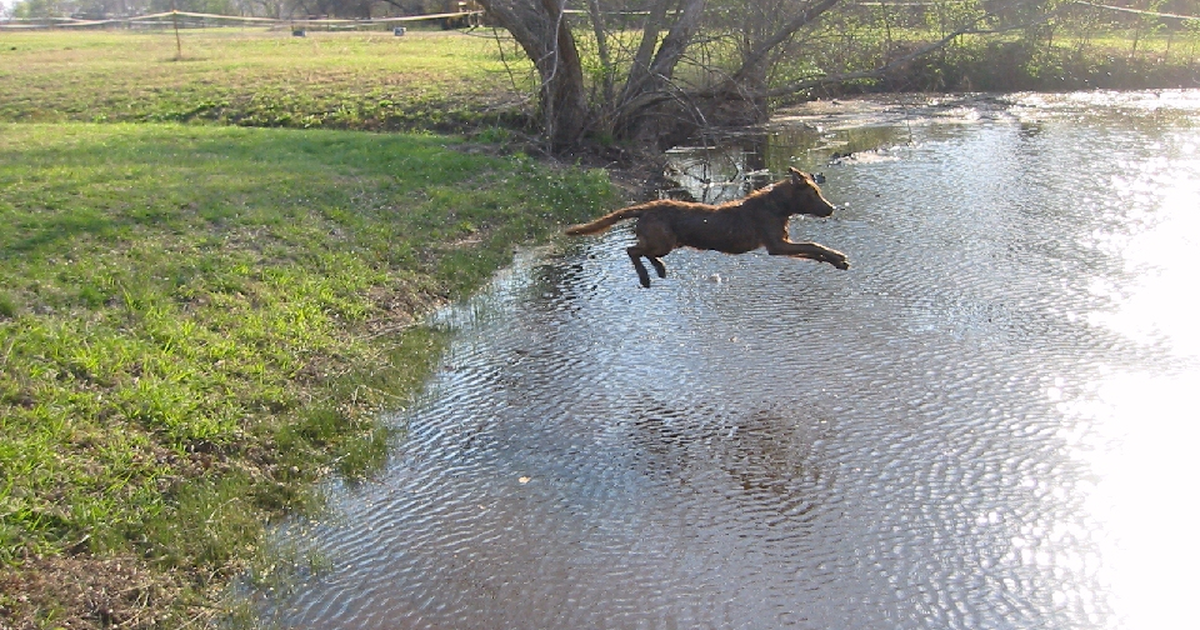
SamMy Chessie is only 6, healthy, a great swimmer. Why would I even think about a spinal disease now?
Elena MarshBecause Degenerative Myelopathy is silent until it isn’t — and the Chesapeake Bay Retriever was literally one of the five breeds researchers used to discover the gene behind it, back in 2009.
SamWait, discover it how — like they found it by studying my breed specifically?
Elena MarshNot exactly your breed alone, but Chessies were part of the founding evidence. The mutation turned out to be the same gene linked to ALS in humans.
SamThat’s a heavier connection than I expected for a “getting older” symptom.
Elena MarshIt is. Let’s walk through what the research actually shows, and what a cheek swab can tell you today.


The short answer: The Chesapeake Bay Retriever was one of the five founding breeds in the 2009 study that first identified the SOD1 gene mutation behind canine Degenerative Myelopathy (DM) — the same gene implicated in some hereditary forms of human ALS. A $65 cheek-swab DNA test from the Orthopedic Foundation for Animals (OFA), processed by the University of Missouri, tells you whether your dog is Normal, a Carrier, or At-Risk. But a positive “At-Risk” result is not a diagnosis — some dogs with two copies of the mutation never develop clinical signs, or don’t show them until 15 years old. DM is a diagnosis of exclusion that requires ruling out other spinal conditions first.
If you own a Chesapeake Bay Retriever, there’s a piece of canine genetics history tied to your breed that most owners never hear about. In 2009, researchers ran a genome-wide association study comparing DNA from 38 Degenerative Myelopathy-affected Pembroke Welsh Corgis against 17 clinically normal relatives, and traced the strongest signal to a gene called SOD1 on canine chromosome 31. When they checked whether the same mutation held up across other breeds, the Chesapeake Bay Retriever was one of just five breeds included in that founding evidence — alongside the Pembroke Welsh Corgi, Boxer, Rhodesian Ridgeback, and German Shepherd Dog.
This isn’t a fringe finding. It’s peer-reviewed, it’s been replicated in tens of thousands of dogs across dozens of breeds since, and — notably — the same SOD1 gene is implicated in some inherited forms of human amyotrophic lateral sclerosis (ALS), making canine DM one of the most-cited spontaneous animal models for ALS research. Here’s what the science actually says, and what Chesapeake Bay Retriever owners in the US should do with that information.
- What SOD1 Does, and What Goes Wrong
- The 2009 Discovery — and Why Chesapeake Bay Retrievers Were Part of It
- What Actually Happens in an Affected Dog
- Getting Your Dog Tested in the US
- Breeding Considerations
- A Note for UK Owners
- Pet Insurance and Genetic Test Results
- What Chesapeake Bay Retriever Owners Should Do Today
- FAQ
- References
- How to get your pet tested
What SOD1 Does, and What Goes Wrong
SOD1 (superoxide dismutase 1) codes for an enzyme that neutralizes damaging free radicals inside cells. The DM-associated mutation is a single-base change in exon 2 of the gene — c.118G>A, producing an amino-acid substitution researchers call E40K. That small structural change appears to make the resulting protein prone to misfolding and clumping inside spinal cord neurons, gradually damaging the white matter that carries movement signals down the spinal cord. The clinical result is progressive, painless weakness and loss of coordination in the hind limbs.
The 2009 Discovery — and Why Chesapeake Bay Retrievers Were Part of It
The foundational paper — Awano et al., published in the Proceedings of the National Academy of Sciences in 2009 — used a genome-wide association scan in Pembroke Welsh Corgis to localize the mutation, then tested whether the same variant tracked with disease status across four additional breeds with documented DM cases: Boxer, Rhodesian Ridgeback, German Shepherd Dog, and Chesapeake Bay Retriever. Across those five breeds combined, 96% of dogs with a confirmed DM diagnosis carried two copies of the mutant allele (A/A), compared with only 34% of clinically normal dogs from the same breeds. That gap is what elevated SOD1 from “a gene that happens to vary” to “the leading genetic risk factor for canine DM.”
A much larger follow-up study — Zeng et al., 2014, in the Journal of Veterinary Internal Medicine — expanded the genetic survey to 33,747 dogs (35,359 individual genotype results, since some dogs were tested for more than one SOD1 variant) across many more breeds, and the Orthopedic Foundation for Animals (OFA) now lists 30 breeds, including the Chesapeake Bay Retriever, where DM has been pathologically confirmed through spinal cord histopathology, not just genetically associated. Of 168 confirmed DM cases examined in that study, 157 were homozygous (A/A) for the mutation, 9 were heterozygous carriers (A/N), and 2 were homozygous Normal (N/N) — a reminder that while the SOD1 genotype is strongly predictive, it isn’t the sole determinant, and a clear or carrier result does not entirely rule DM out in every case.
SamSo Chessies aren’t just “also on the list” — they actually helped prove the mutation was real?
Elena MarshRight. They were part of the original five-breed confirmation set in the 2009 paper, not a later addition.
What Actually Happens in an Affected Dog
DM typically begins in dogs 8 years or older, though OFA notes that some dogs testing At-Risk (A/A) didn’t show clinical signs until they were 15. Early signs are subtle: mild asymmetric weakness in one or both hind limbs, scuffing the tops of the rear paws when walking, or a slight swaying gait. Critically, DM is not painful in its early-to-mid stages, which is one of the ways veterinarians distinguish it from conditions like intervertebral disc disease (IVDD) or orthopedic joint problems, both of which are far more common causes of hind-limb weakness in retriever-type breeds and typically do involve pain.
Because DM mimics several more treatable conditions, OFA and veterinary neurologists are explicit that a genetic test result is not a diagnosis on its own. Confirming DM clinically requires ruling out IVDD, degenerative joint disease, and other spinal cord disorders through neurological exam and imaging (MRI or myelography) — the DNA test tells you genetic risk, not what’s currently happening in your dog’s spinal cord. In the US, this typically means a referral to an ACVIM board-certified veterinary neurologist; general-practice vets can usually initiate that referral once basic orthopedic causes have been ruled out.
Getting Your Dog Tested in the US
The reference DM test in the US is administered through OFA and processed by the University of Missouri College of Veterinary Medicine’s Small Animal Molecular Genetics Laboratory. It’s a simple, non-invasive cheek (buccal) swab — no blood draw or vet visit required — ordered directly through OFA’s website, and the standard fee is $65 per dog. Results come back classified into three genotypes:
- N/N (Normal): no copies of the mutation; cannot pass the risk allele to offspring.
- A/N (Carrier): one copy of the mutation; low individual risk but can pass the allele to roughly half of offspring.
- A/A (At-Risk): two copies of the mutation; the genotype found in the overwhelming majority of confirmed DM cases — but again, not every A/A dog develops clinical disease.
The American Chesapeake Club — the breed’s AKC parent club — actively promotes DM testing on its own health resources page, describing the cheek-swab test as a tool breeders can use “to make sound breeding decisions aimed at preventing resulting puppies from suffering from this disease.” The club’s published guidance is that all breeding animals should be screened prior to breeding. Meanwhile, OFA itself adds a caution worth taking seriously: it advises that breeders “should not over-emphasize the test results” in isolation from the rest of a dog’s health and pedigree profile — this is a risk-management tool, not the sole basis for a breeding decision. Breeders serious about long-term health tracking can also register DM results through the AKC Canine Health Information Center (CHIC), which keeps a permanent, searchable health record tied to the dog. DM testing is also part of the UK Kennel Club’s official testing scheme for the breed, giving Chesapeake Bay Retriever owners international company in treating this as a standard screening test rather than an edge case.
Breeding Considerations
DM follows an autosomal recessive inheritance pattern, though the American Chesapeake Club’s own health materials describe it more precisely as autosomal recessive with incomplete penetrance — meaning the Mendelian math below predicts genotype, not a guaranteed clinical outcome for every A/A puppy. Pair two carriers (A/N x A/N), and that Mendelian math predicts roughly 25% of resulting puppies will be At-Risk (A/A), 50% will be Carriers, and 25% will be clear (N/N). The standard genetic-counseling approach for a recessive trait like this is to test both parents before a planned litter and pair any carrier only with a confirmed N/N partner, so that no puppy in the litter inherits two copies of the mutation — this is general Mendelian breeding logic, not a specific American Chesapeake Club policy, though it’s consistent with the club’s screen-before-breeding guidance above. A Carrier does not need to be excluded from breeding altogether — this is a manageable trait when genotypes are known in advance, not an automatic disqualification.
Separately, researchers have also identified variants in a second gene, SP110, that appear to modify DM risk among SOD1 At-Risk dogs — but as of this writing, that refinement test (DMRM) is validated and offered specifically for Pembroke Welsh Corgis, not Chesapeake Bay Retrievers, so it isn’t yet part of the standard screening picture for this breed.
SamIf my dog tests as a Carrier, does that mean I shouldn’t breed him at all?
Elena MarshNot necessarily — standard genetic-counseling practice is to pair a Carrier only with a confirmed Normal dog, which avoids producing At-Risk puppies entirely.
A Note for UK Owners
This breed’s international footprint means Chesapeake Bay Retriever owners reading this aren’t all in the US. In the UK, DM testing sits within a different regulatory and breeding-oversight framework. The Kennel Club’s Assured Breeder Scheme requires DM testing for some breeds outright — German Shepherd Dogs, for example — but based on what we could confirm, elbow grading rather than DM testing is the current mandatory health screen listed for the Chesapeake Bay Retriever specifically, even though UK breed health resources still actively recommend DM testing given the documented risk. Breeders operating at a commercial scale in England (broadly: three or more litters sold within a 12-month period, or otherwise breeding and advertising puppies as a business) also fall under the Animal Welfare (Licensing of Activities Involving Animals) (England) Regulations 2018, which requires a local-authority breeding licence and an inspection by a local-authority-appointed inspector (who works alongside a vet, but isn’t a vet visit in the sense of your own dog’s vet) — the exact thresholds are specific enough that anyone breeding at scale should check the current guidance rather than rely on a rough summary here. DM testing isn’t itself a legal requirement under this regime, but it’s the kind of health documentation a licensing inspector or a puppy buyer is increasingly likely to ask about.
We could not confirm whether OFA/University of Missouri accepts international samples from the UK, so UK-based owners should ask a UK veterinary genetics lab directly about SOD1/DM testing and current turnaround rather than assume the US pathway applies to them; we’re not going to invent a GBP price we can’t verify. If you’re UK-based and your dog shows possible DM symptoms, ask your vet about referral to an RCVS-recognised Specialist in veterinary neurology, the UK equivalent of the board-certified neurologist referral pathway described above for US owners.
Pet Insurance and Genetic Test Results
A common concern is whether a positive DM genetic test will affect pet insurance eligibility or pricing. Based on the general pattern among major US insurers, genetic test results themselves are generally not used in underwriting decisions — what insurers typically exclude are pre-existing or symptomatic conditions, meaning something already diagnosed or showing signs before the policy’s effective date, not a genotype on record. Coverage details, including any waiting period for hereditary or congenital conditions, still vary by insurer and policy, so the safest approach is to secure coverage before or shortly after testing and to ask your specific insurer directly how they handle genetic test results. UK owners should note that policies are commonly sold as either “lifetime” cover (renewing each year with condition coverage carried forward) or cheaper time-limited/12-month cover (which can stop paying for a chronic condition like DM after the policy year it was first claimed on) — for a slow-progressing condition like DM, that distinction matters more than whether a genetic test was ever run.
What Chesapeake Bay Retriever Owners Should Do Today
- Order the OFA/University of Missouri SOD1 DNA test (cheek swab, $65) for any Chessie 8 years or older, or any dog you plan to breed, regardless of age.
- Keep the result on file and share it with every vet who treats your dog, since early DM signs are easy to mistake for normal aging or joint pain.
- If you notice hind-limb weakness, scuffing, or swaying, ask your vet for a neurological exam and imaging to rule out IVDD and joint disease before assuming it’s DM.
- If breeding, test both parents in advance and only pair a Carrier with a confirmed Normal (N/N) dog.
- If you’re insurance-shopping, ask the insurer directly how they treat genetic test results and hereditary conditions before you sign.
- Always involve a licensed veterinarian for diagnosis and treatment — this article is educational, not a substitute for professional veterinary care.
FAQ
Q. Is the Chesapeake Bay Retriever actually at higher risk for DM than other breeds?
The Chesapeake Bay Retriever was one of the five founding breeds in the 2009 study that identified the SOD1 mutation, and it appears on OFA’s list of 30 breeds with pathologically confirmed DM cases. We could not find a precise breed-specific prevalence percentage from a primary source as of this writing, so treat “documented risk breed” and “guaranteed to develop DM” as two different claims.
Q. If my dog tests At-Risk (A/A), will they definitely get DM?
No. OFA notes that some At-Risk dogs don’t show clinical signs until 15 years old, and not every At-Risk dog develops the disease at all. The test indicates genetic risk, not a certain outcome.
Q. How is DM actually diagnosed, versus just tested for genetically?
A genetic test alone cannot diagnose DM. Vets rule out other causes of hind-limb weakness — especially IVDD and orthopedic disease — through neurological exam and imaging before treating DM as the working diagnosis.
Q. How much does the test cost and where do I get it?
In the US, the reference test is ordered through OFA’s website and processed by the University of Missouri’s Small Animal Molecular Genetics Laboratory for $65 per dog, using a simple cheek swab.
References
- Awano T, Johnson GS, Wade CM, et al. (2009). “Genome-wide association analysis reveals a SOD1 mutation in canine degenerative myelopathy that resembles amyotrophic lateral sclerosis.” Proceedings of the National Academy of Sciences 106(8):2794-2799.
- Zeng R, Coates JR, Johnson GC, et al. (2014). “Breed Distribution of SOD1 Alleles Previously Associated with Canine Degenerative Myelopathy.” Journal of Veterinary Internal Medicine 28(2):515-521.
- Orthopedic Foundation for Animals (OFA), “Degenerative Myelopathy”
- OFA, “Degenerative Myelopathy Risk Modifier (DMRM)”
- American Chesapeake Club, “Degenerative Myelopathy”
How to get your pet tested
Some pet DNA tests screen for hereditary-disease carrier status or genetic risk markers, but the results are information, not a diagnosis. If your pet has symptoms or you need a confirmed diagnosis, please consult your veterinarian.
Below is where DM (SOD1) can be tested, grouped by where you live and marked by whether each service explicitly lists this variant (✅ = listed / ❓ = unverified / ❌ = not offered).
In the United States
In the United Kingdom
In India
Elsewhere
Note: even if the kit can be purchased/shipped internationally, the service itself (sample return, analysis, results) is not guaranteed in your country. Check each service’s stated service area and sample-return method before ordering.
Services offered in other regions (may not be available where you live)
Worried about your pet’s health? — Talk to a veterinarian
A confirmed diagnosis and any treatment plan are decisions for a veterinarian, not a test kit. The links below are professional resources.
AVMA — Find a veterinarian (American Veterinary Medical Association)
This section contains advertising (affiliate links); we may earn a commission if you buy through them. As an Amazon Associate, we earn from qualifying purchases. Genetic tests do not guarantee the prevention, diagnosis, or treatment of any disease — results indicate tendencies and provide information only.
This page is educational information, not veterinary diagnosis or advice. Always consult a veterinarian about your pet’s health.
About the author
Elena Marsh
Editor & writer (not a veterinarian)
A writer with a molecular-biology background and a lifelong dog and cat owner. Not a veterinarian — she translates peer-reviewed genetics research and primary data into plain language, always as information rather than diagnosis.