Conclusion: Malignant hyperthermia (MH) in dogs is a rare, autosomal-dominant reaction to specific anesthetic drugs, not an everyday illness. The Merck Veterinary Manual lists the Pointer among the breeds with reported cases, alongside Greyhounds, Labrador Retrievers, and Golden Retrievers — though no dedicated peer-reviewed Pointer case study exists yet, so this connection rests on that single tier-2 source. What the 2025 case series from Perez Jimenez et al. (Veterinary Anaesthesia and Analgesia) shows is that the underlying RYR1 variants can appear spontaneously (de novo), so a clean family or breed history is reassuring but never a guarantee. This article is educational only — always discuss anesthesia history and genetic testing with your veterinarian before any surgical procedure.
- What Malignant Hyperthermia Actually Is — A Trait, Not an Illness
- The 2025 Case Series: What Actually Happens During a Crisis
- Why the Pointer Is Named in This Article — And What Merck Does (and Doesn’t) Say
- 2001: The Mutation Is Confirmed — And Why “Rare” Doesn’t Mean “Never”
- The Earliest Warning Sign Isn’t Fever — It’s Rising CO2
- What Triggers It, What Doesn’t — And a Recovery Case from Canada
- Treatment: Dantrolene, and Why Availability Can’t Be Assumed
- The Pointer Today: A Shrinking Gundog Population on Both Sides of the Atlantic
- Genetic Testing Options: Embark, Wisdom Panel, Orivet, and International Labs
- Breeding Regulation on Both Sides of the Atlantic: What Isn’t Required
- Pet Insurance and Genetic Risk: US and UK Perspectives
- Practical Steps for Pointer Owners Before Any Anesthesia
- Frequently asked questions
- References
- How to get your pet tested
What Malignant Hyperthermia Actually Is — A Trait, Not an Illness


Inside skeletal muscle sits a calcium channel called the ryanodine receptor 1 (RyR1). It opens to release calcium when a muscle contracts, then closes so the muscle can relax. In dogs carrying certain RYR1 variants, exposure to a volatile inhalant anesthetic acts like a key that jams the channel open. Calcium keeps flooding out, the muscle keeps contracting, and the body keeps generating heat and carbon dioxide faster than it can dissipate them.
The part owners find counterintuitive is that a dog with this trait is, in every other respect, a completely ordinary dog. Normal energy, normal bloodwork, normal behavior on the coldest or hottest day of the year. Embark’s own health-result page makes this explicit, telling owners that outside of anesthesia, a dog with an MH-associated result “can live completely normal, active lives.” The result isn’t a diagnosis to treat — it’s information to share with every veterinarian who will ever anesthetize that dog.
The 2025 Case Series: What Actually Happens During a Crisis
The most detailed and recent published account comes from a Washington State University group: Perez Jimenez et al. (2025, Veterinary Anaesthesia and Analgesia, 52(1):8-18). The team investigated two pet dogs that died of malignant hyperthermia during isoflurane anesthesia — a 7-year-old male Pit Bull-type mix and a 12-month-old male Golden Retriever — both showing tachypnea, tachycardia, severe hyperthermia, and muscle rigidity consistent with an inhalant-triggered crisis.
Next-generation sequencing of RYR1, CACNA1S, and STAC3 (the three genes most associated with MH), confirmed by Sanger sequencing, turned up two missense variants never previously reported in dogs: p.Gly2375Arg in the Pit Bull-type mix and p.Pro152Leu in the Golden Retriever. Notably, p.Gly2375Arg sits at the exact residue implicated in a known human MH mutation — a striking sign that the vulnerable regions of the RyR1 protein are shared across species, not breed-specific quirks.
Why the Pointer Is Named in This Article — And What Merck Does (and Doesn’t) Say
SamIs there an actual study on Pointers and this gene? Elena MarshHonestly, not yet published. Merck’s breed list is the only citable source right now — that’s worth being upfront about.We want to be transparent about the evidence here. Searching the veterinary literature turns up plenty of Pointer breed history and temperament material from sources like the American Kennel Club’s Pointer breed page — which describes a breed whose “name is its job description,” bred for centuries to locate game birds, and characterized today as high-energy and athletic enough to serve as a “runner’s companion.” What we did not find is a peer-reviewed case report, cohort study, or genetic screening paper that names the Pointer specifically in connection with RYR1 or malignant hyperthermia.
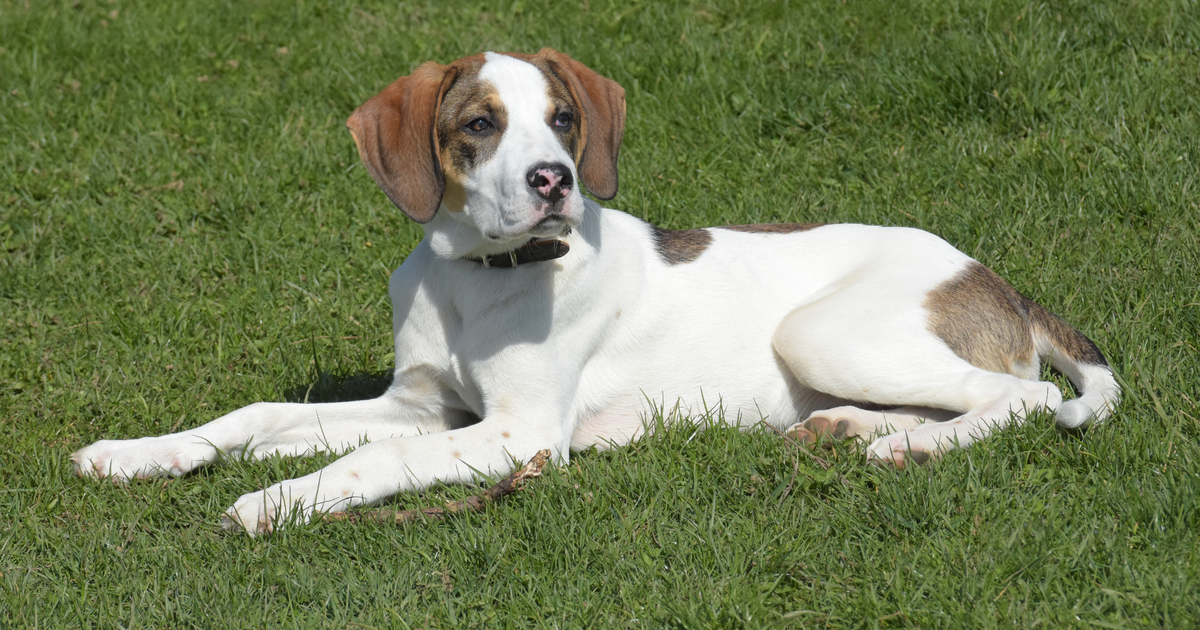
The Pointer’s inclusion in this article rests on one source: the Merck Veterinary Manual’s client-facing page, Malignant Hyperthermia in Dogs, which lists Pointers among the breeds with reported cases (alongside Greyhounds, Labrador Retrievers, Saint Bernards, Springer Spaniels, Bichon Frises, Golden Retrievers, and Border Collies). Merck does not cite a specific study for that breed list, and Embark’s public MH result page currently names only Greyhounds by breed. In other words, the Pointer connection is real but thin — a tier-2 clinical reference, not a confirmed genetic finding in the breed. That gap is itself useful information: it means a negative or absent test result for a Pointer should never be read as “this breed is cleared.”
2001: The Mutation Is Confirmed — And Why “Rare” Doesn’t Mean “Never”
The genetic basis of canine MH was pinned down in 2001. Roberts et al. (Anesthesiology, 95(3):716-725) built a breeding colony from a single susceptible mixed-breed dog, tested 47 dogs with an in vitro halothane/caffeine contracture assay, and mapped the trait to RYR1. The causative change was c.1640T>C, substituting alanine for valine at amino acid 547 (V547A). Every dog that tested contracture-positive was heterozygous for this variant, and inheritance followed a clean autosomal dominant pattern — one copy is enough to confer susceptibility.
What remains unknown, more than two decades later, is how common this variant — or others like it — actually is across the general dog population. Haluskova et al. (2023, Veterinarni Medicina, 68(11):428-434) screened 50 breeding dogs across 27 breeds in Slovakia and found zero carriers of the T1640C variant. A sample of 50 dogs simply isn’t large enough to rule out a variant that might occur in, say, 1 in 500 dogs — so “zero found” supports rarity without proving absence, in this or any breed, Pointer included.
The Earliest Warning Sign Isn’t Fever — It’s Rising CO2
SamWouldn’t a fever thermometer catch it early enough? Elena MarshNot according to Merck — the earliest measurable change is rising end-tidal CO2, well before body temperature climbs.The name “malignant hyperthermia” puts temperature first, but clinically it isn’t. The Merck Veterinary Manual’s professional reference page states plainly that the earliest sign in an anesthetized patient is a rise in carbon dioxide production, detected as increasing end-tidal CO2 on a capnograph — not a spike in body temperature. Rising temperature is a downstream consequence of muscle tissue burning through oxygen and generating heat; by the time it shows up on a thermometer, the metabolic crisis is already well underway.
That has a direct practical implication for owners: the single most useful question to ask a surgical facility beforehand isn’t “do you monitor temperature,” but “do you use capnography (end-tidal CO2 monitoring) during anesthesia?” Facilities and mobile spay/neuter clinics vary in what monitoring equipment they run as standard, and this is the piece of equipment most likely to catch an MH crisis before it becomes a visible emergency.
What Triggers It, What Doesn’t — And a Recovery Case from Canada
The trigger list is short and specific. Per Merck, the agents that reliably provoke MH are the volatile inhalant anesthetics — halothane, isoflurane, sevoflurane — and the depolarizing muscle relaxant succinylcholine. Stress, excitement, and exertion are also noted as possible triggers outside the operating room. Crucially, this means a dog with the trait is not banned from all anesthesia for life; it means specific drugs need to be avoided.
A 2025 Canadian case report demonstrates exactly this. Shin and Ambros (Canadian Veterinary Journal, 66(8):868-873) describe a dog that developed a suspected MH crisis under isoflurane anesthesia. The clinical team switched immediately to propofol-based total intravenous anesthesia (TIVA), increased ventilation, applied active cooling, and administered dantrolene. The dog recovered. Six weeks later, the same dog underwent a second, unrelated surgery — planned from the outset as TIVA with no inhalant anesthetic — and it proceeded without incident.
Treatment: Dantrolene, and Why Availability Can’t Be Assumed
The only drug that specifically counters an MH crisis is dantrolene, which acts directly on RyR1 to shut down the runaway calcium release. Merck’s veterinary dosing guidance is 2–3 mg/kg administered intravenously, repeated as needed up to a cumulative 10 mg/kg, with prophylactic dosing an option for dogs with a known history. Beyond dantrolene, emergency management is supportive: stopping the trigger agent immediately, hyperventilating on 100% oxygen, and active cooling.
Dantrolene is not a drug every general practice veterinary clinic stocks as routine inventory — it’s expensive, has a limited shelf life once reconstituted in some formulations, and is needed only rarely. That is exactly why sharing MH risk information with a clinic before a scheduled procedure matters: it gives the facility the chance to source dantrolene, switch to a TIVA protocol, or refer to a facility with more advanced anesthesia monitoring, none of which can happen if the possibility only comes up after a crisis starts.
The Pointer Today: A Shrinking Gundog Population on Both Sides of the Atlantic
Understanding how relevant this actually is to Pointer owners requires some population context, and the picture differs sharply between the UK and the US. In the UK, the Pointer is one of the country’s oldest native gundog breeds, but its numbers have collapsed. A Kennel Club (UK) report found Pointer registrations had nearly halved over a decade, projecting roughly 436 registrations for the year — low enough to put the breed at risk of joining the Kennel Club’s “At Watch” list for native breeds. Over the same period its continental cousin, the German Shorthaired Pointer, rose about 25%.
In the US, the trend runs the other way: the AKC’s 2025 popularity rankings show the Pointer climbing about ten spots year over year, from roughly 121st to 111st most-registered breed — still a niche breed by volume, but a growing one. Either way, most general-practice veterinarians on both sides of the Atlantic will see relatively few Pointers over a career, which means fewer opportunities to build breed-specific anesthesia experience by repetition alone.
Pointers also remain a genuinely active field breed. A cross-sectional study of Swedish sporting and utility trial dogs (a population that includes pointing breeds used in field work) found that roughly 59% sustained at least one training- or competition-related injury over their lifetime, most commonly muscle strains, ligament sprains, and paw or spine injuries. We could not find data isolating Pointers within that study, but the broader pattern is a useful reminder: active gundogs are more likely than sedentary companion breeds to eventually need orthopedic or soft-tissue surgery, and therefore more likely to face a general anesthetic at some point in their working life.
Genetic Testing Options: Embark, Wisdom Panel, Orivet, and International Labs
Several direct-to-consumer and clinic-submitted panels now include RYR1/MH screening. In the US, Embark’s Breed + Health kit (list price $199) includes an MH result as part of its standard health panel, using a cheek swab the owner collects at home. Orivet offers a standalone MH test targeting the same c.1640T>C (V547A) variant identified by Roberts et al., priced at $60. Internationally, Germany’s LABOKLIN and the Czech Republic’s Genomia both run the same variant as an all-breed test, the latter at roughly $56 with a 12-business-day turnaround.
Worth noting for Pointer owners specifically: Embark’s public MH information page currently names only the Greyhound by breed, even though Merck’s broader list includes Pointers, Labrador Retrievers, and several others. This isn’t evidence that Embark’s assay won’t detect a Pointer’s variant — the underlying test targets the RYR1 gene itself, not a breed — but it does mean owners shouldn’t expect every testing company’s marketing copy to mention their specific breed by name. If in doubt about what a panel actually screens for, check the lab’s variant documentation or ask your veterinarian to confirm before ordering.
UK-based owners don’t need to route a sample overseas at all: LABOKLIN UK runs the same all-breed MH test domestically from either an EDTA blood sample or a buccal swab, priced at £48.00 including VAT with a published turnaround of 2–3 weeks — worth factoring in when comparing against the US-dollar pricing of Embark, Orivet, or Genomia above.
Breeding Regulation on Both Sides of the Atlantic: What Isn’t Required
It’s worth being explicit about what regulation does not yet cover here, because owners sometimes assume health-testing schemes are broader than they are. In the UK, Lucy’s Law bans third-party puppy and kitten sales (requiring buyers to deal directly with a breeder or a rehoming centre), and the Kennel Club’s Assured Breeder Scheme maintains a twice-yearly-updated list of breed-specific “required” and “recommended” health screens (hip/elbow scoring, eye testing, and DNA tests where applicable) that ABS-registered breeders must complete for litters to be checked at registration. As of this writing, malignant hyperthermia/RYR1 is not one of the schemes’ listed required tests for the Pointer, so a clean ABS record says nothing about MH status specifically.
In the US, oversight runs through a different mechanism: the USDA requires a Class A breeder license only once a breeder keeps more than four breeding females and sells sight-unseen, which leaves the great majority of small-scale and hobby breeders outside federal licensing entirely; state-level rules vary widely on top of that. The AKC’s own Breeder of Merit program is voluntary recognition, not a license, and its health-testing certification follows whatever the AKC parent club for that breed recommends — which for Pointers currently does not include an RYR1/MH requirement. In short: on both sides of the Atlantic, testing for this trait is something an owner or breeder currently has to seek out on their own initiative, not something any registration or licensing scheme mandates.
Pet Insurance and Genetic Risk: US and UK Perspectives
SamIf insurance covers hereditary stuff, does that include the DNA test itself? Elena MarshUsually not. Insurers cover treating a diagnosed condition, but elective screening tends to fall under excluded preventive care.US insurers generally distinguish hereditary conditions from pre-existing ones. Trupanion’s policy FAQ states that hereditary and congenital conditions are covered like any other illness once any waiting period has passed, provided there were no signs or symptoms before the policy’s effective date. Healthy Paws takes a similar position but excludes a hereditary condition if symptoms were present — even undiagnosed — before enrollment or during the waiting period. In the UK, Agria and Petplan both treat a hereditary condition as pre-existing (and therefore excluded) only once clinical signs or a diagnosis exist prior to the policy start; a condition that hasn’t yet manifested is typically eligible for future cover.
None of these providers’ public pages describe covering elective genetic screening itself — a proactive RYR1/MH test ordered before any symptoms exist reads, in insurance terms, as preventive or wellness testing, a category that standard accident-and-illness policies on both sides of the Atlantic commonly exclude (some add-on wellness riders may cover a portion; check individual policy wording). The practical upshot: buy insurance, if you want it, based on the condition and waiting-period terms rather than an expectation that it will subsidize a voluntary DNA panel. Genetic testing is a separate, out-of-pocket decision best made in consultation with your veterinarian.
Practical Steps for Pointer Owners Before Any Anesthesia
1. Ask about capnography, not just temperature monitoring. “Do you monitor end-tidal CO2 during anesthesia?” is the single most targeted question you can ask a clinic in advance.
2. Bring a written anesthesia history, not a memory of one. Unusually slow recovery, unexplained fever, or muscle rigidity after a past procedure are worth documenting and requesting records for from any prior clinic.
3. Ask the breeder about the wider litter and pedigree, but don’t rely on it alone. Because at least some RYR1 variants can arise de novo, a clean family history is reassuring, not conclusive.
4. Test early if you decide to test, not the week before surgery. International lab turnaround plus shipping can take several weeks; a scheduled procedure is the wrong time to start.
5. Carry a paper copy of any positive result. Emergency and out-of-town clinics won’t have your regular vet’s chart. A one-page result summary in a document you carry (or a note on file with a pet ID tag service) can change what an unfamiliar team decides in the first ten minutes of a crisis.
Malignant hyperthermia is uncommon, and the great majority of Pointers will go through life, and through anesthesia, without ever encountering it. Even so, the evidence available today — a Merck-listed breed association without a dedicated study, a documented de novo mutation in an unrelated breed, and a treatable-but-time-sensitive crisis pattern — points to the same low-cost habit regardless of test results: tell every anesthesia provider your dog’s full history, and ask what monitoring will be running in the room.
Frequently asked questions
Q. Is malignant hyperthermia the same as heatstroke?
No. Heatstroke results from an external heat and exercise load overwhelming a dog’s ability to cool down, and it can affect any dog in the right conditions. Malignant hyperthermia is a genetic, drug-triggered reaction in which skeletal muscle itself generates uncontrolled heat, typically during anesthesia. The two look similar once temperature is elevated, but the underlying cause and the immediate treatment differ. Either way, a dog that is collapsed, panting heavily, and running a high temperature needs emergency veterinary care immediately.
Q. Are all Pointers at risk for this condition?
There’s no data suggesting most, or even a meaningful minority, of Pointers carry an MH-associated RYR1 variant. The Pointer’s inclusion in Merck’s list of reported breeds means cases have been documented, not that the trait is common in the breed. Without a large-scale screening study, we simply don’t know the carrier frequency — for Pointers or for most other breeds on that list.
Q. My Pointer has had anesthesia before with no problems. Can I stop worrying about this?
A prior uneventful anesthesia is reassuring but not a lifetime guarantee, particularly if a different anesthetic protocol, a longer procedure, or added stress is involved next time. Share the full prior history — including that it went well — with your veterinarian so it can inform the next anesthesia plan rather than replace the conversation.
Q. If my dog tests positive, does that rule out inhalant anesthesia forever?
No. As the Shin and Ambros (2025) case shows, a dog that experienced a suspected MH crisis under isoflurane went on to have a second, unrelated surgery completed safely under total intravenous anesthesia (TIVA) alone. The choice of protocol is a clinical decision for your veterinarian or a veterinary anesthesia specialist, informed by the test result and history you provide.
Q. Will my pet insurance pay for the genetic test?
Based on the publicly posted policies of major US and UK insurers reviewed for this article (Trupanion, Healthy Paws, Agria, Petplan), elective genetic screening ordered before any symptoms appear is generally treated as preventive testing, a category standard accident-and-illness policies typically don’t cover. Confirm the specifics with your own insurer, since wellness add-ons and policy terms vary.
Q. How much does testing cost and how long does it take?
Published prices at the time of writing include Orivet at $60, Genomia at roughly $56 for a standalone MH test with about a 12-business-day turnaround, and Embark’s full Breed + Health kit (which includes MH among many other results) at $199. International shipping and any clinic handling fees can add to both cost and turnaround time, so order well ahead of any planned procedure.
References
- LABOKLIN UK — Malignant Hyperthermia (MH), Dog genetic test (Service ID 8062). https://www.laboklin.co.uk/laboklin/showGeneticTest.jsp?testID=8062
- UK Government — Lucy’s Law: ban on third-party sales of puppies and kittens. https://www.gov.uk/guidance/lucys-law-ban-on-third-party-sales-of-puppies-and-kittens
- The Kennel Club — Latest updates to Kennel Club Assured Breeder Scheme. https://thekennelclub.org.uk/press-releases/2019/november/latest-updates-to-kennel-club-assured-breeder-scheme
- American Kennel Club — Understanding USDA Dog Breeder Licensing. https://www.akc.org/wp-content/uploads/2022/03/USDAAPHIS-Regulations-Information_2022-update-two-sided1.pdf
- American Kennel Club — AKC Breeder of Merit Program. https://www.akc.org/breeder-programs/akc-breeder-of-merit-program/
- Perez Jimenez TE, Issaka Salia O, Neibergs HL, et al. Novel ryanodine receptor 1 (RYR1) missense gene variants in two pet dogs with fatal malignant hyperthermia identified by next-generation sequencing. Vet Anaesth Analg. 2025;52(1):8-18. https://doi.org/10.1016/j.vaa.2024.10.131
- Roberts MC, Mickelson JR, Patterson EE, et al. Autosomal dominant canine malignant hyperthermia is caused by a mutation in the gene encoding the skeletal muscle calcium release channel (RYR1). Anesthesiology. 2001;95(3):716-725. https://pubmed.ncbi.nlm.nih.gov/11575546/
- Haluskova J, Holeckova B, Kokulova L, et al. Detection of the T1640C RYR1 mutation indicating malignant hyperthermia in dogs. Vet Med (Praha). 2023;68(11):428-434. https://doi.org/10.17221/46/2023-VETMED
- Shin CW, Ambros B. A case of suspected malignant hyperthermia in a dog. Can Vet J. 2025;66(8):868-873. https://pmc.ncbi.nlm.nih.gov/articles/PMC12330792/
- Merck Veterinary Manual — Malignant Hyperthermia in Dogs (dog owners edition). https://www.merckvetmanual.com/dog-owners/metabolic-disorders-of-dogs/malignant-hyperthermia-in-dogs
- Merck Veterinary Manual — Malignant Hyperthermia in Animals (professional edition). https://www.merckvetmanual.com/metabolic-disorders/malignant-hyperthermia/malignant-hyperthermia-in-animals
- OMIA:000621-9615 — Malignant hyperthermia in Canis lupus familiaris. https://omia.org/OMIA000621/9615/
- American Kennel Club — Pointer Dog Breed Information. https://www.akc.org/dog-breeds/pointer/
- American Kennel Club — The Most Popular Dog Breeds of 2025. https://www.akc.org/expert-advice/dog-breeds/most-popular-dog-breeds-2025/
- The Kennel Club (UK) — Britain’s Top Dogs: Old Favourites Rise and Fall While Continental Cousins Skyrocket. https://www.royalkennelclub.com/about-us/resources/media-centre/2019/november/britains-top-dogs-old-favourites-rise-and-fall-while-continental-cousins-skyrocket/
- Embark Veterinary — Malignant Hyperthermia (RYR1). https://embarkvet.com/products/dog-health/health-conditions/malignant-hyperthermia/
- Orivet — Malignant Hyperthermia genetic test. https://www.orivet.com/store/malignant-hyperthermia/p/164
- LABOKLIN — Maligne Hyperthermie (MH), Hund. https://laboklin.de/de/leistungen/genetik/erbkrankheiten/hund/maligne-hyperthermie-mh/
- Genomia — MH (malignant hyperthermia) test. https://www.genomia.cz/de/test/mh/
- Trupanion — Are hereditary and congenital conditions covered? https://www.trupanion.com/pet-insurance-faq/article/hereditary-and-congenital-conditions
- Healthy Paws Pet Insurance — Hereditary and Congenital Conditions in Pets. https://www.healthypawspetinsurance.com/hereditary-and-congenital-conditions-in-pets.html
- Agria Pet Insurance (UK) — Pre-Existing Conditions. https://www.agriapet.co.uk/pre-existing-conditions/
- Höglin A, et al. Injuries and Associated Factors in Swedish Sporting and Utility Trial Dogs — A Cross-Sectional Study. https://pmc.ncbi.nlm.nih.gov/articles/PMC10854622/
How to get your pet tested
Some pet DNA tests screen for hereditary-disease carrier status or genetic risk markers, but the results are information, not a diagnosis. If your pet has symptoms or you need a confirmed diagnosis, please consult your veterinarian.
Below is where Malignant hyperthermia (RYR1) can be tested, grouped by where you live and marked by whether each service explicitly lists this variant (✅ = listed / ❓ = unverified / ❌ = not offered).
In the United States
In the United Kingdom
In India
Elsewhere
Note: even if the kit can be purchased/shipped internationally, the service itself (sample return, analysis, results) is not guaranteed in your country. Check each service’s stated service area and sample-return method before ordering.
Services offered in other regions (may not be available where you live)
Worried about your pet’s health? — Talk to a veterinarian
A confirmed diagnosis and any treatment plan are decisions for a veterinarian, not a test kit. The links below are professional resources.
AVMA — Find a veterinarian (American Veterinary Medical Association)
This section contains advertising (affiliate links); we may earn a commission if you buy through them. As an Amazon Associate, we earn from qualifying purchases. Genetic tests do not guarantee the prevention, diagnosis, or treatment of any disease — results indicate tendencies and provide information only.
This page is educational information, not veterinary diagnosis or advice. Always consult a veterinarian about your pet’s health.
About the author
Elena Marsh
Editor & writer (not a veterinarian)
A writer with a molecular-biology background and a lifelong dog and cat owner. Not a veterinarian — she translates peer-reviewed genetics research and primary data into plain language, always as information rather than diagnosis.