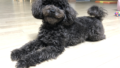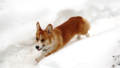


Bottom line: The Beagle carries the disc-disease allele without the dwarfism allele. Dogs have two FGF4 retrogenes: the chromosome 18 insertion (CDPA) shortens legs and is not a disease locus, while the chromosome 12 insertion (CDDY) shortens legs only slightly and starts the center of the discs degenerating within the first months of life. Beagles are near-fixed for the chromosome 12 insertion and, in the Beagles tested so far, carry none of the chromosome 18 one — which is why a hound nobody calls long-backed is named among the breeds at high risk of Hansen type I disc extrusion. A DNA result is a genotype, not a diagnosis; it cannot tell you whether or when your dog will herniate a disc. If your Beagle suddenly refuses to jump, cries when lifted, drags a hind paw or cannot urinate, treat it as an emergency and call your veterinarian, with whom all diagnosis and treatment decisions belong.
The Beagle is the seventh most popular breed in the United States on the American Kennel Club’s 2025 ranking, in a top ten led by the French Bulldog with the Dachshund newly fifth. Three of those seven carry the chromosome 12 FGF4 retrogene above 0.9 in UC Davis’s data, and only two look the part.
- A hound with the disc allele and none of the dwarf allele
- Chromosome 12 and chromosome 18 do not do the same job
- Twenty-fold: what the retrogene does inside a Beagle’s disc
- How likely is it, really — and which numbers to distrust
- The emergency this genotype makes more likely
- Where Americans can test — and why two laboratories describe the same variant differently
- Insurance: where one disc becomes a four-figure conversation
- Buying a puppy: what CHIC does not ask, and the statute that can work against you
- Frequently asked questions
- References
- How to get your pet tested
A hound with the disc allele and none of the dwarf allele
Two independent datasets agree. The UC Davis Veterinary Genetics Laboratory publishes CDDY allele frequencies for breeds in which at least 30 dogs have been tested; among Beagles submitted by paying clients the frequency is 0.9482 (95% CI 0.9180–0.9679), in the band labeled “100–499 dogs tested” — a self-selected testing population with owner-reported breeds, not a census. The same table puts the Dachshund at 0.9179 and the French Bulldog at 0.9118, both lower than the Beagle. The second dataset accompanies Batcher and colleagues’ 2019 paper in Genes, 3,223 dogs of 75 breeds mostly from the University of California, Davis teaching hospital’s DNA repository sampled irrespective of any disc diagnosis: all 12 Beagles genotyped for the chromosome 12 retrogene carried two copies, and the five genotyped for the chromosome 18 retrogene carried none.
Chromosome 12 and chromosome 18 do not do the same job
A retrogene is a gene copied through RNA and pasted back elsewhere in the genome, and dog FGF4 has done this twice. Parker and colleagues (2009, Science) described the chromosome 18 insertion, CDPA, as the breed-defining short-legged trait of at least 19 breeds; Brown and colleagues (2017, PNAS) found the second, on chromosome 12, which shortens legs modestly but also degenerates the discs. OMIA files CDDY under “intervertebral disc disease, predisposition to”, autosomal dominant; the CDPA entry is marked “Disease-related: no”. Batcher’s team put it in one sentence: “While chondrodystrophic dog breeds with 12-FGF4RG alone, such as the French Bulldog and Beagle, are at high risk for IVDD, the chondrodysplastic breeds with 18-FGF4RG alone, such as the Scottish Terrier and the West Highland White Terrier, are not considered at high risk.”
Brown’s team also wrote that the chromosome 12 insertion is “semidominant with respect to height, it is dominant for altered IVDs”: two copies make a dog visibly shorter than one, but one copy is already enough for the disc changes. Wisdom Panel puts the cosmetic half at about “6% shorter” for one copy — which is why the trait hides in a Beagle.
SamSo a West Highland White Terrier is short-legged and safe, and my Beagle is long-legged and not? Elena MarshThat is what the 2019 paper says in as many words, and it is why looking at a dog tells you almost nothing about which retrogene it carries.Twenty-fold: what the retrogene does inside a Beagle’s disc
This breed supplies the mechanism too. In the discussion of the 2019 paper the authors note that Beagle neonates with two copies of the chromosome 12 retrogene express roughly 20 times more FGF4 in the intervertebral disc than Cane Corso neonates with no retrogenes, a result from the 2017 PNAS work. The retrogene is not a silent marker near the culprit; it is transcribed in the tissue that fails.
What follows is a disc that ages wrongly from the start: the center undergoes chondroid metaplasia and mineralizes instead of staying soft and water-rich. UC Davis, citing histopathology published in 2019, says the degenerative phenotype is visible in all the discs of CDDY homozygotes as early as 10 weeks of age and absent in breed-matched dogs without the mutation. A calcified nucleus cannot deform; loaded, it can burst into the vertebral canal — Hansen type I extrusion, which the 2022 ACVIM consensus statement calls the most common cause of acute paraparesis and paraplegia in dogs. Genotype even shifts the site: of the 569 surgical cases in the 2019 series, 72.6% were thoracolumbar, and only 14.2% of extruded discs in retrogene carriers were cervical against 42.2% in dogs with no copies.
How likely is it, really — and which numbers to distrust
One figure about this breed circulates and should not. The 2019 paper records that, of the 65 Beagles in that one referral hospital’s DNA repository, 13.85% had undergone decompressive spinal surgery — a tertiary hospital’s biobank, into which disc cases were at times actively recruited, not a lifetime risk. Beware too of that paper’s main case table, which gives frequencies among operated dogs rather than the breed frequencies in its supplement.
For a genuine lifetime figure the largest American dataset is Wee and Nin’s 2025 analysis in JAVMA of 43,517 dogs in the Dog Aging Project. Lifetime prevalence of owner-reported disc disease was 1.2% (520 of 43,517) across that cohort and highest in the Dachshund at 15.3% (83 of 541); among purebreds the French Bulldog had the highest adjusted odds, 21.1 (95% CI 12.5–35.8). No Beagle-specific prevalence is published there, and the study is cross-sectional and owner-reported, so it cannot establish cause.
Nor does the literature hold a relative risk for the Beagle; such risks could only be computed where the allele still segregates, and high frequencies in breeds like the Dachshund “precluded the calculation of a relative risk.” The authors’ general statement is “The presence of 12-FGF4RG increases the risk for disc herniation 5.5-15.1-fold over the background risk in segregating and mixed breeds” — figures from Shih Tzus, Bichons Frises, Chihuahuas and mixed-breed dogs, not Beagles. Copy number does track calcification: among 423 operated dogs with radiographs, calcified discs appeared in 84.8% of those with two copies against 18.5% with none. Age at surgery was not dose-dependent, and it follows money and referral access as much as biology: Beagle cases at that hospital had a median of 7.9 years against 6.4 for the whole series.
SamIf nobody can give me a risk number for Beagles, what is the test for? Elena MarshFor breeding decisions, and for knowing which emergency to watch for. Not for a personal probability — the 2019 authors could not compute one for near-fixed breeds, and neither can anyone else.The emergency this genotype makes more likely
Signs of a thoracolumbar extrusion include reluctance to jump, an arched back, crying out when lifted, scuffing a hind paw, an unsteady hind end and, in severe cases, paralysis and inability to urinate. The American College of Veterinary Surgeons calls disc rupture “a true surgical emergency”, names the Beagle among the chondrodystrophoid breeds accounting for most ruptures, and puts average onset in these breeds at three to six years.
Deep pain perception is the prognostic dividing line. In the ACVIM panel’s pooled tabulation, paraplegic dogs that still felt deep pain recovered in 60% of 67 medically managed cases and 93% of 548 surgical ones, while paraplegic dogs with no deep pain recovered in 21% of 48 medically managed and 61% of 502 surgical cases; persistent incontinence affected 38.2% of deep-pain-negative paraplegic dogs in a 709-dog series against 5.6% of ambulatory dogs, and progressive myelomalacia is the feared complication in that group. What the evidence does not support is a stopwatch rule: the panel lists roughly as many studies finding no influence of surgical timing as finding one, records dogs paraplegic without deep pain for a week or more that still regained walking, and calls its recommendations “guidelines and not… standards of care.” So a Beagle losing hind-limb function needs urgent examination and referral; your veterinarian makes that call, and a genotype never does. Find the route before you need it — the ACVIM and ACVS directories list board-certified neurologists and surgeons by state, and VECCS certifies emergency facilities.
Where Americans can test — and why two laboratories describe the same variant differently
This test is not scarce; at least four American routes publish prices. UC Davis VGL, where the variant was found, sells “Chondrodystrophy (CDDY and IVDD) and Chondrodysplasia (CDPA)” as one assay covering both retrogenes at USD 58 per animal, or USD 27 as an add-on (prices as of September 2026), turnaround at least 15 business days, on an owner-collected buccal brush, and says its tests “assay for the causal variants, not for linked markers”. Results can be submitted to the Orthopedic Foundation for Animals. The OFA sells its own test with the University of Missouri at the flat USD 65 fee it charges for all its University of Missouri DNA tests, says “no veterinary appointment is necessary”, and lists the Beagle among affected breeds — though its labels are Normal, Carrier and Affected, with a “Carrier” recorded as at risk of the disease. One copy is enough; this is not a silent-carrier label.
The consumer panels carry it too. Embark lists CDDY/IVDD — gene FGF4, chromosome 12, dominant — with a caution aimed squarely at this breed: in “some breeds (e.g. Beagles and Cocker Spaniels, among others) where this variant has been passed down to nearly all dogs of the breed”, most dogs “do not show overt clinical signs of the disorder”. Wisdom Panel reports it in 81 breeds.
Then there is a disagreement owners deserve to know about. Orivet, whose US arm sells the same single assay at USD 60, labels the variant a “Variant of uncertain significance (VUS)”, “Not to be used in clinical decision-making, for breeding programs or screening.” UC Davis markets the identical variant as a causal, breeding-actionable result: two laboratories an American owner can order from, one assay, opposite framing. A granted patent sits over the method — US 11,761,042 B2, granted 19 September 2023 to the Regents of the University of California — but that is a fact about the discovery, not an explanation of availability, since no page states licensing terms. UC Davis’s own guidance also cuts against selling tests: “For breeds where the CDDY allele is fixed in the population… genetic testing for CDDY is not necessary.” At 0.9482 the Beagle is close to that point without being at it. And take any result to your veterinarian: 46 of the 378 dogs with calcified discs at surgery in the 2019 series carried no copies at all.
Insurance: where one disc becomes a four-figure conversation
No American fee schedule for spinal surgery could be found for this article, from a university teaching hospital or a specialty college, and carriers say only that costs vary greatly by location — so get a written estimate at referral rather than trusting a quoted range. For scale on the other side, NAPHIA reports an average annual premium of USD 836 per dog for accident-and-illness cover in the United States in 2025.
The terms are where this disease is exposed. Embrace runs a dogs-only orthopedic exclusion period and names intervertebral disk disease first on it: a condition that occurs or shows symptoms within the first 180 days of the policy is excluded and pre-existing for the life of the policy — permanent, not deferred. Some states allow that to be cut to as few as 14 days via an orthopedic exam and a vet-completed Orthopedic Report Card, but the exam is two-edged: if the veterinarian notes an abnormality, “that specific condition and anything related to it may be considered pre-existing.” Pets Best’s sample booklet deems disc conditions pre-existing where the pet “had at any time any Pre-Existing Conditions involving the intervertebral discs” — wording not limited to the same disc. Trupanion covers hereditary and congenital conditions as standard, provided there are no pre-existing signs or symptoms of them before the policy’s effective date, and states that it has no different waiting periods for specific conditions — five days for injury and 30 for illness, with no orthopedic-specific wait. Buy cover before any episode of back pain, and since no carrier was found stating whether a DNA result alone counts as pre-existing, ask yours in writing.
Buying a puppy: what CHIC does not ask, and the statute that can work against you
The National Beagle Club of America’s screening tests page makes hip dysplasia evaluation, Musladin-Lueke Syndrome DNA testing, thyroid certification, cardiac certification and an eye examination mandatory for a CHIC number, with Factor VII deficiency optional. CDDY, chondrodystrophy and intervertebral disc disease appear nowhere on it — so a Beagle breeder can satisfy everything the parent club asks, in good faith, and never have run this test. The OFA adds that “the CHIC number itself does not imply normal test results”: it is a disclosure badge, not a clearance certificate. Nor will the Animal Welfare Act (7 U.S.C. § 2131) fill the gap, reaching transport, handling, housing and veterinary care with no genetic-testing provision.
State puppy laws are the real lever, and here is the part nobody tells Beagle buyers. Florida Statutes § 828.29(5) gives a purchaser one year to obtain a veterinarian’s certificate that an animal is unfit because of a congenital or hereditary disorder — but § 828.29(7) lets a pet dealer “specifically state at the time of sale, in writing to the consumer, the presence of specific congenital or hereditary disorders, in which case the consumer has no right to any refund or exchange for those disorders.” In Florida a CDDY genotype handed over in writing at sale is not merely information; it removes your right under that statute to a refund or exchange for disc disease attributable to it. Elsewhere windows and wording differ: New York General Business Law § 753 allows 180 days but says “congenital malformation”, and California Health and Safety Code § 122100 runs a year and is aimed at breeders. Check your own state.
For breeders the published advice is two-sided. The 2019 authors wrote that breeding priorities “should be for dogs with fewer copies of 12-FGF4RG, so that the allele frequency can be reduced”. Where a breed carries both retrogenes a clean trade exists — keep chromosome 18 for leg length, select against chromosome 12 — and the Beagle cannot make that trade, having no chromosome 18 insertion to keep. Against that, the Cornell Riney Canine Health Center, which lists Beagles first among predisposed breeds, warns that in high-frequency breeds dogs with one or two copies “should not be immediately removed from the breeding population”. Cornell also names the structural issue: frequencies are very high in some populations “because certain breed standards call for a chondrodystrophic (short legs, long body) appearance”. The Beagle sharpens it — no standard asked for this allele here, and it is near-fixed anyway. Keeping your own dog lean is the part you control: overweight dogs had 1.67 times the odds of owner-reported disc disease in the 43,517-dog Dog Aging Project cohort.
Frequently asked questions
Q. My Beagle has two copies of CDDY. Does that mean he will slip a disc?
No. It means he inherited two copies of the chromosome 12 FGF4 retrogene — a genotype, not a diagnosis or a forecast. UC Davis VGL states that multiple factors influence whether a particular disc herniates in an individual dog, and Cornell notes that other variants, lifestyle and environment contribute. Most Beagles carry this variant and most never come to surgery; take the report to your veterinarian.
Q. Why does my Beagle carry a “dwarfism” gene when he is not short-legged?
Because the two retrogenes do different things. The chromosome 18 insertion (CDPA) is the strong leg-shortening one and is not a disease locus; the chromosome 12 insertion (CDDY) shortens legs only slightly — Wisdom Panel puts it at about 6% for one copy — while degenerating the discs. Beagles carry the second without the first.
Q. Is it true that about 14% of Beagles get disc disease?
No, and this is the most misquoted figure in the field. That percentage is the share of the 65 Beagles in one American referral hospital’s DNA repository that had had decompressive spinal surgery; it is not a breed prevalence. The largest US lifetime figures come from the 43,517-dog Dog Aging Project cohort: 1.2% overall and 15.3% in Dachshunds, with no Beagle figure published.
Q. Is the test worth running if nearly every Beagle is positive?
For an individual pet, rarely: lean weight, sensible activity and knowing the emergency signs apply either way, and UC Davis itself says testing becomes unnecessary once an allele is fixed in a breed. For breeding it is more useful, since the aim in a near-fixed breed is to find and use the uncommon dogs with fewer copies. It is also worth running in a mixed-breed dog, where the allele still segregates.
Q. How quickly does a dog that has lost the use of its hind legs need surgery?
Urgently enough to be seen the same day, but no responsible source gives a fixed number of hours. The ACVIM consensus statement lists roughly as many studies finding no influence of surgical timing as finding one, and records dogs paraplegic without deep pain for a week or more that still recovered walking. What is consistent is that dogs without deep pain perception have the worst outcomes. Your veterinarian decides timing and treatment after examining the dog.
References
- Parker HG, VonHoldt BM, Quignon P, et al. (2009). “An Expressed Fgf4 Retrogene Is Associated with Breed-Defining Chondrodysplasia in Domestic Dogs.” Science 325(5943):995-998.
- Brown EA, Dickinson PJ, Mansour T, et al. (2017). “FGF4 retrogene on CFA12 is responsible for chondrodystrophy and intervertebral disc disease in dogs.” Proceedings of the National Academy of Sciences 114(43):11476-11481.
- Batcher K, Dickinson P, Giuffrida M, et al. (2019). “Phenotypic Effects of FGF4 Retrogenes on Intervertebral Disc Disease in Dogs.” Genes 10(6):435.
- Olby NJ, Moore SA, Brisson B, et al. (2022). “ACVIM consensus statement on diagnosis and management of acute canine thoracolumbar intervertebral disc extrusion.” Journal of Veterinary Internal Medicine 36(5):1570-1596.
- Wee C, Nin DZ (2025). “Demographic and lifestyle characteristics impact lifetime prevalence of owner-reported intervertebral disc disease: 43,517 companion dogs in the United States.” Journal of the American Veterinary Medical Association 263(5):1-9.
- Murphy BG, Dickinson P, Marcellin-Little DJ, et al. (2019). “Pathologic Features of the Intervertebral Disc in Young Nova Scotia Duck Tolling Retrievers Confirms Chondrodystrophy Degenerative Phenotype Associated With Genotype.” Veterinary Pathology 56(6):895-902.
- OMIA:000157-9615. “Intervertebral disc disease, predisposition to in Canis lupus familiaris.” Online Mendelian Inheritance in Animals, University of Sydney.
- OMIA:002542-9615. “Chondrodysplasia, FGF4 retrogene-related in Canis lupus familiaris.” Online Mendelian Inheritance in Animals, University of Sydney.
- Veterinary Genetics Laboratory, University of California, Davis. “Chondrodystrophy (CDDY and IVDD) and Chondrodysplasia (CDPA).”
- Veterinary Genetics Laboratory, University of California, Davis. “Managing the genetics of chondrodystrophy.”
- Collins B, Dockweiler J. “Chondrodystrophy and intervertebral disc disease (CDDY/IVDD).” Cornell Richard P. Riney Canine Health Center, updated August 2024.
- Orthopedic Foundation for Animals. “Chondrodystrophy with Intervertebral Disc Disease (CDDY/IVDD).”
- Orthopedic Foundation for Animals. “CHIC Programs.”
- Orthopedic Foundation for Animals. “Order DNA Tests.”
- Embark. “Chondrodystrophy and Intervertebral Disc Disease, CDDY/IVDD, Type I IVDD.”
- Wisdom Panel. “Chondrodystrophy and Intervertebral Disc Disease in dogs.”
- Orivet. “Chondrodystrophy with Intervertebral Disc Disease Risk Factor (CDDY with IVDD).”
- US Patent 11,761,042 B2. “Methods of diagnosing intervertebral disc disease and chondrodystrophy in canines.” Granted 19 September 2023.
- National Beagle Club of America. “Screening Tests.”
- American Kennel Club. “The Most Popular Dog Breeds of 2025.”
- American College of Veterinary Surgeons. “Intervertebral Disc Disease.”
- American College of Veterinary Internal Medicine. “Find a Specialist.”
- American College of Veterinary Surgeons. “Find a Veterinary Surgeon.”
- Veterinary Emergency and Critical Care Society. “Facility Certification.”
- Embrace Pet Insurance. “What is the waiting period for orthopedic conditions?”
- Trupanion. “Hereditary and congenital conditions.”
- Trupanion. “When does my coverage start?”
- Pets Best. “What pet insurance covers” (sample Accident and Illness policy booklet).
- North American Pet Health Insurance Association. “Industry Data,” State of the Industry Report 2026.
- Florida Statutes § 828.29, “Dogs and cats offered for sale; health requirements; consumer guarantee.”
- New York General Business Law § 753, “Actions available to consumers.”
- California Health and Safety Code § 122100, “Sale of Dogs by Breeders.”
- Animal Welfare Act, 7 U.S.C. § 2131, “Congressional statement of policy.”
Photo: Slyronit, CC BY-SA 4.0, via Wikimedia Commons.
How to get your pet tested
Some pet DNA tests screen for hereditary-disease carrier status or genetic risk markers, but the results are information, not a diagnosis. If your pet has symptoms or you need a confirmed diagnosis, please consult your veterinarian.
Below is where Chondrodystrophy / IVDD (FGF4 CDDY) can be tested, grouped by where you live and marked by whether each service explicitly lists this variant (✅ = listed / ❓ = unverified / ❌ = not offered).
In the United States
In the United Kingdom
In India
Elsewhere
Note: even if the kit can be purchased/shipped internationally, the service itself (sample return, analysis, results) is not guaranteed in your country. Check each service’s stated service area and sample-return method before ordering.
Services offered in other regions (may not be available where you live)
Worried about your pet’s health? — Talk to a veterinarian
A confirmed diagnosis and any treatment plan are decisions for a veterinarian, not a test kit. The links below are professional resources.
AVMA — Find a veterinarian (American Veterinary Medical Association)
This section contains advertising (affiliate links); we may earn a commission if you buy through them. As an Amazon Associate, we earn from qualifying purchases. Genetic tests do not guarantee the prevention, diagnosis, or treatment of any disease — results indicate tendencies and provide information only.
This page is educational information, not veterinary diagnosis or advice. Always consult a veterinarian about your pet’s health.
About the author
Elena Marsh
Editor & writer (not a veterinarian)
A writer with a molecular-biology background and a lifelong dog and cat owner. Not a veterinarian — she translates peer-reviewed genetics research and primary data into plain language, always as information rather than diagnosis.